Chuck - GiggleTime cartoon comedian telling jokes
GiggleTime for Android
Free on Google Play
Get the app
GiggleTime - jokes, comedians and comedy shows GiggleTime
Menu
Go Premium Submit a Joke Comedians Comedy shows Most followed comedians About FAQs Contact Add a comedian
Get the app
Follow us

Legal
Privacy Policy Terms of Service Cookie Policy Refund and Cancellation Policy Attributions
Login
Language
Categories
Settings
Language English English
Safe Mode
Random Jokes Autoplay
Notifications
Global Talent Directory

Comedians Directory

Browse comedian profiles, biographical summaries, country of origin, and official links.

Starts with P Verified Clear all
Showing 73-84 of 102 comedians
Pierre Dac (?–1975), comedian from France – satire, musical comedy
Verified Unclaimed
France

Pierre Dac

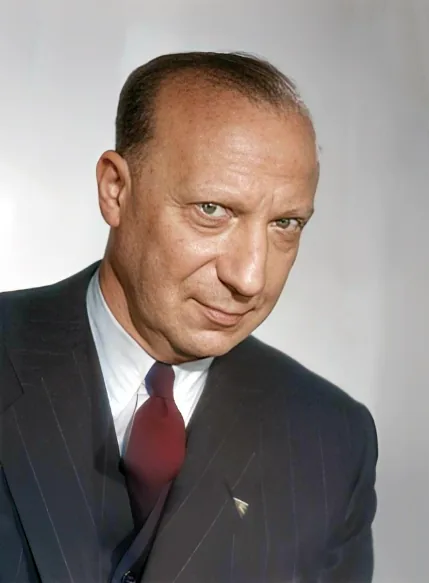
Pierre Dac, born André Isaac on August 15, 1893, in Châlons-sur-Marne, France, was a French humorist. His family, originally from Alsace (Uttenheim and Niederbronn-les-Bains), had Jewish roots and emigrated after the Franco-Prussian War. His father, Salomon Isaac, was a butcher, and the family moved to Paris when Dac was three years old. He attended violin lessons as a child but was expelled from school in 1908 for a prank. Dac's career began in the 1920s as a chansonnier at cabarets like La Muse rouge and La Vache enragée. He created the satirical journal L'Os à moelle in 1938, which gained popularity before being halted by Nazi censorship. He appeared in films such as Voilà Montmartre (1934) and Juanita (1935). In 1941, escaping the conflict of World War II, he sought refuge in London. There, he contributed to Radio Londres, a BBC service reaching occupied France, by composing humorous songs and performing comedic routines. He was arrested in Spain while attempting to reach London and spent several months in Franco's jails. After World War II, Dac formed a comic duet with Francis Blanche, and they created and hosted popular radio series like Malheur aux barbus , Signé Furax , and Bons Baisers de partout . Dac coined the comic term 'Schmilblick,' described as 'rigorously integral, which serves absolutely nothing and can therefore serve everything,’ and popularized the word “loufoque.” He also invented the biglotron and the recipe for noodle jam. He was initiated into freemasonry in 1926 and created a parodic masonic rite called 'Le rite des Voyous'. Pierre Dac was recognized with several distinctions throughout his life; these included the Croix de Guerre (both 1914-1918 and 1939-1945), the Resistance Medal, and the distinction of being appointed a Knight of the Order of the Legion of Honour. Until his passing on February 9, 1975, in Paris, he remained active in film and television, with roles in productions like La Famille Anodin (1956) and Ne jouez pas avec les Martiens (1968).

Pierre Étaix (1928–2016), comedian from France – physical comedy
Verified Unclaimed
France

Pierre Étaix

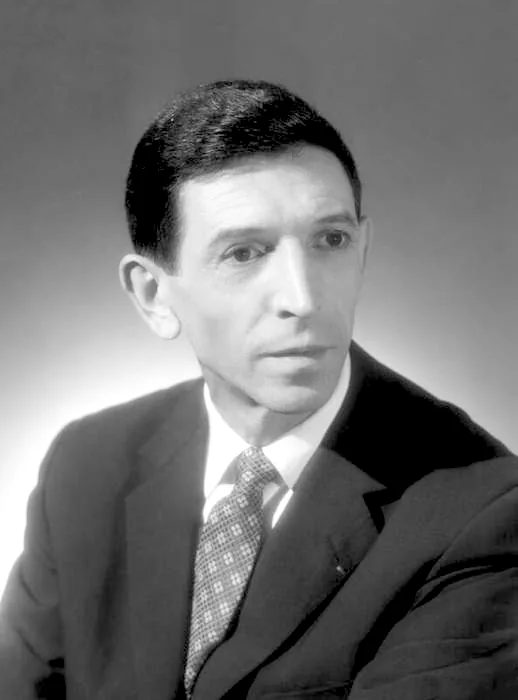
Pierre Étaix, born November 23, 1928, in Roanne, France, was a French clown, comedian, and filmmaker. His parents were Edmond Étaix, a leather merchant, and Berthe Tacher. He initially pursued training as a graphic designer, studying stained glass with Théodore-Gérard Hanssen and supporting himself as a magazine illustrator. Early in his career, he performed in various cabarets and music halls including Le Cheval d'Or, Les Trois Baudets, l'ABC, l'Alhambra, Bobino, and the Olympia, and also worked as a circus performer with clown Nino. Étaix’s career took a significant turn when he began working for Jacques Tati in 1954. He contributed as a cartoonist and gagman to Mon Oncle , assisting in its filming in 1958, and designed posters for the film and its later re-release, Les Vacances de Monsieur Hulot . He also appeared in Tati’s Jour de fête at the Olympia in 1960. Influenced by slapstick comedians like Buster Keaton, Harold Lloyd, Harry Langdon, Max Linder, Charlie Chaplin, and Laurel and Hardy, Étaix began establishing his own comedic style, characterized by elegance of slapstick and meticulous timing. He directed his first short film, Rupture , co-signed with Jean-Claude Carrière, and followed this with the Academy Award-winning short Heureux Anniversaire in 1963, also co-signed with Carrière. Étaix’s feature films include The Suitor (1962), Yoyo (1965), Tant qu'on a la santé (1965), Le Grand Amour (1968), and Pays de cocagne (1971). His films often satirize modern life, noise, and advertising. A legal conflict resulted in Étaix’s films being inaccessible from the 1970s; however, following a court decision, they were restored and shown publicly once more in 2010. Étaix and Annie Fratellini established the École nationale de cirque together in 1973; they had married in 1969 and subsequently toured with their own circus, during which Étaix performed as a whiteface clown. He received the Louis Delluc Prize in 1962 for Le Soupirant and was awarded the Commandeur des Arts et des Lettres in 2013. Pierre Étaix died on October 14, 2016, in Paris, at the age of 87, leaving behind a legacy as a master of poetic burlesque and a major figure in French slapstick cinema.


Pierre Palmade, comedian from France – sketch comedy
Verified Unclaimed
France

Pierre Palmade

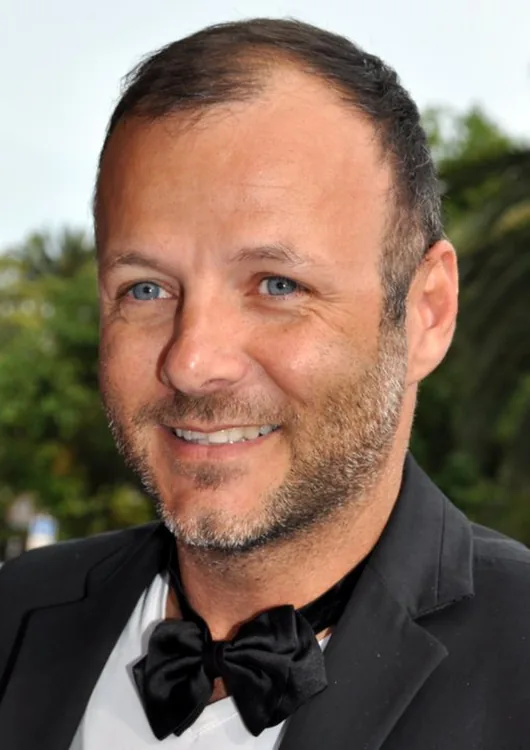
Pierre Palmade, born on March 23, 1968, in Bordeaux, France, is a multifaceted French entertainer. He functions as an actor, comedian, stage director, and playwright. Having attended Paul-Antin school, Alain-Fournier college, and Michel-Montaigne high school in Bordeaux, he abandoned HEC preparatory studies to pursue a career in Paris. Palmade gained recognition as a humorist in the late 1980s, initially participating in sketch comedy shows and later appearing on the television show La Classe in 1988. His comedic style frequently involves portraying unpleasant or irritating characters, and he is known for his style of comedy involving characters and situations. In the 1990s, Palmade transitioned to writing and performing his own stand-up acts and wrote a play, Pièce montée , for Jacqueline Maillan in 1991. He collaborated with Muriel Robin and Michèle Laroque on the Ils s'aiment series of plays, which debuted in 1996 and continued in 2001. These productions were nominated for Molière Awards, a prestigious French theater honor. Palmade also wrote for artists such as Jean-Marie Bigard, Mimie Mathy, and Guy Bedos. Palmade’s career extends beyond the stage; he has appeared in 67 films and written for 12 films, including co-writing Pédale douce and Pédale dure . He starred as Assurancetourix in Asterix and Obélix against Caesar (1998) and played Jacques Chazot in the biographical film Sagan (2008), which received negative reviews. From 1993 to 2021, he participated in the Enfoirés shows. He hosted the sketch comedy show Made in Palmade on France 3 from September 2007 to December 2007. In recent years, his life has been marked by legal and health challenges; he admitted to suffering from drug addiction in 2019 and faced drug-related charges. He was involved in a serious car accident in February 2023 while driving under the influence of cocaine, resulting in severe injuries to others and the death of a baby. As of November 2024, at age 56, he is confined at a residential treatment center with electronic tagging, facing charges including severe bodily injury and involuntary manslaughter.

Pierre Repp (1909–1986), comedian from France – sketch comedy
Verified Unclaimed
France

Pierre Repp

Pierre Repp, born Pierre Alphonse Léon Frédéric Bouclet on November 5, 1909, in Saint-Pol-sur-Ternoise, was a French humorist and actor. He initially studied at the Conservatoire de Lille and earned a Baccalauréat degree before serving in the military in the early 1930s. Following his military service, he relocated to Paris and began his career performing in cabarets. His marriage to Ferdinande Alice Andrée Bouclet, his cousin, occurred on August 14, 1930, in Lille. He frequently performed in music-hall and cabarets both in Paris and on tour, establishing himself as a prominent figure in French entertainment. Repp’s comedy style was characterized by his unique ‘talent de bafouilleur,’ or stammering talent. He humorously simulated stuttering, often replacing words with surprising alternatives and employing wordplay. A particularly famous sketch, "Les crêpes," demonstrated a recipe with comedic mispronunciations and remains a humorous reference, as noted by Stéphane De Groodt. This sketch was also released as a song on a record in 1960, alongside other songs like 'La Machine à laver'. He collaborated with artists such as Boris Vian and Fernand Raynaud, and appeared in numerous theatre plays and TV shows, including Guy Lux’s television shows in the 1970s and Michel Drucker’s shows. His appearances extended to Belgian television on 'Zygomaticorama' as well. Throughout his career, Repp had roles in approximately 100 films, often as a supporting character, including notable titles like ‘Bonjour sourire’ and ‘Les Quatre Cents Coups,’ contributing to his place in French cinema history. He also participated in 'Le Nouveau Testament' alongside Fernand Gravey. In 1982, he performed at the Casino de Paris for the Fondation Perce-Neige. He was a member of the Société des Rosati. Pierre Repp died on November 1, 1986, at almost 77 years old, in Plessis-Trévise and was buried in the new cemetery of Vincennes. In 2018, an essay titled 'Pierre Repp, Bégayer, exister, écrire' by Nicolas Le Golvan explored his life and work.

Pierre-François Martin-Laval, comedian from France
Verified Unclaimed
France

Pierre-François Martin-Laval

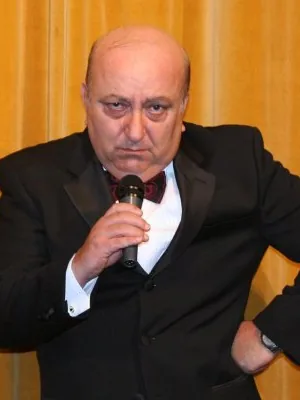
Pierre-François Martin-Laval, frequently referred to as PEF or Pef, was a French actor, film director, screenwriter, and theatre director. Born in Marseille on June 25, 1968, to Denis Martin-Laval, he began his training as an actor from 1988 to 1991 under Isabelle Nanty and Denise Bonal. During this period, he met Marina Foïs, Élise Larnicol, Maurice Barthélemy, Jean-Paul Rouve, and Pascal Vincent, individuals who would later become integral members of a comedy team. The comedy duo 'Les Robins des Bois' was established by Martin-Laval in 1996 alongside his classmates. Initially called 'The Royal Imperial Green Rabbit Company', they quickly renamed themselves after their first successful play, 'Robins des bois'. The play premiered at the Théâtre des Sablons in Fontainebleau and was presented over 250 times at the Théâtre de la Gaîté-Montparnasse and then at the Splendid. Dominique Farrugia discovered Les Robins des Bois and produced them on Comédie! channel, where they appeared on 'La Grosse Emission' from November 1997 to June 1999, and later on Canal+’s 'Nulle part ailleurs' from September 1999 to 2001. During his time with Les Robins des Bois, which lasted from the 1990s to the 2000s, he portrayed recurring characters such as Pouf le Cascadeur, Commissaire Van Loc, Monsieur Merdocu, Maître Marcadet, Madame Marcadet, and Professeur Cigalon. Beyond his work with Les Robins des Bois, Martin-Laval has pursued a diverse career. He directed 'Éric et Ramzy' from 1996 to 1998 and directed the film 'Essaye-moi' in 2006, featuring Julie Depardieu, Pierre Richard, Kad Merad, and Marina Foïs. He also directed 'Serial Teachers' in 2013 and its sequel in 2015, as well as 'Gaston Lagaffe' in 2018. His acting credits include roles in films like Vilaine (2008), Modern Love (2008), L'un dans l'autre (2016), Mon poussin (2016), and Un jour mon prince ! (2016). He also voiced Emile in the French version of 'Ratatouille' in 2007, appeared in 'Capitaine Marleau' in 2018, and 'The Disappearance' in 2015. He directed and acted in the play 'Robin des Bois d'à peu près Alexandre Dumas' in 1997, and directed the musical Spamalot at the Théâtre Comédia in 2010, reprising the role of King Arthur from 2013 to 2014 at Bobino.

Pieter-Dirk Uys, comedian from South Africa – satire, cabaret
Verified Unclaimed
South Africa

Pieter-Dirk Uys

Pieter-Dirk Uys was born on September 28, 1945, in Cape Town, South Africa. He grew up in Cape Town and attended Nassau High School in Mowbray. His father, Hannes Uys, was a Calvinist Afrikaner musician and organist, while his mother, Helga Bassel, was a Berlin-born Jewish concert pianist who escaped Nazi Germany; his sister, Tessa Uys, later became a concert pianist based in London after being taught piano by their mother. Raised in an NG Kerk (Dutch Reformed Church) environment, Uys earned a B.A. degree from the University of Cape Town Drama Department, where he studied with lecturers like Rosalie van der Gucht, Mavis Taylor, and Robert Mohr. Upon his return to Cape Town, Uys took on freelance roles as a playwright, actor, and stage director. He wrote and directed plays like Popcorn , Selle Ou Storie , Pity About People , God's Forgotten , and Karnaval which premiered at the Space Theatre. He joined the Space Theatre as an active actor, writer, and stage director, performing in numerous plays and directing several productions. Uys is widely known for creating and portraying the character Evita Bezuidenhout, an Afrikaner socialite and political activist inspired by Barry Humphries's Dame Edna Everage. Evita Bezuidenhout held the position of former ambassadress for Bapetikosweti, which was an invented Bantustan. Beginning in the late 1970s, he started mimicking South African political figures; his play 'Paradise is Closing Down' had showings in London and at the Edinburgh Festival in 1979, subsequently being adapted for Granada Television in 1981. 'Adapt or Dye,' his show, debuted at the Market Theatre in Johannesburg in 1981 and continued for a total of 280 performances. Uys used humor to criticize South Africa’s apartheid policies and has been an advocate for gay rights. He opened Evita se Perron, a cabaret venue in Darling, Western Cape, converting an old railway station. As an actor, comedian, satirist, author, and playwright, he has created and presented 18 plays, revues, and one-man shows; among these is 'Foreign Aids,' which received an Obie Award in May 2004 and a Special Teddy Award at the Berlin International Film Festival in 2011. He currently lives in Darling and performs to corporate audiences, addressing societal realities with satire, often involving audience participation through box selection in his 'An Audience with Pieter-Dirk Eish' show.


Pinko Izumi, comedian from Japan – cabaret
Verified Unclaimed
Japan

Pinko Izumi

Pinko Izumi, also known as ピンクイズミ on comedy websites, is a Japanese actress and singer born Sayo Takemoto in Nihonbashi, Tokyo on September 11, 1947. She attended Tokyo Metropolitan Higashi-Shinagawa Second Elementary School and Shinagawa Municipal Hino Middle School before dropping out of Japan Music High School in 1966. Her early career began as a kayo enkagakusha (song and talk entertainer) under the name Mari Misaka, mentored by Makoto Maki. This period involved working at cabaret clubs, where she experienced difficult conditions including harassment and audience heckling. Izumi’s transition to television came in 1975 when her amusing speaking style led to a role as a reporter on Television Sanmen Kiji Weekender , prompting a name change to Pinko Izumi. Her initial report involved observing pig sexual behavior, and she quickly gained attention, leading to invitations into television dramas from TBS director Nobuichi Kamikata. She debuted as an actress that same year with Kobe International Gang and starred in her first drama, Hanafubuki Hashigo Kazoku . In 1977, she released her debut single, “Airen Chō” (Melancholy Butterfly), which achieved moderate success, reaching number 37 on the Oricon charts and selling 109,000 copies. She expressed a long-held desire to appear in the NHK Kohaku Uta Gassen , eventually achieving this goal in 2014. Pinko Izumi’s career has spanned decades and encompassed various roles in television, film, and stage. She is particularly recognized for her role as Fuji in the 1983-1984 NHK taiga drama Oshin , which earned her significant acclaim. She has frequently appeared in works by Bridda Sugita following praise from the scriptwriter of Oshin . She starred in Sanga Moyu (1984), Inochi (1986), and Onna Taikoki (1981) as Asahi no kata. Since 1990, she has been a mainstay in Wataru Seken wa Oni Bakari , playing Kojima Satsuki. She also appeared in Onna to Ai to Mystery from 2001 until the present and portrayed Kaneko Akiko in Blackjack ni Yoroshiku (2003) and Kato Kimie in Misora Hibari Tanjo Monogatari (2005). She starred in Old Car (2023) and is scheduled to appear in Zagin de Shisu! (2024). In 1989, she married gastroenterologist Motoe Kabemoto. Her contributions to Japanese entertainment were acknowledged in 2019 with the Commissioner of Cultural Affairs Award and the Order of the Rising Sun, 4th Class, Gold Rays with Rosette.

Pirkka-Pekka Petelius, comedian from Finland
Verified Unclaimed
Finland

Pirkka-Pekka Petelius

Pirkka-Pekka Petelius, a Finnish actor who also directs, produces, writes screenplays and participates in politics, has put out six singer’s records. He belongs to the Green League and won a parliamentary seat in the 2019 election with 6,331 personal votes, though he is no longer serving in parliament.

Polo Polo (1944–2023), comedian from Mexico – storytelling
Verified Unclaimed
Mexico

Polo Polo

Polo Polo , born Leopoldo Roberto García Peláez Benítez , was a Mexican stand-up comedian known for his distinctive storytelling, wordplay, double entendres, and adult-oriented humor. Born on March 9, 1944, in León, Guanajuato, he initially worked in his family's shoemaking business before discovering his talent for comedy. He began performing in small clubs and bars before gaining wider recognition at Mexico City's Keops Nightclub during the 1970s. Polo Polo became one of the most recognizable figures in Mexican comedy during the 1980s and 1990s. His routines were typically delivered as elaborate first-person anecdotes, often featuring sexual humor, Mexican wordplay known as albur , and colorful everyday situations. His live recordings became highly popular, and he also appeared on television, in films, and in major venues across Mexico and the United States, including the Grand Olympic Auditorium in Los Angeles. Often described as a pioneer of stand-up comedy in Mexico, Polo Polo influenced generations of Spanish-language comedians with his conversational storytelling style and unapologetic adult humor. He retired from the stage in the 2010s after more than four decades in entertainment and died on January 23, 2023, at the age of 78. His work remains an important part of the history of Mexican comedy.

Prince Jacob, comedian from India
Verified Unclaimed
India

Prince Jacob

Prince Jacob, also known professionally as प्रिंस जैक, is a multifaceted entertainer from India. Born Miguel Jacob Carmo Luis Fernandes on July 16, 1960, he is recognized as an actor, singer, comedian, playwright, director, producer, and radio personality. He operates primarily within the Marathi and Konkani film industries, with a particular focus on Konkani tiatr productions. His career began at a young age; he debuted in tiatr at just 13 years old in 1973, appearing in Rosario Dias’ ‘Chuk Hanvem Adharli’. Following his SSC, he pursued technical training in welding and machining at Don Bosco, Fatorda, before being recommended to tiatrist Ligorio Fernandes and subsequently joining Roseferns Dramatics Troupe. Prince Jacob's comedic talent quickly established him as a significant figure in the Konkani tiatr scene. He earned the title 'Prince of Comedy' in 1982 after the 75th performance of ‘Thapot’. His work is characterized by innovation, including incorporating elements like a Doberman in ‘Pavnnek’ and magic in ‘Raza Raani’, as well as addressing social issues; he introduced a real handicapped person in the tiatr ‘Pavlam’. He has directed numerous tiatrs, many with titles beginning with 'P', such as 'Pinzrem', 'Pavnnek', 'Pordexi', and 'Padri'. Notably, ‘Padri’ achieved a remarkable milestone, becoming the first tiatr to complete 315 performances. Following this, he directed tiatrs starting with the letter 'R', including 'Rodonaka' and 'Raja Rani'. He frequently collaborates with his brother and comedic partner, Humbert, further solidifying his presence in the entertainment world. Prince Jacob’s contributions to Konkani theatre have garnered significant recognition. He served as the former president of Tiatr Academy of Goa. His work has earned him several awards, including the GoaPost Award, Gulab Award, and Kala Academy Award. He maintains a dedicated fan following across Goa, India, the Gulf region, and the UK. Beyond his entertainment career, Prince Jacob is known for his charitable work. He continues to be an active presence in the Konkani tiatr community, demonstrating a lasting legacy as a versatile performer and influential figure.