
Chuck - GiggleTime cartoon comedian telling jokes
GiggleTime for Android
Free on Google Play
Get the app
GiggleTime - jokes, comedians and comedy shows GiggleTime
Menu
Go Premium Submit a Joke Comedians Comedy shows Most followed comedians About FAQs Contact Add a comedian
Get the app
Follow us

Legal
Privacy Policy Terms of Service Cookie Policy Refund and Cancellation Policy Attributions
Login
Language
Categories
Settings
Language English English
Safe Mode
Random Jokes Autoplay
Notifications
Global Talent Directory

Comedians Directory

Browse comedian profiles, biographical summaries, country of origin, and official links.

Starts with P Verified Clear all
Showing 37-48 of 102 comedians
Patrick Font (1940–2018), comedian from France – satire
Verified Unclaimed
France

Patrick Font

Patrick Font, born September 27, 1940, in Vésinet, was a French humorist and chansonnier. He began his career as a school teacher (instituteur) from 1961 to 1968. From the 1970s until 1995, he formed a comedy duo called Font et Val with Philippe Val. Throughout his career, he wrote lyrics for other artists, including Thierry Le Luron and Christophe Alévêque, demonstrating his versatility within the French entertainment landscape. He published several books, including J'exagère, mais pas assez in 1992 and Souvenirs d'un cow-boy d'opérette in 2018. In 1992, he became a columnist for the satirical magazine Charlie Hebdo , and also contributed to the radio show Rien à cirer on France Inter. He founded Marie Pantalon, a performing arts training school in Haute-Savoie, in 1994. From 2007, he was a permanent comedian at the Théâtre des Deux Ânes in Paris, appearing in plays such as 'Sarkozix Le Gavlois', 'Kadhafi à Paris', and 'Nicolas s'remarie'. His comedy often involved satirical revues about current events, sometimes described as being ‘façon Riviera’, referencing figures like Sarkozy and Fillon. Font’s career was significantly impacted by legal proceedings beginning in 1996. He was convicted of sexual abuse of minors and served four years and two months in prison from 1996 to 2000, following a trial in Annecy in March 1998. Despite these events, he remained involved in artistic endeavors, co-founding Les Auteurs Réunis in 2005, which was responsible for Le Coq des Bruyères and Le Bar des vieux cons . He participated in the album La verVe et la Joie in 2011. Patrick Font died on April 6, 2018, at the age of 77, due to complications from a long liver illness, leaving behind a complex legacy within French comedy.


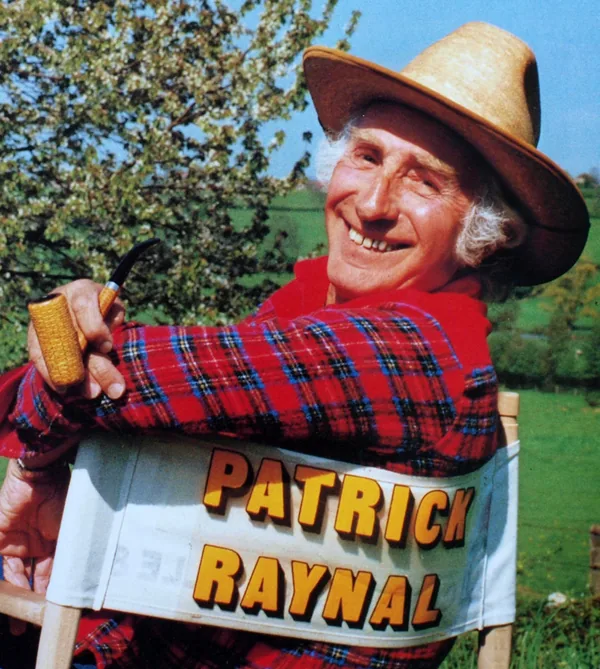
Patrick Raynal (1926–2010), comedian from France – satire
Verified Unclaimed
France

Patrick Raynal

Patrick Raynal, born Bernard Giraud in Vierzon on May 29, 1926, was a French chansonnier and humorist. He began his artistic journey after World War II, at the age of 20, deciding to pursue a career as an artist. Raised in a modest family with a communist father, he experienced early disruptions, including frequent expulsions from school and a brief runaway episode at age 13. His initial performance experiences involved imitating Charles Trenet while serving in the army, earning him the nickname "the singing madman of Vierzon." He subsequently embarked on a music-hall career as a “peasant comedian,” embracing his rural roots. Raynal gained prominence in the 1950s, performing initially across the Berry region and then nationally. His comedy style often featured satirical portrayals of Berry farmers, embodied by the Berlodiot family and particularly the character of Berlodiot, a caricature with a distinctive accent. He performed at venues such as the Caveau de la République, where he fostered friendships with Pierre Dac and Francis Blanche, and later graced stages like Bobino and the Olympia. Throughout his career, which spanned approximately 50 years, he recorded numerous 45 rpm records, achieving significant popularity in the Berry region and beyond, earning two gold records along the way. Beyond his stage performances and recordings, Raynal also appeared in several films, including Le journal d'une femme en blanc (1965) alongside Marie-José Nat, as well as Babette s'en va-t-en guerre (1960), Le Magot de Josepha (1962), and Les grandes familles (1966). He openly criticized aspects of Parisian culture, particularly consumer society, viewing it as stressed, disrespectful, and uniform, and also expressing disapproval of 'nouvelle cuisine'. He received recognition for his work, including the Prix de l'humour in 1971 and the Prix Fernand Raynaud twice, in 1971 and again in 1989. He was also awarded the Chevalier des Arts et des Lettres, Grand Officier de la Ligue du Bien Public, and medals from the city of Paris and the Sacem. After retiring to Anzy-le-Duc with his wife Claudie, he continued performing charity shows for organizations like the league against cancer and the association for blind dogs. Patrick Raynal died in Paray-le-Monial hospital on May 1, 2010.

Patrick Timsit, comedian from France – sketch comedy
Verified Unclaimed
Mar 12, 2027 France

Patrick Timsit

Patrick Timsit, born on July 15, 1959, in Algiers, Algeria, is a French comedian, writer, and film director. His family moved to mainland France when he was two years old due to the Algerian War. He spent his childhood in his parents' leather goods workshop and obtained a baccalauréat D as an external student after leaving multiple schools. He briefly pursued real estate, opening his own agency in 1983; this experience later informed his comedy sketch 'Les Petites Annonces'. His parents were Jewish Sephardic, and he is of Algerian Jewish ancestry. Timsit's career includes a diverse range of roles both on screen and stage. He played Charles VIII of France in Sans peur et sans reproche (1988) and Michou in La Crise (1992), for which he was nominated for a César Award for Best Supporting Actor. He is particularly known for his involvement with the comedy film Un indien dans la ville . He also appeared in Mayrig (1991) as Garbis and Une époque formidable… (1991). In the early 1990s, he gained recognition for his sharp comedic tone in television appearances. He co-wrote and starred in Pédale douce (1996), earning nominations for a César Award for Best Actor, Best Original Screenplay or Adaptation, and Best Actor again. His comedy frequently addresses sensitive topics such as politics, racism, antisemitism, and the Israeli-Palestinian conflict. Beyond acting, Timsit has also demonstrated his directorial talent. He directed and starred in Quasimodo d'El Paris (1999) and L'Américain (2004). He has provided French dubbing for numerous films, including The Monster (1994), Hercules (1997), Atlantis: The Lost Empire (2001), Shark Tale (2004), and Dragon Hunters (2008). He participated in Rendez-vous en terre inconnue in 2006. He has received four nominations for a César Award, recognizing his contributions to French cinema. He continues to act, with roles in recent films like Dalida (2017), The Last Mercenary (2021), Brother and Sister (2022), and It Takes Two to Tango (2025).

Paul Beckers (1878–1965), comedian from Germany
Verified Unclaimed
Germany

Paul Beckers

Paul Beckers, born November 1, 1878, in Magdeburg, was a German comedian and actor. His parents were Gustav Beckers, an Elbe ship captain, and Marie Beckers (née Gabriel). After receiving training in acting and music, he initially worked as an orchestral musician playing the flute and oboe. He made his debut at the Magdeburg Stadttheater in 1902, performing in operettas there for several years. Around 1902, he spent two years in the United States before working in revues at the Apollo-Theater in Berlin. Beckers became a variety artist with the help of Robert Wilschke and performed in various German theaters, including the Berliner Wintergarten and Leipziger Krystallpalast. Beckers is perhaps best known for his signature character, Fliegentüten-Heinrich, a tramp and vendor of fly traps. This character was based on a Magdeburger original depicted in a relief. He starred as Fliegentüten-Heinrich in numerous silent films between 1917 and 1936, including Der Fliegentüten-Heinrich (1917), Fliegentüten-Heinrich als Don Juan (1918), Fliegentüten-Heinrich als Rentier (1918), and Fliegentüten-Heinrichs Pech (1918). He also appeared in other films during this period, such as Der Fliegentüten-Othello (1918), Heinrich sucht eine Lieblingsfrau (1920), The Heath Is Green (1932), Dream of the Rhine (1933), When the Village Music Plays on Sunday Nights (1933), The Valiant Navigator (1935), I Love All the Women (1935), and Pillars of Society (1935). Beckers continued to appear in numerous films throughout the 1930s, including Petri Heil! (1932), Das Familienalbum (1933), Wenn Männer kochen (1933), So leben wir alle Tage (1933), Glück im Schloss (1933), Mister herkules (1933), Der Schrecken vom Heidekrug (1934), Meine Frau, die Schützenkönigin (1934), Fräulein Veronika (1936), and Das Hermännchen (1936). Beckers’ career included directing and acting at the Komische Oper, and operating his own theater, 'Beckers Bunte Bühne,' from 1927 to 1930. He led Emil Winter-Tymian’s “Tymians Thalia Theater” in Dresden after 1926. His humor was described as simple and drastic. After World War II, he lost all his possessions and attempted to revive his comedy career with solo performances at age 67. He became known for the Saxon number 'Plättbrett' and performed it in several RIAS-Unterhaltungsprogramm shows called 'Komikercocktail'. Beckers continued performing in these shows through 1986, appearing in titles such as 'Grüße aus den Komikerhimmel' (December 31, 1974) and 'Wer schmeiÃt denn da mit Lehm' (December 31, 1975). His last performance was in December 1961 at the Magdeburger Kristall-Palast in the revue 'Mein Magdeburg am Elbestrand'. Paul Beckers died on April 27, 1965, in Leipzig, where he spent his later years running a pension with his wife Marga and is buried in the Leipziger Südfriedhof.

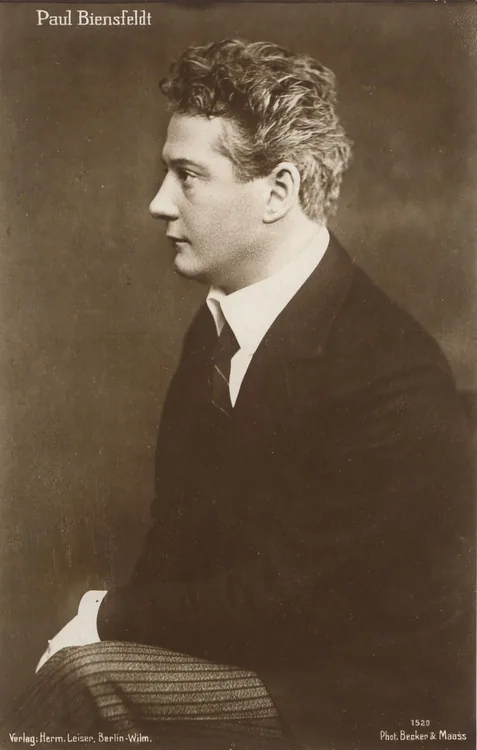
Paul Biensfeldt (1869–1933), comedian from Germany – musical comedy
Verified Unclaimed
Germany

Paul Biensfeldt

Paul Biensfeldt was a German-Jewish actor who contributed significantly to the German theater and film landscape for over four decades. Born on March 4, 1869, he spent forty years as part of the Berlin theater scene. His career began in 1893 with a breakthrough performance in Max Halbe's play 'Jugend' at the Residenztheater. Subsequently, he worked under Otto Brahm and later under the influential Max Reinhardt at the Deutsches Theater, becoming a regular performer on that stage. He was a popular ensemble player at Reinhardt’s theater for 25 years, frequently portraying comedic roles. Biensfeldt's versatility extended to both stage and film, appearing in over 100 silent and sound productions between 1913 and 1933. Prominent directors such as Fritz Lang, Ernst Lubitsch, Friedrich Wilhelm Murnau, Paul Leni, Robert Wiene, and Joe May frequently cast him. While often playing supporting roles as characters like servants, dance teachers, police officers, or nobles, he also enjoyed larger roles in the early 1910s. Notable silent film appearances include portraying the father of Lil Dagover and a magician who transforms into a cactus in Fritz Lang's 'Der müde Tod'. He often acted alongside Henny Porten. His comedic talent was recognized by playwright Carl Sternheim, who specifically wrote the role of Krey in his 1913 comedy 'Bürger Schippl' for Biensfeldt. He showcased a range of performances, including playing the chamberlain Lebel in Lubitsch’s ‘Madame Dubarry’ and exhibiting “camp obeisance” and “playful subservience” as a sidekick to Emil Jannings in films such as Anna Boleyn (1920) and Das Weib des Pharao . Other notable film appearances include roles in Die ideale Gattin (1913), Die Geliebte Tote (1919), Waxworks (1924) – where he was part of an all-star cast including Emil Jannings and Conrad Veidt – Der Goldene Schmetterling (1926), and Fiaker Nr.13 (1926), in which he portrayed a caring cab-driver and foster father. In one performance, he performed a comic song as the jester, transitioning from smugness to terror before being whipped due to the king’s offense. Paul Biensfeldt died on April 2, 1933, and was buried at the Wilmersdorf Waldfriedhof Güterfelde in Berlin.

Paul Elliot, comedian from the United Kingdom
Verified Unclaimed
United Kingdom

Paul Elliot

The Chuckle Brothers were a British comic duo consisting of the real brothers Barry David Elliott and Paul Harman Elliott. Their fame stemmed from the BBC children’s series ChuckleVision, which ran from 1987 to 2009 and was honoured with a 2010 live tour titled An Audience with the Chuckle Brothers to mark its twenty‑first series. Their routine leaned on slap‑stick physicality, visual jokes and wordplay, and they are remembered for the catch‑phrases “To me, to you!” and “Oh dear, oh dear!”.

Paul Kato Lubwama (1970–2023), comedian from Uganda
Verified Unclaimed
Uganda

Paul Kato Lubwama

Paul Kato Lubwama was a Ugandan filmmaker who also acted in theater, most prominently in leading roles for the Bakayimbira drama, pursued a career as a musician and radio presenter, and served as the Member of Parliament for Lubaga South from 2016 until 2021.

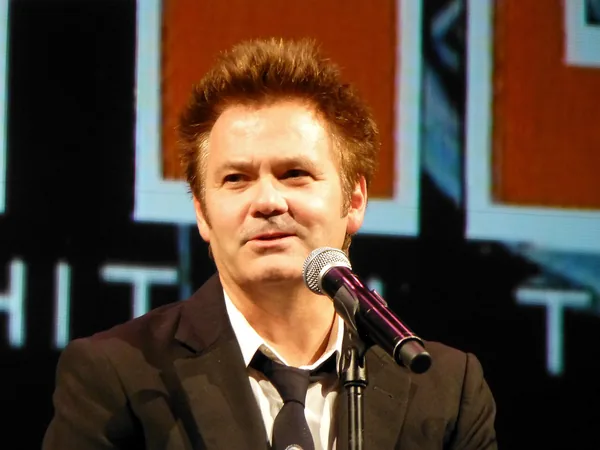
Paul McDermott, comedian from Australia
Verified Unclaimed
Australia

Paul McDermott

Paul McDermott is an Australian entertainer, born on May 13, 1962, in Adelaide, South Australia. He is one of six children, and a fraternal twin; his father was a senior public servant while his mother managed the home. The family relocated to Canberra when he was three years old. For four years, he pursued art studies at the Australian National University's Canberra School of Art, as well as Marist College Canberra and Dickson College. McDermott’s talents encompass a wide range, with recognition as a comedian, actor, writer, director, singer, artist, and television personality. McDermott began performing at age 25 due to financial need, initially busking in 1985. He was a member of Gigantic Fly before joining the Doug Anthony All Stars (DAAS) in the 1980s, with whom he started busking in Canberra. DAAS gained notoriety at the Edinburgh Fringe Festival and subsequently appeared on ABC TV’s The Big Gig . The group starred in their own spin-off TV show, DAAS Kapital , from 1991 to 1993. McDermott took lead vocals and wrote much of the material for DAAS, and the group toured nationally and internationally, even appearing at the opening of the Barcelona Olympics. DAAS initially disbanded in 1994 but reformed in 2014 with Paul Livingston replacing Richard Fidler. Following DAAS’s initial disbandment, McDermott hosted two other ABC programs and briefly worked as a morning radio presenter on Triple J from 1996 to 1997. He is best known for hosting Good News Week until 2012. He has frequently performed at the Melbourne International Comedy Festival, participating in the Comedy Festival Gala and the Great Debate. McDermott has authored children’s books, newspaper articles, and compiled his columns into the book The Forgetting of Wisdom . He also wrote and directed short animated films, including three award-winning films: The SCREE (2004), The Girl who Swallowed Bees (2007), and GHOSTBEAR (2019). Since 2012, he has pursued a painting career and performed concerts featuring his own more serious songs. He currently tours with the live show Paul + 1, conceived and performed with Glenn Moorhouse, and they recorded a musical piece called I’VE SEEN THE FUTURE AND YOU’RE NOT IN IT detailing experiences during lockdown.

Paul O'Grady (1955–2023), comedian from the United Kingdom – physical comedy
Verified Unclaimed
United Kingdom

Paul O'Grady

Paul O'Grady, a comedian and actor, was born Paul James O'Grady on June 14, 1955, in Tranmere, Cheshire (now Merseyside). His father, Patrick 'Paddy' Grady, immigrated to England from Ireland in 1936, while his mother, Mary 'Molly' Savage, was born in England to Irish immigrant parents. He grew up in Tranmere, raised in an Irish Catholic household, and attended St Joseph's Catholic Primary School and St. Anselm's College. After departing school at the age of sixteen, he took on a role as a clerk within a magistrate's court and subsequently engaged in several other positions, such as providing cleaning services for Cleo Laine and employment at an abattoir. He had a daughter, Sharyn, when he was still a teenager. O’Grady commenced his professional life in the latter part of the 1970s following a relocation to London, starting with a position as a traveling care officer for Camden Council. He developed his drag act in 1978, creating the character Lily Savage based on female relatives and someone he saw in a Sheffield market, drawing inspiration from his mother, Molly, and aunts Chrissie and Annie. Before going solo as a stand-up comedian, he performed as part of the drag mime duo the Playgirls. He began formulating the idea for Lily Savage while working as a waiter in Manila in 1977, and started performing as Lily Savage in 1985. The character of Lily Savage, characterized as a sharp-tongued, audacious, platinum-haired woman from Birkenhead, achieved widespread recognition as his signature persona, and he presented her at the Royal Vauxhall Tavern (RVT) for a period of eight years. He appeared at the Edinburgh Festival in 1987 and was nominated for a 1992 Perrier Comedy Award. Throughout his over three-decade career, O'Grady presented numerous television shows, including The Big Breakfast (1995–1996), Blankety Blank (1997–2002, known as 'Lily Savage's Blankety Blank’ from 2001), Lily Live! (2000–2001), and later, For the Love of Dogs (2012–2023), Animal Orphans (2014–2016), Blind Date (2017–2019), and Great British Escape (2020). He also hosted BBC Radio 2’s Paul O’Grady on the Wireless (2009–2022) and presented The Paul O'Grady Show (2004-2006, 2006-2009) and Paul O’Grady Live (2010–2011). His television breakthrough came in 1995 with 'Live From The Lilydrome'. He appeared in productions like ‘Coronation Street’, the film ‘In The Name Of The Father’, West End shows including ‘Prisoner Cell Block H’ and ‘Annie’, and pantomimes such as ‘Snow White & The Seven Dwarfs’ (1999) and ‘Chitty Chitty Bang Bang’. Throughout his career, he was recognized with several honors, including a Bafta in 2005 for 'The Paul O'Grady Show', a National Television Award in 2008, and the distinctions of Member of the Order of the British Empire (MBE) in 2008 and Deputy Lieutenant for the County of Kent in 2022. In 2020, he assumed the position of president of the British Music Hall Society.

Paul Panzer, comedian from Germany
Verified Unclaimed
Dec 19, 2026 Germany

Paul Panzer

Paul Panzer, born Dieter Tappert on January 8, 1972, in Düren, Germany, is a German comedian. He spent his childhood in Nörvenich and later moved to Cologne in the mid-1990s. Initially training as a welder, he also pursued studies in music and media education. His career began in 1998 at a radio station in Eupen, Belgium (100’5 Das Hitradio), where he quickly gained recognition. It was through over 800 prank calls that he established the persona of Paul Panzer, a name he adopted for his comedic work. Paul Panzer's comedy style is characterized by a distinctive speech impediment, mispronunciation, and the incorporation of foreign terms into German. Recurring characters like 'Dachdeckermeister Benether' and 'Szabo' feature prominently in his routines. He developed the comedy series 'Die Baulöwen,' which consists of over 200 episodes. His first solo stand-up program, 'Heimatabend Deluxe,' proved successful, leading to a televised version airing on RTL in 2006. This performance earned him the German Comedy Award as best newcomer that same year. Following his early success, Paul Panzer continued to expand his reach. He starred in the film 'Männersache' in 2009, co-writing the script with Mario Barth. A stage program, 'Endlich Freizeit – Was für′n Stress!', launched in 2009 and has been ongoing. From 2011 to 2014, he co-hosted 'Stars bei der Arbeit' on RTL. Since 2016, he has appeared frequently as a guest on the quiz show 'Wer weiß denn sowas?'. He also streams live on Twitch.tv as Paul Panzer since December 2020. He was married for 25 years and became a widower in 2026.