
Chuck - GiggleTime cartoon comedian telling jokes
GiggleTime for Android
Free on Google Play
Get the app
GiggleTime - jokes, comedians and comedy shows GiggleTime
Menu
Go Premium Submit a Joke Comedians Comedy shows Most followed comedians About FAQs Contact Add a comedian
Get the app
Follow us

Legal
Privacy Policy Terms of Service Cookie Policy Refund and Cancellation Policy Attributions
Login
Language
Categories
Settings
Language English English
Safe Mode
Random Jokes Autoplay
Notifications
Global Talent Directory

Comedians Directory

Browse comedian profiles, biographical summaries, country of origin, and official links.

Starts with L Verified Clear all
Showing 73-84 of 89 comedians
Lupe Rivas Cacho (1899–1975), comedian from Mexico – satire, sketch comedy
Verified Unclaimed
Mexico

Lupe Rivas Cacho

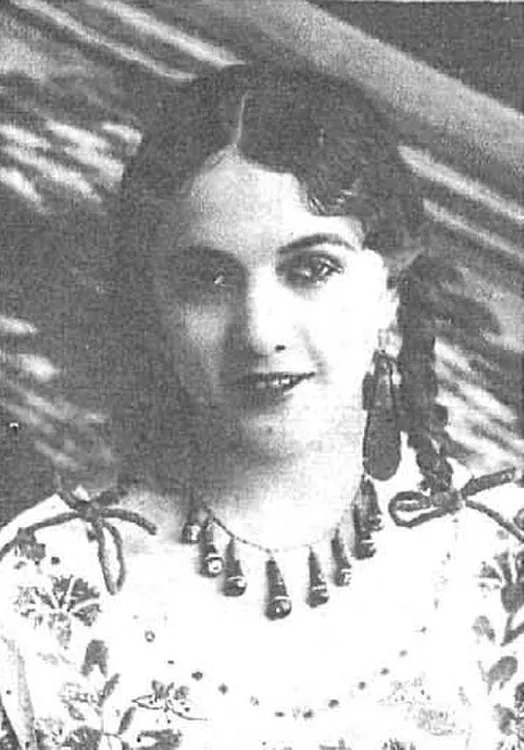
Lupe Rivas Cacho, born Guadalupe Rivas Cacho in Mexico City on August 8, 1884, was a multifaceted Mexican performer. She worked as an actress, comedian, and vedette, beginning her artistic career in 1897 when she was just thirteen years old. Initially, she performed in zarzuelas and operettas, appearing in cities like Mexico City, Guadalajara, Monterrey, and Mérida. Around 1910, she adopted the name Lupe Rivas Cacho and transitioned to theater of revue, becoming known as 'La Pingüica' because of her short stature. She served as the first soprano of the Lyrical Theater and demonstrated vocal skill by singing difficult musical notes with a high-pitched voice. Rivas Cacho’s career encompassed extensive touring and a distinctive comedic style. She toured internationally, including performances in Spain, Argentina, and France at venues like the Théâtre de l’Avenue in Paris. Her work during the 1920s and 1930s focused on comedies and political satires, gaining popularity among marginalized communities. She was considered a pioneer of Mexican satirical revue and performed comedy sketches in theaters, similar to cabarets. Her image was widely disseminated by theaters through photographs. A romantic relationship with Diego Rivera began in 1921, and they formed a leftist political alliance; Rivera subsequently immortalized her in his mural 'La Creación' as the figure of 'la comedia'. She also had a stage rivalry with Mimí Derba. Lupe Rivas Cacho’s career extended beyond theater. She entered film in 1949, appearing in titles such as Comisario en turno , El charro y la dama , Mi canción eres tú , and Viva la juventud! . Later, in 1967, she made her television debut in the telenovela Atormentada . As a 'tiples' performer, she combined singing and acting throughout much of her career. She died in Mexico City on September 15, 1975, at the age of 91. Monsiváis interpreted her image as representing the beginning of female emancipation, signifying her lasting impact on Mexican culture.

Lutz van der Horst, comedian from Germany – satire
Verified Unclaimed
Germany

Lutz van der Horst

Lutz van der Horst is a German television presenter and comedian born in Cologne, Germany on August 20, 1975. His father, Rolf van der Horst, was a businessman who managed an offset printing company. He studied English and German at the University of Cologne, demonstrating an early interest in language and communication. Following his studies, Lutz van der Horst began his career working as a speaker and author for radio programs like 'Bürgerfunk' and 'Mehr von mehr', and completed an internship at 1LIVE radio station. From 2000, he transitioned to writing for television, contributing gags for Brainpool productions such as 'Die Wochenshow,' 'Rent a Pocher,' and 'TV total'. He also wrote for other comedy shows including 'Switch Reloaded' and 'Sechserpack'. His first on-camera appearance occurred in December 2001 on 'TV total', where he appeared in a pink rabbit costume. From August 2003, he played the satirical reporter Günni on the same show. In 2008, Lutz van der Horst co-founded the comedy office N2O Comedy with Manuel Butt and Thomas Rogel. He has been a cast member of the satirical television program 'heute-show' since 2009, earning the nickname 'Political Terror' as a satirical foreign correspondent. From 2011 to 2012, he co-hosted the quiz show 'Iss oder quizz'. He also portrayed the unsuccessful stand-up comedian Jimmy Breuer in the radio show Jimmy Breuer Radioshow from 2009 to May 2013 and toured with 'Jimmy Breuer' performing 36 shows in 2011. Since 2013, he has hosted 'Wie werd' ich …?' with Christiane Stenger. He has also explored other roles, playing the prison supervisor since 2016 and appearing as 'Frosch' in Die Fledermaus from 2016 to 2017. He voiced Arabello in Trolls World – Voll vertrollt! in 2019 and formed the synth band Tippy Toppy in 2020. He is openly gay and identifies as queer. In June 2022, he played the narrator in The Rocky Horror Show , and since March 2022, has hosted introductions for the Saw film series. Currently, he hosts 'Lutz van der Horst – Der Filmtalker' on Tele5 and co-hosts the podcast Uns fragt ja keiner with Ilka Bessin. His first novel, Konfetti-Blues , was published in October 2025, and in November 2025 he and Fabian Köster won Schlag den Star .

Verified Unclaimed
Iceland

Laddi

Laddi, born Þórhallur Sigurðsson on 20 January 1947, is an Icelandic comedian, actor, singer, songwriter and voice actor, one of the best-known entertainers in the country for more than half a century. He has released records, acted in films and written and performed in a great many television comedy shows, including Heilsubælið, Imbakassinn and Spaugstofan, and he has appeared in and co-written many editions of Áramótaskaupið, Iceland's New Year's Eve satire. He began his music career as a drummer in the band Faxar. With his brother Haraldur Sigurðsson he formed the duo Halli og Laddi, hugely popular in the 1970s, a fixture of television entertainment shows and the makers of several records of songs and comedy; the best known, Látum sem ekkert C, was made with Gísli Rúnar Jónsson in 1976. In the 1980s the brothers founded the HLH-flokkurinn with Björgvin Halldórsson, a band that copied the look and sound of 1950s rock and roll and had lasting hits such as "Riddari götunnar" and "Seðill". Laddi has written dozens of songs, among them the popular "Sandalar", "Austurstræti" and "Búkolla", released on solo albums such as Einn voða vitlaus and Deió. Laddi helped found Spaugstofan in 1985 and later returned as a guest and for a full season in 2013–14. He has created a gallery of characters for Icelandic television, including Þórður the caretaker, Eiríkur Fjalar, Doctor Saxi, Skúli the electrician, Magnús the farmer, Elsa Lund, Marteinn Mosdal and Dengsi from Hafnarfjörður. His many films include Stella on Holiday (1986), Under the Glacier and Magnús (1989), The Icelandic Dream (2000), Regína (2001), Stella for Office (2002), Jóhannes (2009), Mr. Bjarnfreðarson (2009), Spooks and Spirits (2013) and The Secret Life of Walter Mitty (2013). On stage his best-known parts are Fagin in Oliver! and the dentist in Little Shop of Horrors, and he appeared in Björk's music video "Triumph of a Heart". He has dubbed a huge number of animated films into Icelandic, including Aladdin, The Lion King, Mulan, Wreck-It Ralph and Frozen, and from 1985 he voiced every character in The Smurfs by himself. In 2007 his 60th-birthday show Laddi 6-tugur at the Reykjavík City Theatre was planned for four performances and became one of the most popular comedy shows ever staged in Iceland; six years later he followed it with Laddi lengir lífið at Harpa. One of his four sons, Þórhallur, won Iceland's Funniest Man contest in 2007.

Verified Unclaimed
Greece

Lambros Konstantaras

Lambros Konstantaras, born on March 13, 1913, in Athens, Greece, was considered one of the best Greek comedian actors. From a young age, he participated in athletics, serving as an athlete for AEK and playing goalkeeper for the B team during the 1929-30 season. Initially enrolled in the Naval Cadets School in Corfu in 1930, he escaped by swimming. Subsequently, he was sent to Paris in 1934 to study goldsmithing but abandoned those studies. He made his theatre debut in France in 1937 and returned to Greece in 1938, beginning his acting career. He appeared in over 80 films between 1940 and 1981, including 'The Parting Song' in 1939, the first Greek movie with sound. Konstantaras initially played serious roles but later focused on comedic roles, frequently portraying characters like executives or fathers of the bride. During the 1950s and 1960s, he frequently partnered with Alekos Sakellarios to create multiple acclaimed films, notably 'Alice in the Navy' and 'Yparhei kai Filotimo'. Additionally, his career involved collaborations with actresses like Ellie Lambeti and Aliki Vougiouklaki; furthermore, he established a theatrical ensemble alongside Jenny Karezi, Maro Kontou, and Nikos Rizos. In 1969, 'O Blofatzis' earned him the award for best leading actor at the Thessaloniki Festival of Greek Cinema. His last film was 'The Lamproukos Balladeer' in 1981, and he participated in 191 recorded theatrical performances between 1938 and 1978. He is remembered for his role in the 1972 comedy film O Anthropos pou Espage Plaka , where he played a wealthy gossip who loses his fortune.

Verified Unclaimed
Canada

Lara Rae

Lara Rae—once performing as Al Rae—is a Canadian comedian most noted for her enduring tenure as artistic director of the Winnipeg Comedy Festival and for her recurring appearances on CBC Radio One’s comedy series The Debaters.

Verified Unclaimed
Philippines

Lassy Marquez

Reginald Charias Marquez, who performs under the name Lassy Marquez, is a Filipino comedian, actor, entertainer, host, television personality and businessman. He rose to fame as one of the three members of the comedy group Beks Battalion, alongside MC Muah and Chad Kinis, and as a regular co‑host on the midday variety program It’s Showtime. Marquez is also recognized for his supporting appearances in several Viva Films comedy movies.

Verified Unclaimed
Bulgaria

Latinka Petrova

Latinka Petrova-Dzhongalova is a Bulgarian comic actress of stage and screen. She was born on 1 January 1944 in the village of Gorna Koznitsa near Kyustendil, into an old merchant family whose ancestors came from Prilep. As a schoolgirl she studied accordion and piano, and from the age of sixteen she performed on stage as a singer of folk songs. She got into the Krastyo Sarafov National Academy for Theatre and Film Arts (VITIZ) at her second attempt and studied acting in the class of Professor Stefan Sarchadzhiev, alongside Stefan Danailov, Stefan Mavrodiev, Iliya Dobrev, Prodan Nonchev, Meglena Karalambova and Milen Penev. She started out with the Kyustendil theatre company, and with her very first role, in Pancho Panchev's Kalpatsite, she came to the national review of Bulgarian drama and theatre in Sofia and won the award for best actress as well as the Komsomol prize. She then spent 29 years at the Satirical Theatre in Sofia, playing more than a hundred roles, although for almost nine years she was largely kept in reserve. Her public breakthrough came in 1981 in Shtraklitsa, when she stepped in for Nevena Kokanova. She was also the last stage partner of Georgi Partsalev. After the democratic changes of 1989 she left the Satirical Theatre at 55 and went freelance. She was involved in public life for a time, serving as a municipal councillor for the Union of Democratic Forces in Sofia's Mladost district, and later toured the country with the Travelling Theatre. She wrote her own show, Tova Ne Stava (This Won't Do), which she and her colleague Elena Kaneva played around 300 times in provincial theatres, followed by Nadezhda Ima (There Is Hope) and the one-woman show Vrashtam Parite (I'm Giving the Money Back), a look back at her life with songs from the Golden Blackbird festival. A new generation discovered her in 2008 through a hugely successful M-Tel Homebox advertisement, after which she signed on for the company's campaigns for years. She appeared in music videos for Galena, Emiliya and Malina (2010) and for Galin, Ani Hoang and Kristiana (2014), and in 2013 she took part in Dancing Stars. Her television theatre work includes Vrazhalets (1970) and Orchids Grow on Monte Grosso (1982).

Verified Unclaimed
Argentina

Leo Rosenwasser

Leonardo Fabián Rosenwasser, known professionally as Leo Rosenwasser, was an Argentine comedian and actor. He was born in Buenos Aires on August 27, 1955, and died there on February 17, 2017, at the age of 61. His remains are interred in the Actors' Association pantheon at Chacarita Cemetery. Rosenwasser worked as an actor, announcer, host, and humorist throughout his career. Rosenwasser’s career began in 1991 with the show Noticreo . He gained significant popularity through his work on Arriba las gomas (1992) and, most notably, Videomatch (1992-2003). On Videomatch , he was known for hidden camera segments, including 'El Oso,' 'Leo Leonor,' 'Rompe Pepe,' 'Leo Taxista,' and 'El Panadero.' Daniel Jacubovich invited him to join Videomatch after seeing him on NotiCreo . Marcelo Tinelli helped him achieve peak popularity, and he was often referred to as 'Leo de Tinelli'. His sketches have aged well, with some being rediscovered years later. He created characters such as Pachu, Pablo Granados, and Listorti, and is remembered for characters like Leo Panadero and Pepe Rompé. Beyond television, Rosenwasser appeared in the telenovela Alas, poder y pasión in 1998 and performed in the play La marquita del zorro in 1999. He hosted a show called Noche y Pico in Uruguay (1999), featuring his characters and erotic entertainment, and subsequently worked in Paraguay and Ecuador. In 2013, he hosted the cable show Contamelo Todo , where a controversial incident involving a child's statement occurred. Rosenwasser also had a long history of radio work, first for Radio Rivadavia and then for Radio Belgrano, hosting Rompé, Leo Rompé . He was affiliated with the Asociación Argentina de Actores since 1993. His last appearance was on a cable television interview program.

Verified Unclaimed
Cuba

Leopoldo Fernández

Leopoldo Fernández, known on stage as Pototo and to millions of listeners as Tres Patines, was a Cuban actor, singer and comedian, considered one of the most influential Spanish-language humorists of the twentieth century. He was born Leopoldo Augusto Fernández Salgado on 26 December 1904 in Matanzas province and grew up in Güines in a humble family; his father was a tobacco worker. He left school young to help support his family, delivering bread and working as a telegraphist, cigar maker and fortune-teller, until in 1926 he founded his own theatre company with friends. That year he also toured Cuba with Blanquita Gómez, and through the 1930s he became established on the island's theatre circuit. Mass stardom came in the early 1940s, when the radio network Cadena Azul hired him and Aníbal de Mar for a new programme. The Spanish writer Cástor Vispo created the scripts and characters of La tremenda corte, launched in 1941, in which Fernández played José Candelario Tres Patines, a small-time rogue forever in trouble with De Mar's judge. Its success was immediate, it was heard daily as far away as Puerto Rico, Venezuela, Colombia, Peru, Panama and the Dominican Republic, and it is still broadcast today. Fernández said many characters were drawn from real Cuban types. On stage he and De Mar were also the duo Pototo y Filomeno, and Fernández formed a celebrated partnership with the actress Mimí Cal as Nananina. He appeared in the films Hotel de muchachas (1951) and ¡Olé, Cuba! (1957) and recorded comedy albums. He kept working in Cuba after 1959; by March 1962 his company had played 70 weeks in a row at Havana's Teatro Nacional. That April a performance was broken up, his theatre was closed, and later that year he left Cuba with 1,170 refugees on the cargo ship Shirley Lykes. He always denied the popular story that a joke about hanging a portrait had sent him to prison. In exile he worked in Mexico, recording the album Tres Patines y El Señor Juez with De Mar in 1968, and in Peru, where in 1969 he starred in the Panamericana Televisión series El Guardia Tres Patines with Antonio Salim. In Puerto Rico he met the actress Vilma Carbia, his second wife. In 1971 he settled in Miami. In 1976 he launched the radio show Los Problemas de Trespatines, with Carbia as his wife, heard on stations across the United States; in 1977 his company played five months at Hialeah's Teatro Lecuona; and in 1980 he returned to film with Misión 3K3, co-directed with his son Polito. His last stage season, Pototo odia a las mujeres, ran until October 1984. He never received royalties for the endless rebroadcasts of his work. Leopoldo Fernández died in Miami on 11 November 1985, and Cuban soil was placed on his coffin.

Verified Unclaimed
Armenia

Levon Ter Petrossian

Levon Ter Petrossian was an Armenian comedian, actor, musician, and one of the founding members of the influential DEMQ Show , a comedy group that became an important part of Armenian diaspora entertainment. Born in Yerevan in 1981, he moved with his family through Russia and Canada before settling in the United States, eventually making Glendale, California, his home. Together with a close group of friends, Ter Petrossian helped develop the DEMQ Show in the 1990s, using comedy and storytelling to explore Armenian identity, everyday life, and the experiences of the diaspora. His work connected with Armenian audiences across generations and helped establish a distinctive style of Armenian-American comedy. Ter Petrossian died on April 16, 2026, at the age of 45. He is remembered for his contributions to Armenian comedy and entertainment, particularly through his work with the DEMQ Show, and for the lasting connection his humor created within the Armenian diaspora.

Verified Unclaimed
Austria

Liesl Löwinger

Liesl Löwinger, born Elisabeth Meinhard on January 11, 1918, in Graz, Styria, was an Austrian folk actress and comedian. She died in Vienna on October 15, 1980, following a pulmonary infarction, which was described as a 'heavy blow' for the community of Altlengbach. Löwinger’s journey into performance began with extensive training; she studied at the Graz Conservatory and received instruction in piano, accordion, speech coaching, literature studies, acting with Dorothea Neff, dance with Willy Fränzl, and singing with Professor Rittersheim. She married folk actor Paul Löwinger in 1938, which led to her involvement with the family-owned theater stage directed by him. Known as a 'drastic comedian,' she frequently portrayed down-to-earth women with a strong rural character, embodying characters like Mirzl, Zenzi, Kathi, Leni, and Mitzi. She appeared in numerous films between 1950 and 1970, including 'Der keusche Adam' (1950), 'Lachendes Wien' (1957), and 'Das Liab am Almsee' (1966). The Löwinger Bühne became central to her work. She gained theater experience at the Löwinger Bühne, and television recordings of its productions are considered cult classics. She performed in numerous folk plays alongside Paul Löwinger and her aunt Gretl. She retired from public life in 1970 to focus on her family, which included three children: Sissy, Guggi, and Paul Jr. Following her father’s death in 1988, Sissy Löwinger took over the management of the Löwinger stage, which has been touring Austria since 1997. She also contributed significantly to the Löwinger Bühne’s programming, directing, writing under a pseudonym, and organizing tours through Germany and the USA. Culture Minister Claudia Schmied praised Liesl Löwinger as a 'full-blooded actress' who charmed audiences with humor, while Niederösterreich’s Governor Erwin Pröll highlighted her contribution to bringing joy through her acting.