
Chuck - GiggleTime cartoon comedian telling jokes
GiggleTime for Android
Free on Google Play
Get the app
GiggleTime - jokes, comedians and comedy shows GiggleTime
Menu
Go Premium Submit a Joke Comedians Comedy shows Most followed comedians About FAQs Contact Add a comedian
Get the app
Follow us

Legal
Privacy Policy Terms of Service Cookie Policy Refund and Cancellation Policy Attributions
Login
Language
Categories
Settings
Language English English
Safe Mode
Random Jokes Autoplay
Notifications
Global Talent Directory

Comedians Directory

Browse comedian profiles, biographical summaries, country of origin, and official links.

Starts with G Verified Clear all
Showing 73-84 of 91 comedians
Gundu Hanumantha Rao (1956–2018), comedian from India
Verified Unclaimed
India

Gundu Hanumantha Rao

Gundu Hanumantha Rao, born on October 10, 1956, in Vijayawada, was an Indian actor and comedian who primarily worked in Telugu films, theatre, and television. He came from a middle-class family and began his acting journey early, appearing in the play Ravana Bramha at age 18. Before entering entertainment, he ran a confectionery business. His film debut occurred in Jandhyala’s Aha Naa Pellanta in 1987, where he gained recognition for his role as the groom’s father. V. Krishna Reddy. Notable films include Rajendrudu Gajendrudu , Mayalodu , Yamaleela , Srivariki Premalekha , Pellaniki Premalekha Priyuraliki Subhalekha (1992), Popula Pette (1997), and Apparao Driving School . He also appeared in films frequently directed by Jandhyala, K Vasu, and SV Krishna Reddy. His comedic roles were well-received in films such as Prema (1989), Kobbari Bondam (1991), Gharana Alludu (1994), and Annamayya (1997). He shared a close friendship with Brahmanandam, who affectionately called him 'Baava,' and they first acted together in Satyagraham . His work in television brought him further acclaim. He starred as Aamudaala Anjaneyalu in the TV serial Amrutham (2001–2007), a role that earned him three TV Nandi Awards, including recognition for his sharp and unconventional thinking. He also appeared in Aanando Bramha on DD Saptagiri and Sambaraala Rambabu on MAA TV. Hanumantha Rao was 61 years old when he died on February 19, 2018, in Hyderabad due to cardiac arrest secondary to chronic kidney disease. He suffered from a kidney ailment for some time before his death. In the later part of his life, he faced financial difficulties, but received assistance from Chiranjeevi, the Telangana government, and other organizations.
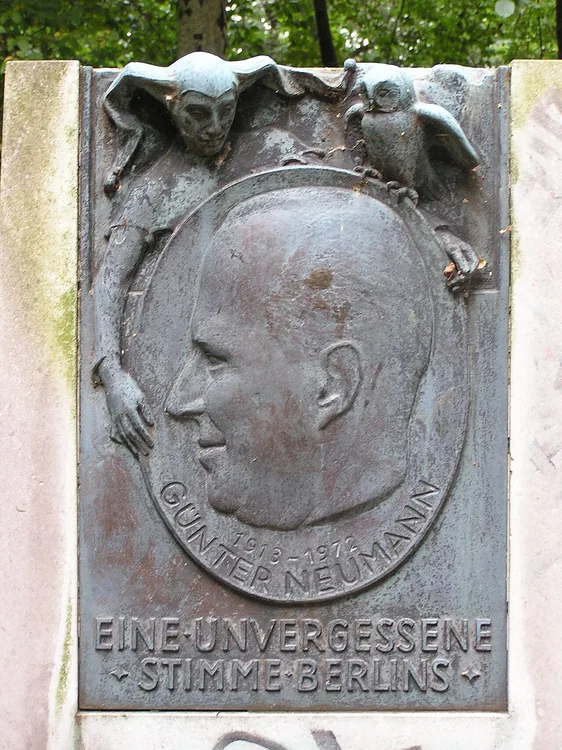
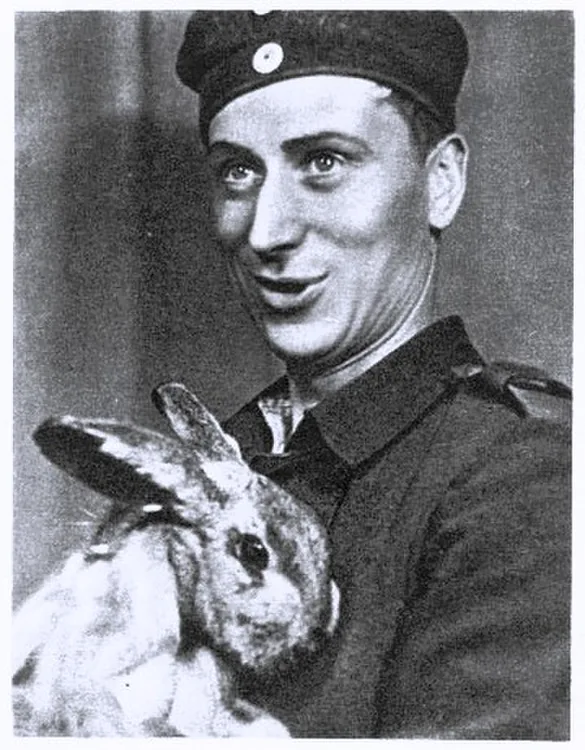
Günter Neumann (1913–1972), comedian from Germany – satire, cabaret
Verified Unclaimed
Germany

Günter Neumann

Günter Neumann, born in Berlin on March 19, 1913, was a German entertainer with a multifaceted career. He worked as a singer, composer, lyricist, cabaretist, and screenwriter. His versatility extended to journalism and direction, making him a significant figure in German entertainment. He died in Munich in 1972 at the age of 59. Neumann’s early career began at the age of 16 when he was noticed by the Nachwuchsstudio of the Berlin 'Kabarett der Komiker' in 1929. He studied at the Berlin Music School, with Professor Thiessen as his teacher, and frequently accompanied programs for Werner Fincks 'Katakombe' and Valeska Gerts 'Kohlkopp' as a pianist. During the 1930s, he contributed to program design, creating texts and chansons, and worked on radio. He presented the cabaret revue 'Gib ihm heraus' at the KadeKo in 1937, and later created the revue 'Liebe, Lenz und Tingel-Tangel', which was banned by the Nazis in May 1935. He married cabaret artist Tatjana Sais in 1938. After World War II, Neumann quickly re-established himself as a prominent figure in Berlin’s entertainment scene. He returned to Berlin in 1946 and began composing and writing for cabaret again. His most successful cabaret revues included 'Alles Theater' (1947) and 'Schwarzer Jahrmarkt' (1948), which was adapted into the satirical film 'Berliner Ballade' (1948). During the Berlin Blockade, he published the satirical magazine 'Insulaner' from 1948 to 1949, which subsequently evolved into the popular radio series 'Günter Neumann und seine Insulaner,' running from 1948 to 1961 with nearly 150 episodes. (1958), The Beautiful Adventure (1959), The Haunted Castle (1960), Snow White and the Seven Jugglers (1962), and Glorious Times at the Spessart Inn (1967). He translated the musical 'Kiss Me, Kate' into German as 'Küss mich Kätchen'. Neumann was awarded the Berlin Freedom Bell by Ernst Reuter and received the Silver Laurel of the David O. Selznick Prize, the Berlin Art Prize, and the Paul Lincke Ring. The Günter-Neumann-Stiftung was established in 1981/83 to support cabaret and revue theater.

Günther Lüders (1905–1975), comedian from Germany
Verified Unclaimed
Germany

Günther Lüders

Günther Lüders, born March 5, 1905, in Lübeck, was a German actor with a career spanning over four decades. He came from a family involved in shipping; his grandfather, Johannes Meno Wilhelm Lüders, co-founded the Lüders & Stange shipping company in 1865, and his father, Carl, continued as a shipowner and merchant. After attending the Katharineum until reaching maturity and completing a commercial apprenticeship from 1921 to 1923, he pursued acting studies with Karl Heidmann. Early in his career, Lüders joined the Wanderbühne of the Städtebund-Theater in 1923, performing in cities like Lübeck, Dessau, and Frankfurt am Main throughout the 1920s. From 1934 onwards, he was engaged at Berlin theaters, and his film debut came that same year in Die Insel . His work included roles in notable films such as Drei Männer im Schnee (1951), Das sündige Dorf (1954), and Das Wirtshaus im Spessart (1958). He also ventured into directing, with films like Wenn wir alle Engel wären (1956) and Ihr 106. Geburtstag (1958). A brief imprisonment in the Esterwegen concentration camp in 1935 resulted from his critical views on the Nazi regime. Following World War II, Lüders continued to work extensively in theater, including engagements at theaters in Flensburg, Lübeck, and Hamburg. From 1947 to 1954, he was a prominent member of the Schauspielhaus Düsseldorf under Gustaf Gründgens. He was recognized as one of the most sought-after theater actors of his time. In addition to his stage and film work, he participated in over one hundred radio plays from 1946 onwards, often taking leading roles. Lüders also contributed texts for Die Rückblende in the 1960s and was known for his performances of works by poets such as Joachim Ringelnatz, Christian Morgenstern, and Wilhelm Busch. He resided in Urfeld am Walchensee from 1954 until his death on March 1, 1975, in Düsseldorf, shortly before his 70th birthday. His contributions to German entertainment were acknowledged with the German Kleinkunstpreis in 1974.

Guy Bedos (1934–2020), comedian from France – satire
Verified Unclaimed
France

Guy Bedos

Guy Bedos, born June 15, 1934, in Algiers, Algeria, died on May 28, 2020, in Paris. He was a multifaceted artist, identified as a Pied-Noir, a term for French people in Algeria, and known for his work as a screenwriter, stand-up comedian, and actor. Born while Algeria was a French department, his family included Alfred Bedos, his father who worked as a health visitor, and Hildeberte Verdier, his mother. His childhood was marked by instability, involving moves between homes and boarding schools, including a Catholic high school in Bone and lycée Bugeaud in Algiers. Bedos's career began in the early 1950s as part of the 'Bande du Conservatoire' group of comedians. He arrived in Paris with his family in June 1949 and made his first film appearance in Futures Vedettes in 1954. To avoid military service during the Algerian War, he staged a hunger strike and was deemed mentally unfit. He debuted at the Bobino music hall in 1965 alongside Barbara, and later collaborated with Michel Boujenah and Smaïn on Coup de soleil à l'Olympia . Bedos also staged plays such as ‘Arlequin poli par l’amour’ at age seventeen and a half. Bedos is particularly remembered for his recurring role as Simon, a doctor, in Un éléphant ça trompe énormément (1976) and Nous irons tous au paradis (1977), the latter of which brought him significant recognition. He also appeared in Les Aventures de Bidibi et Banban , playing Bidibi, and contributed to the satirical weekly Siné Hebdo , supporting Siné after he was fired from Charlie Hebdo . Politically, he supported François Mitterrand and moved to Hénin-Beaumont in 2012 to support Jean-Luc Mélenchon. Towards the end of his life, he was diagnosed with Alzheimer's disease.

Guy Grosso (1933–2001), comedian from France
Verified Unclaimed
France

Guy Grosso

He performed under the pseudonym Guy Grosso throughout his career. From an early age, he demonstrated an interest in humor and theater, influenced by French comedies. His initial forays into performance began in the 1950s with roles in boulevard theater productions, including works by Georges Feydeau and Marc Camoletti; one notable early appearance was in 'Boeing Boeing' in 1960, where his comedic timing was recognized. Grosso’s career path shifted significantly following a meeting with director André Hunebelle. Grosso achieved considerable prominence through his association with Michel Modo, forming the comedy duo Grosso and Modo. This partnership led to significant roles in several popular film series. He appeared in the 'Three Musketeers' trilogy (1961) and 'Le Capitan', both directed by Hunebelle. Perhaps his most recognizable role was as Lucien Fougasse in the 'Gendarmes' series, which ran from 1964 to 1982 alongside Louis de Funès. Other film credits included a role as a waiter in 'Le Grand Restaurant' (1966) and portraying a loyal sidekick in 'Oscar' (1967). He also featured in 'L'Homme Orchestre' (1970), demonstrating his versatility. Throughout his career, Grosso continued to perform on stage, appearing in productions such as 'La Puce à l'oreille' (1970) and 'Un fil à la patte' (1980). Louis de Funès served as a major influence, with Grosso admiring his comedic energy and timing. He also drew inspiration from the works of Sacha Guitry, Robert Dhéry, Francis Blanche, Marcel Pagnol, and Georges Courteline. Guy Grosso continued acting until the late 1990s before his death on February 14, 2001.

Guy Jodoin, comedian from Canada
Verified Unclaimed
Canada

Guy Jodoin

Guy Jodoin is a Quebec comedian and television host, born December 27, 1966, in Sherbrooke, Quebec. His career began in children's television, demonstrating an early interest in performance. Prior to pursuing theatre, he earned a degree in pure sciences. He then studied theatre at Collège Lionel-Groulx, graduating top of his class in 1989. This foundation in both science and the arts has likely influenced his diverse roles throughout his career. Jodoin is widely recognized for his portrayal of Capitaine Charles Patenaude in the Dans une galaxie près de chez vous series and films, as well as the summer show Sucré Salé , which he hosted for twelve years until 2014. He also played Victor-Hugo Lamothe in the 2022 film Niagara , and has appeared in other films including Mon ami Walid , Tight Lettuce (Tissé serré) , and Contre toute espérance . His acting credits extend to television series such as Histoires de filles and the Quebec adaptation of Brooklyn Nine-Nine , titled Escouade 99 , which premiered in 2020. He also played a role in the play Ma grosse chum de fille in 1998. Beyond acting, Jodoin has demonstrated versatility as a television host, notably leading the TVA game show Le Tricheur from 2012 to 2026. In 2022, he received a Gémeaux Award for best male lead in Alertes . Looking ahead, he is scheduled to co-host the third season of Sortez-moi d’ici with Rosalie Vaillancourt in 2025 and will participate in the fourth season of LOL: Qui rira le dernier? in 2026. He is also slated to appear in Fear Factor Célébrités in 2026, continuing his engagement with Quebec television and entertainment.

Verified Unclaimed
United States

George LeMaire

George LeMaire was an American vaudeville comic who acted in several motion pictures and took on directing and producing duties for Pathé. Recognized as an experienced straight man, he teamed up in comedy acts with Eddie Cantor, Joe Phillips and Louis Simon.

Verified Unclaimed
Bulgaria

Georgi Kaloyanchev

Georgi Kaloyanchev, known to Bulgarian audiences as Kalata, was one of the best-loved comic actors in Bulgarian theatre and film. He was born in Burgas on 13 January 1925 and, after his military service, enrolled in the theatre school in Sofia, where he studied acting under Professor Stefan Sarchadzhiev alongside Katya Zehireva, Kosta Tsonev and Katya Dineva. He graduated in 1952. His talent was noticed early. In 1951 the Russian director Boris Babochkin, who was staging plays at the National Theatre, saw how Kaloyanchev mixed humour and drama in Ostrovsky's The Storm, and the young actor joined the National Theatre company straight after his studies. In 1956 he moved to the newly founded Aleko Konstantinov Satirical Theatre, the stage most closely linked with his name. There he played Comrade Velosipedkin in Mayakovsky's The Bathhouse, Ostap Bender in The Twelve Chairs, Prisypkin in The Bedbug and Ivancho Yotata in Vazov's Uncles, among many others. His handprints are on the Wall of Fame outside Theatre 199. On screen he made his debut in Morning over the Homeland (1951) and went on to appear in more than fifty films. Bulgarian viewers remember him as the weightlifter in Specialist in Everything (1962), the inspector in The Inspector and the Night (1963), Jesse James in Jesse James versus Lokum Shekerov (1966), the conjurer in The Longest Night (1969), Rikshata in The Attached Balloon (1969) and the title role in Aesop (1971). He also played Giordano Bruno in the Italian production Galileo Galilei (1969) and appeared in Nako, Dako, Tsako (1974), Bon Chance, Inspector! (1984) and Rhapsody in White (2002). His best-known late role was Bay Ganyo, the famous character of Aleko Konstantinov, in Ivan Nichev's Bay Ganyo Goes to Europe (1990), which became one of the most watched Bulgarian films of the early 1990s. A follow-up script was written for him, and when the sequel, Ganyo Balkanski Returns from Europe, was finally made in 2006, Nichev added a new character, the spirit of Bay Ganyo, so that Kaloyanchev could still appear in it. Kaloyanchev received many honours, including the Dimitrov Prize for theatre (1959), the titles Honoured Artist (1963) and People's Artist (1966), the Askeer award for lifetime achievement in 1995 and the Union of Bulgarian Actors' lifetime achievement award in 2006. He was made an honorary citizen of Burgas in 1995. His autobiographical book, I'm Alive, I'm Yours!, written down by Katya Vodenicharova, came out in 1998. He died in Sofia on 18 December 2012, aged 87, and is buried in the Central Sofia Cemetery. A street in the Dragalevtsi district of Sofia bears his name.

Verified Unclaimed
Bulgaria

Georgi Partsalev

Georgi Partsalev was a Bulgarian stage and film actor who spent almost his whole career in comic roles and became one of the best-remembered faces of Bulgarian comedy. He was born in the town of Levski on 16 June 1925. After finishing secondary school in Pleven he went on to study medicine at Sofia University before the stage took over his life. In the mid-1950s he worked at the Labour Service Theatre (1954) and the Construction Troops Theatre (1955), and in 1956 he joined the Satirical Theatre in Sofia, where he stayed for the rest of his career. His roles there show the range of the company's repertoire: Optimistenko in Mayakovsky's The Bathhouse, Kislyarski in The Twelve Chairs, several parts in Mayakovsky's The Bedbug, Hadzhi Smion in Ivan Vazov's Uncles, Osip in Gogol's The Government Inspector, Mihal in Mihal Mishkoed by Sava Dobroplodni and Ivan Gamasha in Yordan Radichkov's Commotion. He also took part in the touring variety and satire concerts of the late 1950s and the 1960s, which made him known far beyond the capital. His first film role came in 1958 in Favourite No. 13. Over the next three decades he became a fixture of Bulgarian film comedy, with memorable parts in The Attached Balloon (1967), Whale (1970), The Five from Moby Dick (1970), With Children at the Seaside (1972), Poor Man's Summer (1973), My Father the Painter (1974), Two Dioptres of Far-Sightedness (1976) and The Prince's Thirteenth Bride (1987). He had long hoped to play Don Quixote, a role he never got to perform. Partsalev was named Honoured Artist in 1969 and People's Artist in 1983, and he received the Order of Saints Cyril and Methodius, first class, and the Order of the People's Republic of Bulgaria, first class (1985). His performance as Metodi Rashkov in Poor Man's Summer won the best actor award at the 25th Working People's Film Festival in Czechoslovakia in 1974. He was a member of the Union of Bulgarian Film Makers from 1974. Georgi Partsalev died in Sofia on 31 October 1989, at the age of 64.

Verified Unclaimed
Bulgaria

Gerasim Georgiev-Gero

Gerasim Georgiev, known simply as Gero, is a Bulgarian film and stage actor, comedian and television host. He was born in Ruse on 10 July 1974 and graduated in 1999 from the National Academy for Theatre and Film Arts (NATFIZ) in Sofia, in the class of Dimitrina Gyurova. His early stage years took him to the theatres of Gabrovo, Ruse, Kardzhali and Smolyan. He later belonged to the companies of the Little City Theatre Off the Channel, the Satirical Theatre and the Youth Theatre in Sofia, and he has appeared on the stages of the National Theatre, the Army Theatre, Theatre 199 and the theatres of Plovdiv, Sliven, Haskovo and Ruse. He has also taken part in productions of the opera houses of Varna, Stara Zagora and Burgas. Television made him a household name. He hosted the satirical programme Gorchivo on MSat and bTV and later Gospodari na Efira (Masters of the Airwaves) on Nova Television, and he was part of the team of the sketch show Palna Ludnitsa (Total Madhouse). In 2016 he competed in the fourth season of Your Face Sounds Familiar (Kato Dve Kapki Voda), and from 2021 he has hosted the show, first together with Vasil Vasilev-Zueka and later with Dimitar Rachkov. In 2019 he was one of the panel of detectives in the first season of The Masked Singer on Nova, and he hosted its second and third seasons in 2020 and 2021, alongside Vasil Vasilev-Zueka and Krasi Radkov respectively. In 2018 he played the lead, police officer Plamen Plamenov, known as Patso, in Nova's comedy series Politsaite ot Kraya na Grada (The Cops from the Edge of Town). Gero has built a steady film career as well. He has worked with director Stefan Komandarev on Directions (2017), In the Circle (2019) and Blaga's Lessons (2023), and his other films include Holidaymakers (2016), Like for the Last Time (2020), German Lessons (2020), The Naked Truth about the Zhiguli Band (2021), in which he played the drummer Puhi, and The Good Driver (2022). On television he appeared in the series The Portal (2021) and Guilt (2023–2024), and in 2026 he played Borislav Andreev in Rain Leaves Traces by Kristina Grozeva and Petar Valchanov. In 2020 he also tried music, recording the song Lya-lya as a duet with singer and actress Lyudmila Slaneva as part of the Singing Actors project.