Chuck - GiggleTime cartoon comedian telling jokes
GiggleTime for Android
Free on Google Play
Get the app
GiggleTime - jokes, comedians and comedy shows GiggleTime
Menu
Go Premium Submit a Joke Comedians Comedy shows Most followed comedians About FAQs Contact Add a comedian
Get the app
Follow us

Legal
Privacy Policy Terms of Service Cookie Policy Refund and Cancellation Policy Attributions
Login
Language
Categories
Settings
Language English English
Safe Mode
Random Jokes Autoplay
Notifications
Global Talent Directory

Comedians Directory

Browse comedian profiles, biographical summaries, country of origin, and official links.

Starts with C Verified Clear all
Showing 49-60 of 127 comedians
Verified Unclaimed
Sweden

Christian Åkesson

1 120 followers

Christian Åkesson is a Swedish actor, comedian, program host, and scriptwriter. Born on March 7, 1986, he grew up in Staffanstorp. He is a comedic actor, imitator, and singer with fifteen years of experience in comedy, both performing and writing. His career began as a child actor at Malmö Opera and in Lund's spex world, and later transitioned from a career as an officer to comedy. Åkesson’s professional career began in 2011 with sketch work in the Ana Gina Show . He gained recognition through his appearances in the TV show "Partaj" on Kanal 5, where he is known for parodies of Andreas Isaksson and Jimmie Åkesson. Between 2012 and 2015, he was part of eight seasons of the humor program Partaj , and also performed in Partajs humorshow . He appeared in Ballar av stål in 2012 as the character Bemanningsmannen, and later played in the farce Kuta och Kör . In 2021, he starred as Trazan in the musical Trazan och Banarne , demonstrating his versatility as a performer. Beyond television, Åkesson co-created and stars in the comedy series Kurt & Lang , and also appears in the children's program Mattemacken . He works as a creator on social media, where he creates short videos portraying socially conscious men. These videos often feature titles like 'Climate battle on Södermalm’ and ‘Södermalm residents are planning a vacation,’ and include sketches predicting a phase of 'post-woke' and depicting conversations about veganism. His comedy style involves exaggerating idealism and making fun of it, frequently satirizing aspects of the 'woke' movement. He portrays multiple characters within these videos, including acquaintances. Lokko&Robson Reklambyrå praised him for being sharp and commanding attention, while Annie Lingstrand from Telia Consumer Services commended his humor and professionalism. He is frequently booked as a moderator and host for conferences, debates, panels, and kick-offs, and is available for corporate events and collaborations. Christian Åkesson has received numerous awards throughout his career. He has won the Humorpriset award twice (as an actor) and is a three-time recipient of the Kristallen award. He studied at Spykens teaterlinje and Medieinstitutet in Stockholm, developing skills as an actor, creator, and screenwriter on the revue stage. He has experience both in front of and behind the camera, and is known for having appeared in over 100 distinctive characters in parody shows.

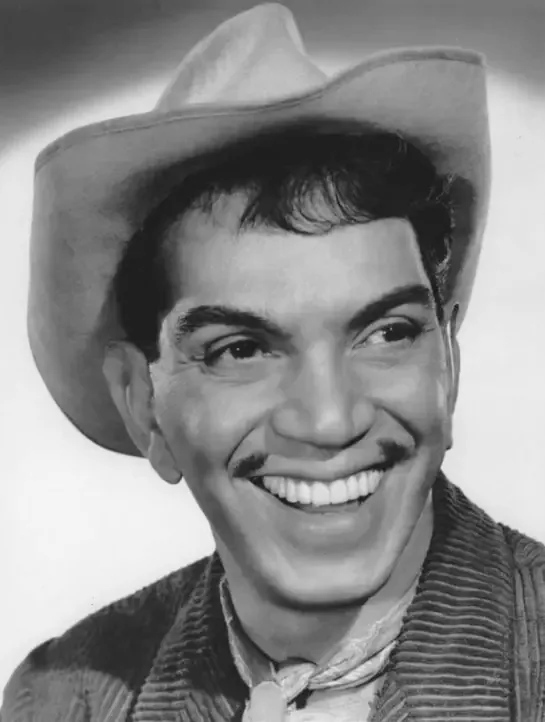
Cantinflas (1911–1993), comedian from Mexico – physical comedy
Verified Unclaimed
Mexico

Cantinflas

Mario Fortino Alfonso Moreno Reyes, known professionally as Cantinflas, was born in Mexico City on August 12, 1911. He died on April 20, 1993. As a Mexican comedian, actor, filmmaker, mime, producer, screenwriter, and comedian, he is considered one of the most widely accomplished Mexican comedians. His parents were Pedro Moreno Esquivel and María de la Soledad Reyes Guízar; he was the sixth of fourteen children, with eight surviving. Before establishing himself as an entertainer, Cantinflas explored other paths, considering careers in medicine and boxing, and held a variety of jobs including shoemaker's assistant, bootblack, messenger, postman, taxi driver, billiard hall employee, boxer, and even briefly enlisted in the Mexican army in 1928. Cantinflas’s comedic style was distinctive. He initially attempted to imitate Al Jolson but ultimately developed his own persona as a slum dweller. His humor incorporates Mexican linguistic features like intonation, vocabulary, and syntax; he often portrayed impoverished farmers or peasants. The nickname 'Cantinflas' originated during his early performances in travelling tents, intended to conceal his entertainment career from his parents. He drew inspiration from comedian Manuel Medel, partnering with him early in his career and starring in three films together. His unique humor led to the creation of new words and phrases, such as 'ser un cantinflas,' meaning to be like Cantinflas. Cantinflas achieved international fame through his films, including work in Hollywood, California, USA. He co-starred with David Niven in Around the World in 80 Days (1950), a role that earned him a Golden Globe Award for Best Actor – Motion Picture Musical or Comedy. Charlie Chaplin considered him the best comedian alive, and Charles Chaplin later considered him the best living comedian. Cantinflas helped usher in Mexico's golden era of cinema and contributed significantly to its development. He also served as president of the Asociación Nacional de Actores (ANDA) and first secretary general of the Sindicato de Trabajadores de la Producción Cinematográfica (STPC), demonstrating his involvement in Mexican politics and business. His character is associated with Mexican national identity, and he opposed the practice of one-party government controlling unions (charrismo sindical). A film about his arrival in Hollywood was released in 2014.

Carl Ballantine (1917–2009), comedian from the United States
Verified Unclaimed
United States

Carl Ballantine

Carl Ballantine, born in the United States, pursued careers as a magician, comic performer and actor. He promoted himself under monikers such as “The Great Ballantine,” “The Amazing Ballantine,” and “Ballantine: The World’s Greatest Magician.” In his vaudeville‑inspired act he presented obviously flawed or deliberately transparent illusion routines that regularly backfired, prompting him to feign exaggerated disappointment with a wry grin. Historians attribute the invention of comedy magic to him, and his style has left a mark on both stand‑up comedians and stage magicians.

Carlo Buccirosso, comedian from Italy
Verified Unclaimed
Italy

Carlo Buccirosso

Carlo Buccirosso, born in Naples on July 7, 1954, is an Italian actor, theatre director, and playwright. He currently resides in Naples. After high school, he studied law but did not finish his degree; he also completed eleven months of military service in Novara in 1978. Buccirosso began working with Tato Russo in 1978, marking the start of his professional career in the performing arts. Buccirosso is particularly known for his comedic roles in films directed by Vincenzo Salemme and Carlo Vanzina. He frequently portrays a stereotypical lower middle-class Neapolitan man in these films, often collaborating with Salemme, Maurizio Casagrande, Nando Paone, and Biagio Izzo in both theatrical productions and films. These collaborations include works such as ...e fuori nevica! , L'amico del cuore , and Premiata pasticceria Bellavista . Buccirosso also co-authored the theatrical farce Il miracolo di don Ciccillo . Vincenzo Salemme recognized and valued him as a character actor, contributing to their long-standing professional relationship. His work has garnered significant recognition. He received critical praise and a David di Donatello nomination for his role as Paolo Cirino Pomicino in Il Divo (2008), and later appeared in Paolo Sorrentino's The Great Beauty (2013). Buccirosso won a Nastro d'Argento for Best Supporting Actor for Song'e Napule (2013) in 2014. He then received a David di Donatello for Best Supporting Actor for The Legendary Giulia and Other Miracles (2015), also known as 'Noi e la Giulia', in 2015. His extensive filmography includes appearances in titles like L'ultima scena , Amami , Febbre da cavallo - La mandrakata , Le barzellette , Guardiani delle nuvole , Eccezzziunale veramente - Capitolo secondo... me , and more recently, Mamma o papà? and Il giorno più bello . He also appears in the ongoing TV series Imma Tataranni - Sostituto procuratore (2019-2025) and was featured in the music video for Clementino and Fabri Fibra's song 'Chi vuol essere milionario?' in 2019. Buccirosso has also played Peppino Esposito in the TV series Un ciclone in famiglia (2006-2008). While generally private about his personal life, Buccirosso has stated he never married or had children. He jokingly claimed to have always acted to impress a woman he never revealed. He worked often in Italian film and television, showing he could play many roles and helping to make Italian comedy movies.

Carlo Verdone, comedian from Italy
Verified Unclaimed
Italy

Carlo Verdone

Carlo Verdone is an Italian actor, comedian, director, and screenwriter, born in Rome on November 17, 1950. His family background includes a father, Mario Verdone, who was a professor of film history and a critic, and a mother, Rossana Schiavina, who was a professor of literature. His paternal grandfather, Oreste, was a chemist from Pozzuoli (Naples). He attended the Collegio Nazareno in Rome, where he met Christian De Sica, and later studied at the Liceo classico in Rome. Verdone earned degrees in Modern Literature from Sapienza University of Rome in 1976-1977, with a thesis on Italian silent film, and in Film Direction from the Centro Sperimentale di Cinematografia in 1974. Verdone started his career with his comic style in the 1970s. He appeared in advertisements for the Carosello show and debuted on television in 1977 in the variety show Non stop . He introduced his characters on television in 1978 in the comedy series Non Stop . Sergio Leone gave him his film debut, and mentored him in filmmaking techniques. He made amateur short films from a young age, including Poesia solare (1969), Allegoria di primavera (1971), and Elegia notturna (1973). His directorial debut was Un sacco bello (1980), followed by Fun Is Beautiful (1980) where he played three characters. He co-wrote Journey with Papà with Sergio Leone, and Troppo forte with Verdone and Leone. Verdone’s work includes the highly regarded Bianco, rosso e Verdone (1981), produced by Sergio Leone and featuring Elena Fabrizi, and its soundtrack composed by Ennio Morricone. He directed Talcum Powder (1982) which won multiple David di Donatello awards, and co-wrote it with Enrico Oldoini. Since the 1990s, his work has explored more serious subjects. He wrote the book Fatti Coatti in 1999. Verdone starred in the Manual of Love film series (2005, 2007, 2011) and appeared in Paolo Sorrentino's The Great Beauty (2013). He directed Blessed Madness (2018), co-writing it with Nicola Guaglianone and Menotti. He has received numerous awards including nine David di Donatello awards, four Globi d’oro awards, eleven Nastri d'argento awards, and two Premi Flaiano awards. In 2017, he was awarded an honorary doctorate in Cultural Heritage and Territory from the University of Rome Tor Vergata. He recently starred in L'Abbiamo Fatta Grossa (2016), where he plays Arturo Merlino, a modest private investigator, alongside Antonio Albanese as Yuri Pelagatti.

Carlos Faemino, comedian from Spain
Verified Unclaimed
Spain

Carlos Faemino

Born Juan Carlos Arroyo Urbina and known as Carlos Faemino, he works as a humorist and writer, integrating the comic duo Faemino and Cassado. He also serves as a graphic designer, illustrator, musician, painter and publicist.

Carlos Michelena, comedian from Ecuador – satire, political comedy
Verified Unclaimed
Ecuador

Carlos Michelena

Carlos Alberto Michelena Soria, known as "El Miche", is an Ecuadorian actor, comedian, cartoonist and humorist, considered one of the most representative figures of street theatre in Ecuador. His long career combines political satire, social humour and criticism of inequality. He was born in Quito on 5 January 1954 into a family of limited means: his father was a shoemaker and his mother sold sweets and newspapers on the street, and as a child he helped the family by selling sweets himself. He went to primary school at the Colegio Simón Bolívar but did not finish secondary school. He became interested in theatre at ten, miming to records at a neighbourhood club in El Dorado, Quito. At fifteen, encouraged by his mother, he began attending the drama school of the Casa de la Cultura Ecuatoriana as an observer, and then worked as a props assistant for the Teatro Ensayo company, where he got his first role, in Huasipungo, based on Jorge Icaza's novel. He started his acting career at the Casa de la Cultura's theatre school at eighteen, trained under the director Antonio Ordóñez, and acted with Teatro Ensayo in plays such as Boletín y elegía de las mitas, Dos viejos pánicos and El médico a palos. He later joined the Ollantay company of the National Polytechnic School and the group Malayerba, and directed Teatro de la Calle, which took plays to squares and parks. Since the 1980s his stage has been El Ejido park in Quito, where, with his face painted white and in costumes he makes himself, he plays characters drawn from everyday life, from neighbours, workers and street sellers to politicians and the powerful, using irony to make audiences think. The press has described El Miche as a cross between a political jester and a popular chronicler. He has also worked in television, radio and online. In 2011 he opened a circus show, El circo del Miche, which ran for three weeks at the Carpa Teatro, and in 2019 he presented El toque del Miche at the Teatro Centro de Arte in Guayaquil. He prefers open spaces, which let him improvise on what happens around him, and avoids double-entendre humour. In 2003 the Casa de la Cultura Ecuatoriana awarded him its Order of Artistic Merit.

Carlos Núñez Cortés, comedian from Argentina
Verified Unclaimed
Argentina

Carlos Núñez Cortés

Carlos Núñez Cortés, known affectionately as 'Carlitos,' is a multifaceted Argentine artist born in Buenos Aires on October 15, 1942. His parents were Anselmo Núñez Cortés and Julia Alazdraqui; he has two siblings, Eduardo Enrique and Mónica. With paternal grandparents of Spanish origin and maternal grandparents from Turkey, his family moved to Posadas (Misiones) when he was six, where he lived until age thirteen. This early experience fostered a deep interest in nature and wildlife. He began piano lessons at the same age and continued studying with Roberto Saccente, giving his first concerts at fourteen while independently studying composition and harmony. Núñez Cortés’s professional journey is closely linked to the celebrated comedy group Les Luthiers. After participating in student choirs at the Faculty of Exact Sciences and Faculty of Engineering, he was part of I Musicisti, which later split into Les Luthiers and I Musicisti. He joined Les Luthiers around late 1968 and remained a member from 1969 until his retirement in 2017. Within the group, he is considered a versatile member with musical, acting, and composing skills. He frequently served as the lead vocalist, often carrying the melody in choral pieces because of his high vocal range, and performed pieces like 'Voglio Entrare' and serenatas. He also contributed significantly to their repertoire by composing numerous pieces, including 'Las Majas', 'Teorema de Thales', 'San Ictícola', 'Epopeya de Edipo', 'Calypso de las píldoras', and 'Kathy, la reina del saloon'. He created new instruments for the group, such as the Bunsen flute and glamocot, and handled vocal arrangements, exemplified by 'Conozca el Interior'. His comedic acting skills are recognized and influenced by Charles Chaplin. Beyond his work with Les Luthiers, Núñez Cortés has demonstrated a wide range of interests and expertise. He earned a degree in biological chemistry from the University of Buenos Aires (UBA) in 1967 and worked as a chemist until 1972. He is an expert malacologist, possessing a large collection of seashells, and co-authored '100 Caracoles Argentinos' with naturalist Tito Narosky. He has also authored three books in Spanish: 'Los juegos de Mastropiero', '100 caracoles argentinos', and 'Memorias de un luthier'. He is currently a columnist for the podcast 'La Hora de la Nostalgia'. Núñez Cortés’s diverse talents and contributions to Argentine culture, spanning music, comedy, science, and literature, solidify his place as a unique and enduring figure.

Carmen Salinas (1939–2021), comedian from Mexico – impressions
Verified Unclaimed
Mexico

Carmen Salinas

Carmen Salinas Lozano, known affectionately as Carmelita Salinas, was a multifaceted Mexican entertainer and politician. Born in Torreón, Coahuila, Mexico on October 5, 1939, she began her career early, singing and performing voice imitations on a radio program in Monterrey at age ten. Discovered by film producer Carlos Amador Martínez in 1953, she made her film debut on October 28 of that year at the Ópera cinema. Her television debut followed in 1964, appearing in the telenovela 'La vecindad'. Throughout her career, she worked across numerous media, demonstrating versatility as an actress, impressionist, comedian, and theatre entrepreneur. Salinas’s prolific career spanned decades and encompassed a wide range of roles. She appeared in 115 films, beginning with 'La vida inútil de Pito Pérez' in 1970, and frequently collaborated with Adalberto Martínez ‘Resortes’ during the 1970s and 1980s. Her extensive work also included 70 theater productions, 23 telenovelas, and appearances in nine television series such as 'La vecindad', 'La frontera', and 'El chofer'. She toured with the musical 'Aventurera,' presenting and producing the play in 1997. Notably, she shared the screen with Denzel Washington in the film 'Man on Fire'. Her son, Pedro Plascencia Salinas, contributed musically to projects for Necaxa and Televisa. Beyond entertainment, Carmen Salinas was involved in politics. Declaring herself a member of the Institutional Revolutionary Party (PRI) since childhood, she served as a deputy in the Chamber of Deputies from 2015 to 2018. During her time as a federal deputy, she participated in the Gender Equality, Radio and Television, and Health Commissions. She married Pedro Plascencia Ramírez in 1956, and they had two children: Pedro Plascencia Salinas and María Eugenia Plascencia. Sadly, Pedro Plascencia Salinas died in 1994 due to cancer. Carmen Salinas Lozano passed away in Cuauhtémoc, Ciudad de México on December 9, 2021, leaving behind a significant legacy in Mexican entertainment and public service.