GiggleTime GiggleTime
Menu
Go Premium Submit a Joke Comedians About FAQs Contact

Legal
Privacy Policy Terms of Service Cookie Policy Refund and Cancellation Policy Attributions
Login
Language
Categories
Settings
Language English
Safe Mode
Random Jokes Autoplay
Notifications
Global Talent Directory

Comedians from Germany

The comedian directory of Germany — profiles, bios, photos, and social links for comedians from Germany.

Add a comedian
Reset
188 comedians
Elke Winkens, comedian from Germany
Verified Unclaimed
Germany

Elke Winkens

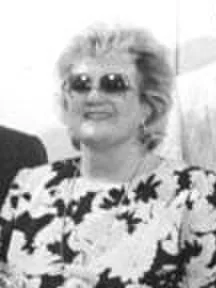
Elke Winkens, geborene Fischer, ist eine österreichisch-deutsche Schauspielerin. Sie wuchs im deutschen Ort Ratheim, einem Stadtteil von Hückelhoven, auf. Wegen des Berufs ihres Vaters zog die Familie zunächst in die Niederlande und anschließend nach Belgien; für eine Weile lebte sie zudem in Afrika. Mit sechs Jahren begann sie Ballettunterricht, und im Alter von neun trat sie erstmals auf einer Bühne auf. Anschließend war sie in zahlreichen Tanz‑ und Theaterproduktionen zu sehen. Von 1978 bis 1986 war sie als professionelle Turnerin aktiv und gewann mehrere Titel im Bodenturnen.

Helga Hahnemann, comedian from Germany
Verified Unclaimed
Germany

Helga Hahnemann

Helga Hahnemann, a German entertainer, cabaret artist, singer, and actress, was born in Berlin-Wilhelmsruh on September 8, 1937, and died in Berlin-Buch on November 20, 1991. She was the youngest of four children. Her talent for comedy was discovered while she was still at school. From 1956 to 1959, she studied at the Ernst Busch Academy of Dramatic Arts in Berlin-Niederschöneweide, which she attended as the Schauspielschule. This training prepared her for a career in performance. Hahnemann began her professional life with a stage debut in 1959 at the Leipziger Pfeffermühle cabaret ensemble. She returned to Berlin around 1961 or 1962, focusing on cabaret and comedy. After 1962, she appeared frequently on television and radio. From 1969, she became a permanent member of the German Television Broadcasting (Deutscher Fernsehfunk) ensemble. She was known for her appearances on the satirical comedy show 'Tele-BZ,' where she performed alongside Ingeborg Krabbe, Ingeborg Naß, Hans-Joachim Hanisch, and Sergio Günther, appearing in over 30 episodes. Her work on 'Tele-BZ' earned her the Art Prize of the Free German Trade Union Association (FDGB) of the GDR. Hahnemann achieved significant popularity in East Germany by the late 1970s, known for her “Berlin Schnauze,” or Berlin bluntness. She hosted 'Helgas Top(p)-Musike' on Berliner Rundfunk from that time, and had hits including 'Wo ist mein Jeld bloß geblieben,' 'Jetzt kommt dein Süßer,' and 'U-Bahn-Beat.' She also regularly presented the variety show 'Ein Kessel Buntes' and played roles such as Erna Mischke in the television drama series Maxe Baumann from 1976 to 1980, and the stepmother Marianne in the 1976 fairy tale film Aschenbrödel . She provided voice-over work for Yvonne Jensen in three of the Olsen Gang movies. Hahnemann received the Art Prize of the GDR in 1982 and the National Prize of the GDR for Art and Literature III. Class in 1987. She was diagnosed with lung cancer in November 1991, shortly before her death at age 54. In her memory, the 'Goldene Henne' prize was established in 1995, and the community center in Schöneiche, where she lived, was named Helga-Hahnemann-Haus.

Jakob Geis, comedian from Germany
Verified Unclaimed
Germany

Jakob Geis

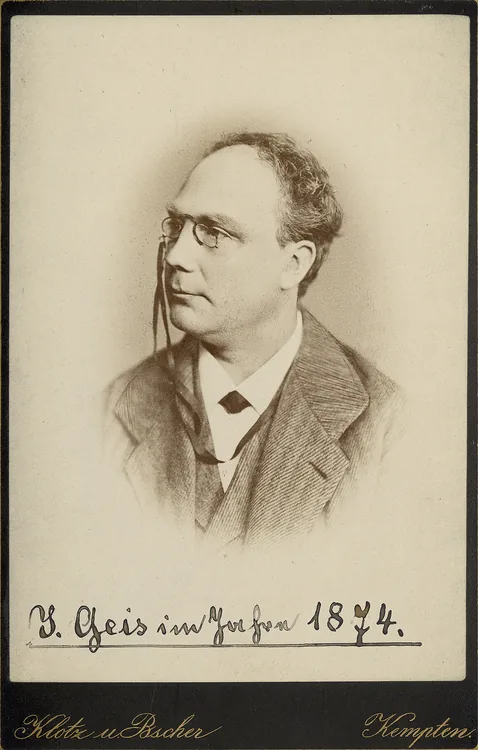
Jakob Geis, also known as Papa Geis, was a German performer, folksinger, and musical director. Born in Athens on December 27, 1840, he moved to Munich with his family when he was six years old. His father, Nikolaus Geis, held a position as a court official at the Greek royal court. Geis initially intended to become a Catholic priest, but abandoned theological studies at age 26 to pursue a stage career. He died in Munich on March 3, 1908, at the age of 67 and was buried at the Westfriedhof. Geis began his performance career in Vienna, appearing on stage for the first time at age 26. From 1869, he regularly performed as a humorist at the Hotel Oberpollinger. He briefly joined Anderl Welsch's ensemble and, in November 1875, became director of his own singing group, which included Christian Seidenbusch and Willy Schäffer, known for their female impersonations. His stage name, Papa Geis, translates to 'Daddy Geis', and he often wore black clothing resembling a Catholic priest, sometimes being greeted as 'Father'. He achieved significant success with his caricature of a forgetful corps student in the costume performance "Das bemooste Haupt." Around 1900, he was considered the most popular folk singer in Munich. Geis’s comedic style involved portraying characters with elaborate life stories and frequently featured ‘ordinary people’ like servants and coachmen. He founded his own musical and comedic group called Gesellschaft Geis in 1878. Paul Damas composed music for his couplets, later succeeded by Georg Huber. His cuplés are considered a reflection of Munich's cultural history. In 1902, he recorded five titles for the Gramophone Co., including 'Kalauer-Couplet', 'Daradl-Dadl,' and a travestie of the 'Bachstelzenlied' (Tit-willow). He wrote an autobiography, Jakob Geis: Selbstbiographie, in 1905. Well-known couplets included 'Schimpfen tut a jeder', 'Verlassen bin i', 'Drah di Madl, drah di', and 'morgen kommt der Mahdi'. His legacy influenced subsequent generations of folk singers, and his grandchildren included a dramatist and director.

Karl Valentin, comedian from Germany
Verified Unclaimed
Germany

Karl Valentin

Karl Valentin, born Valentin Ludwig Fey on June 4, 1882, in Munich, was a Bavarian comedian and cabaret performer. He came from a middle-class family; his father, Johann Valentin Fey, was involved in a furniture-transport business, and his parents married in 1869. He initially worked as a carpenter's apprentice, completing this apprenticeship around 1896. Early in his life, he experienced loss with the deaths of his sister Elizabeth in 1871 and brothers Karl and Max in 1882; he himself survived diphtheria as an infant thanks to an old woman’s remedy. Valentin began his performance career around 1901 as a 'Vereinshumorist'. In 1902, he attended a variety school in Munich for three months under Hermann Strebel and first performed under the name ‘Karl Valentin’ at the Zeughaus variety theater in Nuremberg. He took a three-year break from performing to construct a twenty-piece one-man band, which he toured with in 1906, and also briefly managed his family's shipping company, Falk & Fey, from 1902 to 1906 after his father’s death. He studied music and learned guitar from Heinrich Albert, and performed regularly in Munich cabarets and beerhalls. From 1911, he partnered with Elisabeth Wellano (Liesl Karlstadt), and they were known for short comic routines in a Bavarian dialect. Valentin’s creative output included numerous silent films in the 1920s, starting around 1912 when he established a film studio in Munich. He appeared in approximately 40 short films, often based on his sketches, including Mysteries of a Barbershop (1923) written by Bertolt Brecht and Mysterien eines Frisiersalons (1922). He directed and starred in his last silent film, 'Der Sonderling,' in 1929. He wrote sketches and a play titled 'Ritter Unkenstein', and composed the classic song ‘Ja so war'ns die oidn Rittersleut’. Bertolt Brecht compared Valentin to Chaplin for his rejection of mimicry and psychology, and Brecht occasionally played clarinet in Valentin’s sketches, highlighting their close friendship. Valentin was sometimes referred to as the 'Charlie Chaplin of Germany'. He appeared in his first sound film, Die verkaufte Braut , in 1932. He died on February 9, 1948, in Planegg from pneumonia. A Valentin-Museum was established in Munich in 1959, and a statue of him stands in the Viktualienmarkt. His work influenced artists like Bertolt Brecht, Samuel Beckett, Loriot, and Helge Schneider, and is now considered to have significantly influenced German Weimar culture.

Kaya Yanar, comedian from Germany
Verified Unclaimed
Germany

Kaya Yanar

Kaya Yanar is a German comedian, born on May 20, 1973, in Frankfurt am Main. His parents are Turkish immigrants from Antakya, Turkey, and he attended the Heinrich-von-Gagern-Gymnasium in Frankfurt, earning his Abitur. From a young age, Kaya Yanar initially wanted to be a comedian. He pursued higher education, studying phonetics, American studies, and philosophy at the Johann Wolfgang Goethe University Frankfurt, though he did not complete a degree. His background as a German citizen with Turkish-Arab parents has contributed to his unique perspective. Yanar gained prominence in 2001 through the Sat.1 comedy show Was guckst du?! , which features him playing with cultural stereotypes. The show earned him the Deutscher Fernsehpreis in 2001 and multiple awards including the German Television Award for Best Comedy and Best Comedy Show in 2002. He has released several CDs, including 'Suchst du' (2001) and 'Welttournee durch Deutschland' (2003), and published a book titled Made in Germany (2011). He tours Germany with solo comedy programs, including Made in Germany (2008), Live und unzensiert (2009), and All Inclusive! (2013), with recordings broadcast on RTL. He also had a film role in the 2008 TV comedy Dekker & Adi – Wer bremst verliert! . Beyond his comedic performances, Kaya Yanar hosts the RTL show 'Geht's noch?! Kayas Woche' (since 2014), combining stand-up and political satire. He previously hosted 'Kaya Yanar testet Deutschland – die Multi-Kulti-Show' on ZDF in 2007 and co-hosted ‘Stars bei der Arbeit’ from 2011 to 2012. He is considered a key figure in promoting multicultural acceptance in German-speaking countries, and since 2012, he has been godfather of the Heinrich-Middendorf-Oberschule Aschendorf, supporting 'School without racism – school with courage'. He is also a jury member on the German 'Comedy Grand-Prix' and actively involved in animal rights advocacy, supporting PETA and being vegan. He announced his retirement from touring after his Lost tour in 2026.

Loriot, comedian from Germany
Verified Unclaimed
Germany

Loriot

A versatile German personality, Bernhard-Viktor Christoph-Carl von Bülow, known as Vicco or Loriot, functioned in several roles including comedian, actor, cartoonist, writer, film director, and humorist. Born on November 12, 1923, in Brandenburg an der Havel, Prussia (now Brandenburg, Germany), he primarily used the pen name Loriot, derived from the French word for the Eurasian nuthatch, the coat of arms animal of the von Bülow family. His parents were Johann-Albrecht Wilhelm von Bülow and Charlotte von Roeder; they separated shortly after his birth. He grew up in Berlin with his grandmother following his mother’s death when he was six years old. He served as an Oberleutnant in the Eastern Front during World War II for three years, receiving the Iron Cross 2nd and 1st class and the Panzerkampfabzeichen in Bronze. Loriot initially established himself as a cartoonist, publishing cartoons under the pseudonym Loriot from 1950 onwards in magazines like Die Straße , Stern , and Quick . Von Bülow completed his Abitur in 1946 after finishing studies for graphic design along with painting at Hamburg's Landeskunstschule. From 1950, he began to expand into other creative fields, working as an actor, screenwriter, animator, host, director, and stage/costume designer. In 1971, he created the cartoon Wum, voicing this character himself; moreover, 'Ich wünsch' mir 'ne kleine Miezekatze,' a song associated with Wum, gained wide recognition during 1972. His comedy style involved a poker face, aiming for the audience to laugh rather than himself, often poking fun at German formality and earnestness. Müller-Lüdenscheidt's duck in the bathtub and scenarios involving marriage counseling and parking fees. The television series Loriot premiered in 1976, combining straight-faced slapstick with wry jokes about German stereotypes. He directed the films Ödipussi (1988) and Pappa Ante Portas (1991), and conducted a humorous gala concert for the Berlin Philharmonic Orchestra's 100th anniversary in 1982. The Bavarian Film Award was presented to him on two occasions, in 1988 and 1993, and the University of Wuppertal bestowed upon him an honorary doctorate in 2001. His work significantly shaped the German language with his wordplay and wit, and is known for lovingly nonsensical and crazy scenes. Sketches often feature recurring themes like a crooked picture on the wall and famous quotes such as "The duck stays outside." Loriot died on August 22, 2011, in Münsing-Ammerland, leaving behind a legacy of humorous drafts, stories, and movies that continue to entertain audiences today, including ongoing tours featuring his sketches performed by the Leipziger Pfeffermühle cabaret ensemble.

Michael Herbig, comedian from Germany
Verified Unclaimed
Germany

Michael Herbig

Michael Herbig, born April 29, 1968, in Munich, Germany, is a German comedian, actor, entrepreneur, screenwriter, director, voice actor, and producer. He is professionally known as Bully Herbig, a nickname he received as a child from a teacher and later adopted. From a young age, he dreamed of making films, initially pursuing photography at his mother’s request. Herbig began his career in 1991 with appearances in radio shows like Langemann und die Morgencrew and Die Bayern-Cops . He continued to work in radio, appearing on numerous shows and later hosting Bully's Late Light Show from 1997. His work expanded to television, including the sketch comedy series Bullyparade , which ran from 1997 to 2002 and featured Rick Kavanian, Christian Tramitz, and Diana Herold. The show’s sketches included parodies of Star Trek , westerns, and the life of Empress Elisabeth of Bavaria (Sissi), with audiences voting on themes for future films. He founded herbX Medienproduktion GmbH in 1996, followed by herbX Tonstudios in 1998 and herbX Film GmbH in 1999. Herbig achieved significant success in film, directing his first film, Erkan & Stefan , in 2000. Der Schuh des Manitu (2001) was a major commercial success, drawing over 11.7 million viewers and receiving a Special Prize at the 2001 Bavarian Film Awards. (T)Raumschiff Surprise – Periode 1 (2004) also proved commercially successful. He has voiced Sheriff Woody in the German dubs of Toy Story 3 and Toy Story 4 . He directed a live-action adaptation of Vicky the Viking in 2009, and the thriller Balloon in 2018. He currently hosts Last One Laughing: Germany on Amazon Prime since April 2021. His work has been recognized with awards including the Bernd Eichinger Award at the 62nd German Film Awards in 2012, a Bambi Award – Film National in 2001 and a German Comedy Award – Best Comedian in 2001.

Michael Mittermeier, comedian from Germany
Verified Unclaimed
Germany

Michael Mittermeier

Michael Mittermeier is a German comedian born on April 3, 1966, in Dorfen, Upper Bavaria. His father worked as an auctioneer, and he attended Gymnasium in Gars am Inn, earning his Abitur. He spent his childhood in Bavaria and initially aspired to be a rock musician, receiving piano and guitar lessons and performing as a street musician. Inspired by the American comedian Jerry Lewis, he began preparing material for performance around 1987 and first appeared on television at age 15 in 1981 on the ZDF show Scooter. Mittermeier studied political science and American studies at Ludwig-Maximilians-Universität München, completing a master’s thesis on American stand-up comedy in 1994. He began his career with the comedy program 'Zapped' in 1996, which included parodies of German advertisements and the US series 'MacGyver.' The show toured extensively through Germany, Austria, and Switzerland, achieving sold-out runs and earning him the Golden Europa award for comedy in 1997. He released a CD of 'Zapped!' in early 1997 and won the Prix Pantheon at Bonn’s German Spaß-und-Satire-Open in 1996. He has since released numerous comedy programs, including 'Wahnsinnlich' (1990), 'Zapped!' (1999), 'Back to Life' (2002), 'Paranoid' (2004), 'Safari' (2007), and 'Achtung, Baby!' (2010), as well as more recent shows like '#13' (2022) and 'Flashback – Die Rückkehr der Zukunft' (2024). Mittermeier’s work has garnered significant recognition, including the Deutscher Comedypreis for Best Comedian consecutively starting in 1999, winning it five times total. He has also received a Fernsehpreis der ARD (Golden Europe) award in 1998 and an ECHO award for 'best national Comedy-Star' in 2001. He has performed in New York comedy clubs and at international festivals, including the Cape Town International Comedy Festival in 2009. He is also known for popularizing the term 'Arschgeweih' and for his collaboration with Guano Apes on the single 'Kumba Yo!' under the name Mittermeier vs. Guano Babes. Currently, he hosts the TV show 'Find The Liar, Mittermeier' (BR) and is preparing his new program, 'OLDBOY …sind wir bald da?' which will premiere in 2027. He opened the 'Lucky Punch Comedy Club' in Munich in 2023 and a second location in Vienna in 2026, providing a platform for emerging comedians.

Otto Waalkes, comedian from Germany
Verified Unclaimed
Germany

Otto Waalkes

A German entertainer, Otto Gerhard Waalkes, who is widely recognized simply as Otto, works as a comedian, actor, musician, writer, and comic book artist. Born on July 22, 1948, in Emden, Germany, he grew up in the Transvaal district with his older brother, Karl-Heinz. His parents were Karl Waalkes, a painter, and Adele Lüpkes. He first performed publicly at age eleven, reciting the Babysitter-Boogie and receiving a voucher and a book. During the period between 1964 and approximately 1970, Otto was a member of The Rustlers, a rock & roll band that mainly performed Beatles songs; however, his improvisational stage commentary gained greater audience appeal than the music, ultimately guiding him toward a career in comedy. Otto pursued art education at the Hochschule für bildende Künste Hamburg starting in 1970, but did not complete his studies. During this time, he lived in a shared apartment called Villa Kunterbunt in Hamburg-Winterhude with fourteen other artists, including Udo Lindenberg and Marius Müller-Westernhagen. He performed at Danny's Pan folklore club in Hamburg. In 1972, he met his manager Hans Otto Mertens. His first album, 'Otto,' was released in 1973 and sold over 500,000 copies, featuring the Ottifanten on the cover. The 1973 TV show 'Otto Show' marked a significant breakthrough for him. Otto’s comedy relies on puns, wordplay, and absurd language, sounds, and body language. He often incorporates satire, political commentary, and social criticism into his performances. His 'Otto' books and records were successful, reaching top positions in charts. He is known for characters like Harry Hirsch, Frau Suhrbier, Oberförster Pudlich, and Herbert von Karamalz, but the Ottifant is his most famous comic character. He created the 13-part animated series 'Ottos Ottifanten' in 1993 and the animated film 'Kommando Störtebeker' in 2001. Otto has also lent his voice to characters such as Mushu in Disney’s Mulan (1998) and Sid the Sloth in Ice Age (2002). He starred in '7 Zwerge' (2004) and its sequel (2006). He currently lives in Hamburg-Blankenese and sells merchandise, including toasters featuring an ‘Ottifant’ logo and a sound effect called 'Guten Appetit,' and t-shirts with a laughing Ottifant design. In 2023, an edit of his song 'Friesenjung' reached the top of the German Singles Chart.

Stefan Raab, comedian from Germany
Verified Unclaimed
Germany

Stefan Raab

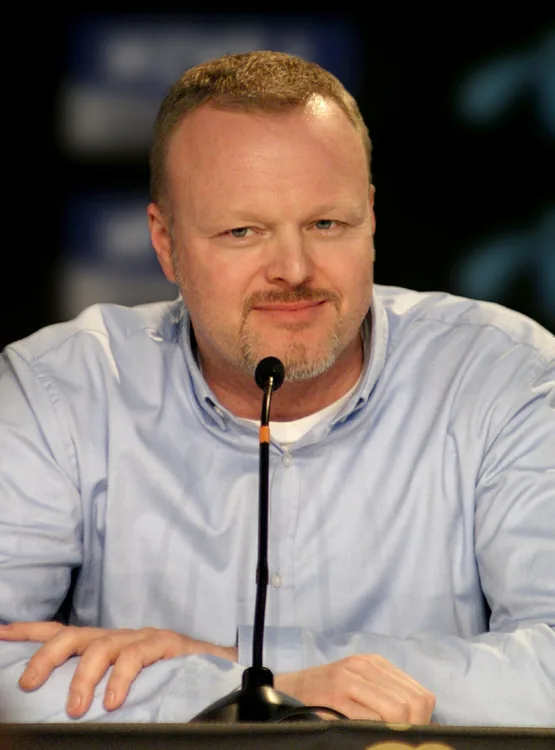
Stefan Konrad Raab was born on October 20, 1966, in Cologne. He is a German entertainer, television and music producer, composer, musician, television host, and entrepreneur. Raised in Cologne's Sülz district alongside his sister, he received his Abitur after attending the Jesuit boarding school Aloisiuskolleg in Bonn-Bad Godesberg. His parents ran a butcher shop, and he himself completed an apprenticeship as a butcher, passing the journeyman's examination in June 1990. He briefly studied law for five semesters. Starting in 1990, Raab pursued a career as an independent producer and composer, beginning with the creation of advertising jingles. He first appeared on German TV in the 1990s, becoming known as a moderator of the comedy music show Vivasion starting in 1993 on VIVA. From 1993 to 1998, he hosted Vivasion. A chart-topping parody of national football coach Berti Vogts was composed by him in 1994. Additionally, he is recognized for originating wok racing and established his production firm, RaabTV, in 1999. The late-night comedy program TV total, which became a staple on German television, featured Raab as its host from 1999 until 2015. Raab created other television shows including Schlag den Raab, involving games played against guests for large money prizes, and Bundesvision Song Contest. He was involved in producing German entries for the Eurovision Song Contest from 1998 to 2012, and again in 2025. In 2000, he performed the song 'Wadde hadde dudde da?' at Eurovision and placed fifth. He discovered and promoted musicians like Max Mutzke, Stefanie Heinzmann, Lena Meyer-Landrut, and Abor & Tynna, as well as the moderator Elton. Considered one of the most successful entertainers of the 1990s and 2000s, he received a long-term contract extension offer from ProSieben. He ended his on-screen career in 2015 but remained a television producer until 2024. Since September 2025, he has hosted 'Die Stefan Raab Show,' and since March 2026, he co-hosts the Saturday evening show 'Wer weiß wie wann was war?' with Barbara Schöneberger. In 2024, he reappeared publicly with the show 'Du gewinnst hier nicht die Million' on RTL.

White Ferdl, comedian from Germany
Verified Unclaimed
Germany

White Ferdl

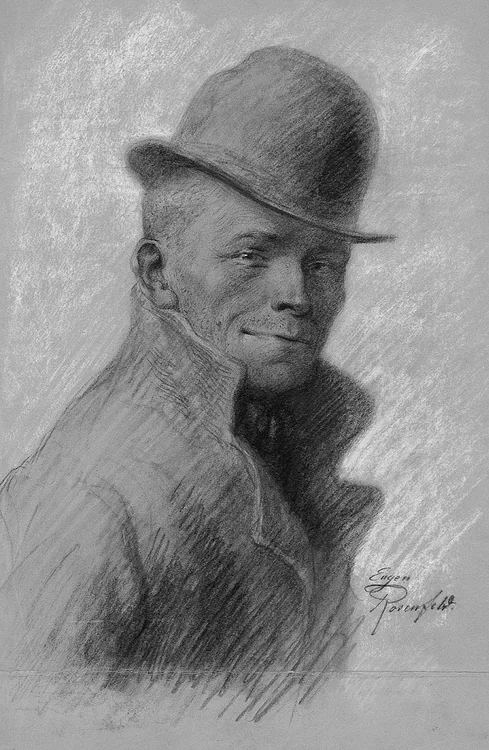
Weiss Ferdl was a German comedian and is one of the most famous Bavarian folk songmakers and performers. His fame is based on the singing performance “Ein Wagen von der Linie 8” “, a satire for the Munich Trambahn, the It became the anthem of many tram friends.

Willy Astor, comedian from Germany
Verified Unclaimed
Germany

Willy Astor

Willy Astor, born Wilhelm Gottfried Astor in Munich on September 6, 1961, is a German cabaret artist, musician, and composer. Growing up in the Hasenbergl district of Munich, he attended local schools before beginning an apprenticeship as a toolmaker at BMW in 1976. He furthered his education, becoming a mechanical engineer by 1985. Astor’s diverse background, including his time as a toolmaker, informs his approach to comedy, which he considers a craft. He is recognized as Germany’s most well-known wordplay artist and syllable fisherman for 35 years. Astor's musical journey began at age 14 when he started playing the accordion, followed by guitar lessons from 1979 onwards. Around 1983, he started writing songs and prose texts, establishing himself in Munich’s cabaret scene. He became particularly known in the early 1990s for his cabaret routines utilizing wordplay, including homophones and homoephones. His comedy style relies on his own imagination and adheres to German rhyming rules, often performed under the persona 'Wolfgang Amadeus Notarzt'. From 1990 to 1999, he hosted the comedy show 'Die Feuchtgrubers' on Antenne Bayern. He also contributed a weekly comedy segment called 'Willys Wortstudio' for Bayern 3. Throughout his career, Willy Astor has achieved notable recognition. In 1997, he composed the FC Bayern Munich anthem, 'Stern des Südens,' collaborating with Stephan Lehmann on the lyrics. He appeared in the TV series 'Die Willy Astor-Show' alongside Günter Grünwald in 1996 and performed at the Arosa Humor Festival in 2009 and the Songs an einem Sommerabend festival in 2004. He has released five albums of instrumental music by the mid-1990s, and his musical project 'Sound Of Islands' is popular among fans of instrumental music. He participated in a charity recording 'Weida' in 2013. His comedic repertoire includes numerous songs considered classics, such as 'Radkäppchen,' 'Alkoholnummer,' 'Fasermacker,' and 'Maschin scho putzt'. Currently, he is touring with his program 'Pointe of no Return', featuring his 'Greatest Witze', and maintains an online shop for his publications, including a CD related to his program 'Jäger des verlorenen Satzes'. His performances aim to help people forget everyday worries.

German Comedians and the Comedy Scene in Germany

Germany has a diverse comedy culture that includes stand-up, Kabarett, sketch comedy, television, film and live stage performances. German comedians work across many different styles, from observational humour and satire to character comedy, storytelling and improvisation.

GiggleTime's directory brings together German comedians, stand-up comedians, comedy actors, cabaret performers and other personalities from the world of German comedy. Browse the profiles above to discover comedians from different generations and learn more about their careers and performances.

Comedy and Stand-Up in Germany

Stand-up comedy has become an increasingly popular part of entertainment in Germany, with comedians performing in comedy clubs, theatres, festivals and other live venues.

German stand-up covers a wide range of subjects and styles. Performers may draw material from everyday life, relationships, work, cultural differences and personal experiences, while others focus on satire, social observations or deliberately absurd humour.

Berlin, Hamburg, Cologne and Munich are among the cities with active comedy communities, but German comedians perform throughout the country. The growth of comedy clubs, touring shows and online platforms has also created more opportunities for new performers to reach audiences.

Kabarett and German Satire

One of the most distinctive parts of German comedy is Kabarett, a form of performance traditionally associated with political and social satire.

Kabarett performers often use humour, irony and commentary to examine current affairs, society and everyday life. Although Kabarett has its own traditions and style, modern German comedy includes many performers who move between different formats, combining elements of cabaret, stand-up and theatrical performance.

This long-standing tradition gives German comedy a particularly broad range, from light entertainment and observational humour to more satirical performances.

German Comedians on Television and Film

Television has played a major role in making German comedians familiar to large audiences. Comedy series, sketch programmes, panel shows, late-night formats and entertainment programmes have provided platforms for performers from different backgrounds.

German comedians and comedy actors are also active in cinema, theatre and voice acting. Some performers have built careers primarily through television, while others began with live comedy before moving into acting, writing or presenting.

Germany's entertainment industry also includes performers from different regions and cultural backgrounds, contributing to the variety of voices found within contemporary German comedy.

Comedy in German and Beyond

German is the main language of the country's comedy scene, but German-language comedy also reaches audiences in Austria, Switzerland and other parts of the German-speaking world.

At the same time, digital platforms have made it easier for German comedians to reach international audiences. YouTube, podcasts, social media and streaming services allow performers to publish sketches, stand-up clips, interviews and other comedy content without relying solely on traditional television or live venues.

This changing media landscape has helped introduce a new generation of German comedians to wider audiences.

Discover German Comedians on GiggleTime

Looking for German comedians, German stand-up comedians or comedy performers from Germany? Explore the GiggleTime directory above to discover comedians working across stand-up, television, film, theatre and other forms of entertainment.

Use the search feature to find a particular comedian or browse the profiles to discover new performers. Individual profiles may include biographical information, career highlights, performances, photographs and other interesting details.

Whether you're interested in German stand-up comedy, Kabarett, comedy actors, television comedians or emerging German comedy talent, GiggleTime makes it easier to discover the people behind the humour.

The directory continues to grow as new German comedians and comedy personalities are added.