GiggleTime GiggleTime
Menu
Go Premium Submit a Joke Comedians About FAQs Contact

Legal
Privacy Policy Terms of Service Cookie Policy Refund and Cancellation Policy Attributions
Login
Language
Categories
Settings
Language English
Safe Mode
Random Jokes Autoplay
Notifications
Global Talent Directory

Comedians from France

The comedian directory of France — profiles, bios, photos, and social links for comedians from France.

Add a comedian
Reset
211 comedians
Didier Bénureau, comedian from France
Verified Unclaimed
France

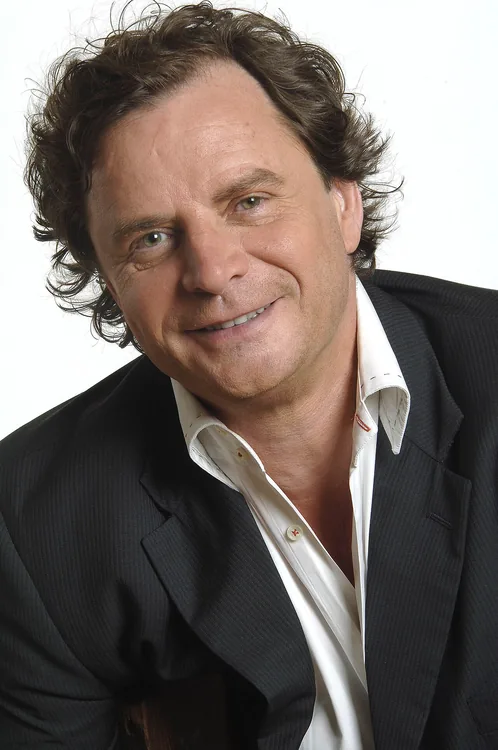
Didier Bénureau

Didier Bénureau is a French humorist and actor born on October 28, 1956, in Courbevoie, a western suburb of Paris. He began his musical journey at age 15 with a passion for the guitar, leading to the formation of an acoustic group called 'Quasifolklo' in 1975. This group achieved recognition when it won a medal on a television show hosted by Patrice Laffont. Following this, he served in the military from 1977 to 1978. After his military service, Bénureau pursued performance opportunities, working as an entertainer for the MSC de Villeneuve-la-Garenne and also holding positions as a summer camp counselor and school cafeteria monitor. He took acting classes at the Villeneuve-la-Garenne MSC in 1979. Between 1981 and 1984, he appeared in minor roles in films and television shows. In 1985, he first appeared at the Petit Théâtre de Bouvard with his neurotic characters. He collaborated with Muriel Robin to co-write a play called 'MAMAN ou donne-moi ton linge ou je fais une machine !' in 1986. Bénureau’s career gained momentum with his first solo show, 'Enfin Bénureau,' in 1988. He subsequently appeared in Bertrand Blier’s film Trop belle pour toi after presenting Blier a video of his show. Between 1990 and 2000, he had supporting roles in several films, including Palais Royal! In 1993, he began his second solo show, directed by Dieudonné, and met Dominique Champetier, who would become a frequent collaborator. He released a short film called Zanzibar in 1998. From 1997 to 1999, he performed his third solo show at the Café de la Gare and Comédie Caumartin. He has appeared in numerous works spanning comedy, romance, and television series, participating in over 60 productions by 2008. Critics have praised his shows, and he received the Grand Prix de l’Humour Noir in 2007 for his show Bobo , which won the SACD Best One-Man-Show award in 2009. He played Gilbert in the TV series Scènes de ménages from January 23, 2023, but left the show in June 2024 due to scheduling conflicts.

Didier Porte, comedian from France
Verified Unclaimed
France

Didier Porte

Didier Porte is a French comedian, radio host, journalist, and humorist born on January 29, 1958, in Compiègne. He is currently 68 years old. His parents are French and have lived in France for generations. Porte earned a degree in economics from the University of Paris-X Nanterre in 1980. He describes himself as a 'journalist de complément' rather than a simple entertainer. Porte began his career as a journalist in 1984 at La Dépêche du Midi, and subsequently collaborated with various media outlets including Le Matin de Paris, L’Étudiant, Canal 102, TSF 93, RMC, RFM, Europe 2, and Ouï FM. From 1984 to 1992, he worked as a reporter-director for the show 'Culture Pub' on M6. He also co-authored the show 'La Nuit de la connerie' with Anne Magnien on Canal+ and the book 'Le Grand Livre de la connerie' with William Reymond. His work has included contributions to shows like 'Les Lois de la jungle', 'Éconoclaste', 'Tutti frutti', 'Comme au cinéma', and 'Héros vinaigrette'. Didier Porte’s career includes regular columns on France Inter, starting in 1993 with 'Zappinge' and continuing through shows like 'Zoom', 'Audimatraquage', 'Rien à cirer', 'Les P’tits Déj’s', 'Changement de direction', 'Rien à voir', and 'Le Fou du roi'. He has faced several defamation lawsuits due to his commentary. He debuted as a one-man show performer in 1998 with L'Ami des vedettes , followed by other shows including Entracte manqué , Didier Porte joue et gagne à être connu , Didier Porte aime les gens , and Didier Porte fait rire les masses . Since 2013, he has performed Didier Porte à droite! He satirizes Nicolas Sarkozy and his administration and is known for being 'merciless' in his satire; last week, he satirized Bernard Kouchner, the foreign minister. His work has attracted more and more listeners, contributing to a resurgence of politically engaged French comedy. He has appeared as himself in the film 'Satire dans la campagne' and continues to contribute to the web version of 'Là-bas si j'y suis' since 2015.

Dominique Farrugia, comedian from France
Verified Unclaimed
France

Dominique Farrugia

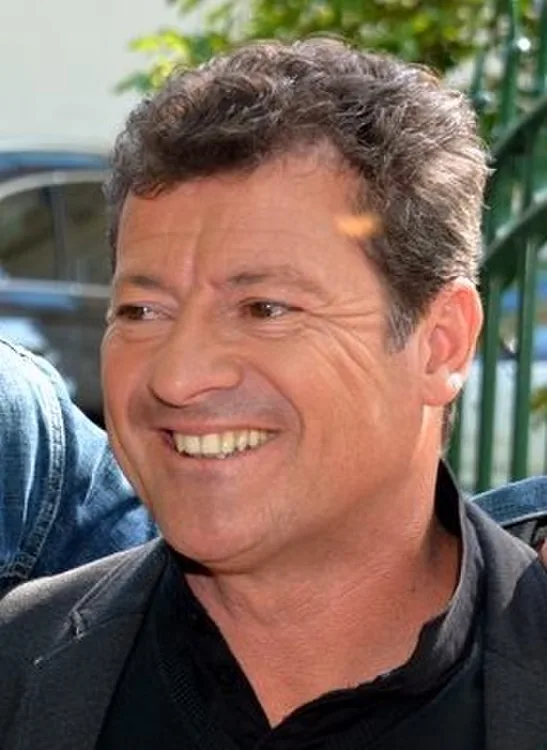
Dominique Farrugia, born on September 2, 1962, in Vichy, France, is a multifaceted French creative. He functions as an actor, film director, screenwriter, producer, humorist, and comedian. His family background reflects a diverse heritage, including Jewish pied-noir and Maltese ancestry; his parents, who left Algeria after its independence in 1962, settled in Vichy. They ran a bar-restaurant called Le Verdier, and his father worked as a bandleader at the Vichy casino. Dominique Farrugia’s full name is Dominique Spiridion Léon Farrugia. From 1986 to 1992, Les Nuls were active, contributing significantly to French comedy. He wrote for the TV series Objective: nul in 1987, which earned a 7 d'Or award. During this period, he briefly hosted a parodic weather forecast on 'Nulle part ailleurs' from 1987 to 1988 and accidentally appeared as an actor in an episode of Objective: nul due to an actor’s absence. The TV special TVN 595 in 1988 also received a 7 d'Or. He co-founded the RF2K production company with Olivier Granier and, in 1997, established the Comédie! TV channel, serving as director-general and president from April 2002 to February 2003. He directed La Cité de la peur in 1994, which attracted 2.2 million viewers in France. His directorial work includes Delphine 1, Yvan 0 (1996), L'amour, c'est mieux à deux (2010), Bis (2015), Return to 17 (2015) and Under the Same Roof (2017). Currently, he leads Shine Fiction alongside Guillaume Thouret as chief operating officer, focusing on producing premium scripted series for French broadcasters and global streaming platforms.

Dranem, comedian from France
Verified Unclaimed
France

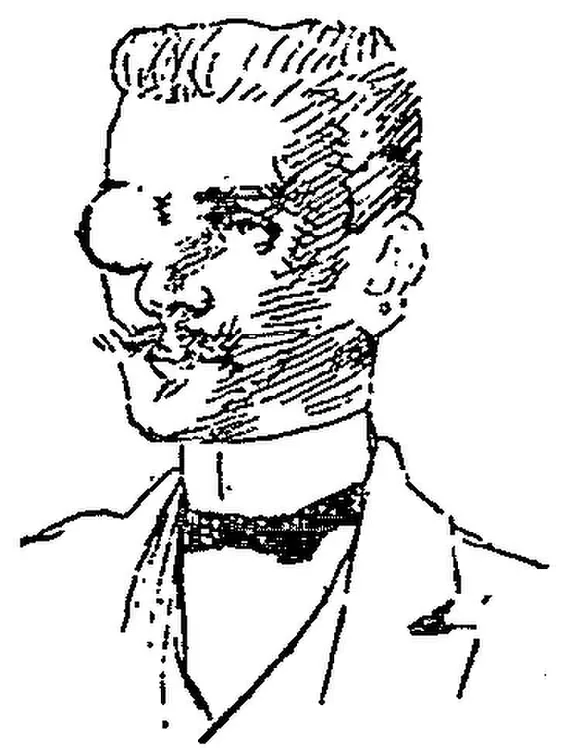
Dranem

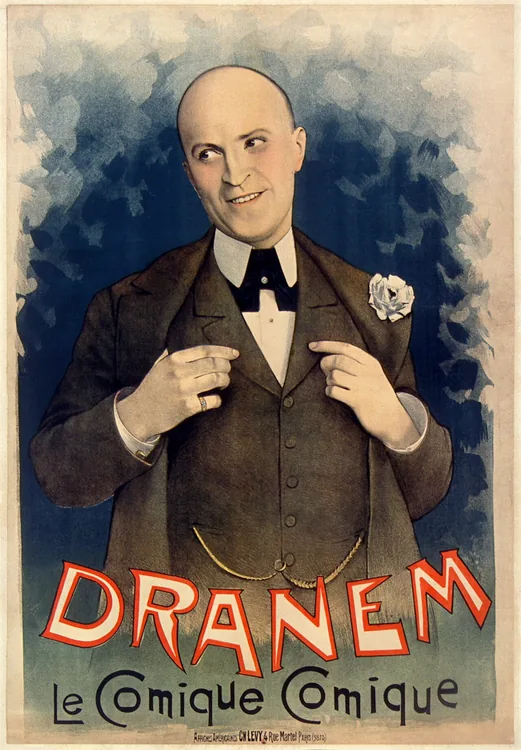
The French entertainer Charles Armand Ménard, who used the stage name Dranem, was a singer of comic songs, a performer in music halls and on stage, and an actor in films. Born in Paris’s 10th arrondissement on May 23, 1869, he died in Paris’s 7e arrondissement on October 13, 1935. His father was a craftsman-jeweler, and Dranem learned the trade from him. He adopted the stage name Dranem as an anagram of Ménard. Dranem began his career as an apprentice jeweler before entering entertainment. Initially, he worked briefly as a belt salesman and an orthopedic instrument seller. He launched his amateur stage career at La Verrerie in September 1890. His professional debut occurred on March 24, 1894, at the Electric-Concert. From 1895, he performed with Félix Mayol and Max Dearly at the 'Concert Parisien'. Around 1896, he developed a signature costume: a small jacket, striped pants, enormous shoes, and a hat, along with face paint. He became a leading music hall entertainer known for his comic absurdist genre. Dranem’s comedic singing routine gained him a loyal following and made him wealthy. He appeared in numerous films, including 'Bonsoir m'sieurs dames' in 1902 and several silent shorts directed by Ferdinand Zecca, such as 'Le salut de Dranem' (1901). Alice Guy directed eleven initial sound films, referred to as 'Phonoscènes,' featuring Dranem for Gaumont in 1905. His humor was incongruous and often risqué, and he performed songs like ‘Le Fils d'un gniaf’ to great popularity. Acquiring Château de Ris in 1910, he subsequently created a philanthropic organization to aid aging entertainers; the retirement facility was inaugurated by President Armands Fallières in 1911. The Dranem Foundation operated until 2000, and the property is now a government-operated retirement home. He appeared in operettas, live theatre, and film, including 'La fille de Madame Angot' (1918) at the Paris Opéra-Comique and ‘Les brigands’ (1931). During 1910, Dranem also took part in a production of Molière's 'Le Médecin malgré lui' at l'Odéon theater. In 1923, he received the distinction of Chevalier de la Légion d'Honneur, followed by the rank of Officier in 1935. The Château de Ris-Orangis serves as Dranem’s final resting place. During World War I, Dranem performed for troops and wounded soldiers, appearing in hospitals. He also appeared alongside Maurice Chevalier in 'Là-Haut'. The film ‘Le Ménage Dranem’ (The Dranem Household), made by Pathé, depicts a reversal of traditional gender roles, with the wife abusing the husband. He made numerous radio appearances and starred in a dozen films between 1919 and 1935. He passed away on October 13, 1935, at the Clinique de l'Alma in Paris, having reached the age of 66.

Fabrice Éboué, comedian from France
Verified Unclaimed
France

Fabrice Éboué

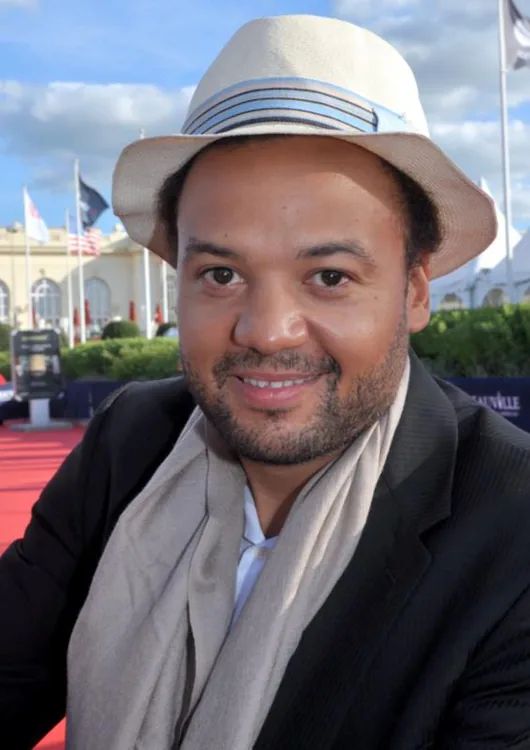
Fabrice Éboué was born on June 7, 1977, in Maisons-Alfort (Val-de-Marne). He spent his childhood in Vincennes and Nogent-sur-Marne. His family background is diverse; his father is a gynecologist-obstetrician of Cameroonian origin, while his mother is French with Norman roots. Éboué has four siblings. Early on, he displayed creative inclinations, participating in the Val-de-Marnais Splifton collective's mixtape 'Embauche pour la débauche' in 1999, rapping under the pseudonym Mr. Faf. Éboué’s educational path included experiences at Albert-de-Mun private high school, from which he was expelled, and later at Branly, Montalembert (Nogent-sur-Marne), and La Providence d'Amiens. He earned a baccalaureate as an external candidate and secured a BTS in Tourism with the help of his German teacher. During this time, he worked as a guide in the Lombrives cave, initially reciting geological information before incorporating jokes and fabricated historical anecdotes to entertain visitors. From 2000, he began performing on various Parisian stages like the Théâtre des Blancs-Manteaux and Trianon. Éboué’s career expanded significantly in the mid-2000s. He appeared in a short film, 'Un crime d'eau,' in 2005 and became part of Jamel Debbouze’s Comedy Club troupe from 2006 to 2008. He co-wrote 'Inside Jamel Comedy Club' with Thomas N'Gijol and participated in the TV show 'T'empêches tout le monde de dormir' from 2006 to 2008. He was a regular columnist on 'On va s'gêner' on Europe 1 from 2008 to 2014, and co-founded the Comedy Club theater in Paris with Thomas N'Gijol in April 2008. His comedy style is described as dark humor with a sharp perspective, often making observations about relationships, social media, and society. He received the 'Macho d'argent' award in March 2009. Éboué has directed films including 'Case départ' (2010), 'Le Crocodile du Botswanga' (2014), and 'CoeXister' (2016). He is currently performing a new show called 'SolitudeS,' which explores the paradox of connection and loneliness, scheduled for Roubaix on November 19, 2026.

Francis Ginibre, comedian from France
Verified Unclaimed
France

Francis Ginibre

Francis Ginibre is a French comedian and humorist, born on June 17, 1959, in Toulouse, France. He spent his childhood in Toulouse and earned a degree from the Beaux-Arts school, studying fine arts at the Toulouse School of Fine Arts. Initially pursuing a career in art, he earned a diploma from that institution. Around the early 1980s, he shifted his focus to music, becoming a self-taught drummer. He played drums in several bands, often performing dance music to earn a living, and even participated in early tours and performances due to involvement in a choir. A pivotal moment in Ginibre's career occurred in the early 1980s when he met Éric Carrière, who needed a drummer. This meeting led to the immediate formation of the comedy duo Les Chevaliers du Fiel. They formed a professional and friendly partnership, performing together under that stage name. Their first show was 'Le détournement d’avion le plus fou de l’année,' and they achieved significant recognition with the hit song 'La Smica 2000' in 1996. They have appeared regularly on television and radio, and in 1995, they moved to Paris. Ginibre also has experience writing for other artists; he has written sketches and co-authored for various performers, including Les Vamps and Michel Galabru, and has contributed to television and radio shows. Ginibre's work extends beyond stand-up comedy. He has appeared in several films, including Repas de famille (2014), Les Municipaux, ces héros (2018), Les Municipaux, trop c'est trop (2019), and Bingbodi (1998). He co-directed and starred in Municipal Hero (2018) and Municipal Hero, Too Much is Too Much (2019) with Éric Carrière. In 2016, they co-founded the Championnat du monde du cassoulet de Toulouse , demonstrating an interest in local culture. Currently, Ginibre continues to maintain a regular stage presence, performing with Les Chevaliers du Fiel in their show "Vacances à Dubaï." Their humor is rooted in everyday life, and their show 'Le Best of collector' remains popular. He also starred in the play 'Vacances d'enfer' at the Théâtre du Gymnase Marie Bell starting January 14, 2011, which is described as a parody of boulevard theatre.

Fransined, comedian from France
Verified Unclaimed
France

Fransined

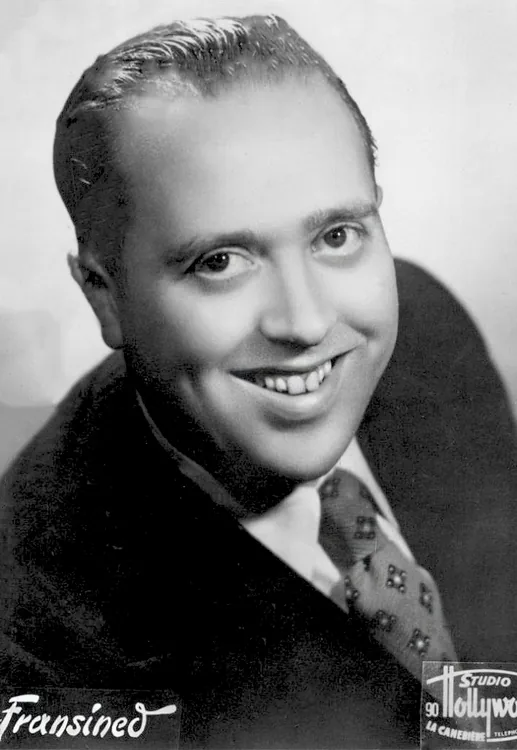
Fransined, born Francis Contandin on October 21, 1914, in Marseille, France, was a French comedian and singer. He passed away in Marseille on October 17, 2012. His family had strong ties to the entertainment world; he was the younger brother of actor Fernandel, born Fernand Joseph Désiré Contandin on May 8, 1903, and uncle of Franck Fernandel. His parents' act was called Les Sined, and Fransined adopted the pseudonym Fransined, combining his first name with that of his parents’ performance group. He spent much of his career performing as a 'comique troupier,' meaning he traveled extensively to perform. Fransined’s career encompassed various forms of entertainment. He primarily performed in cabarets and music halls, and made numerous appearances in films, often in smaller roles or as an extra. As a singer, he performed songs by Vincent Scotto, Bob Cary, and Paul Lemel, alongside popular songs by his brother Fernandel. Between 1966 and 1978, Fransined released several records, including an album dedicated to Fernandel’s music. He also contributed to the advertising industry from the 1960s onward, appearing in many commercials, with his last appearance being for La Salvetat mineral water in 2012. Fransined's comedy often featured Southern French humor, frequently showcased in one-man shows. In 1972, he revived Fernandel’s song “Ne me dis plus tu” and performed it on television. While his brother Fernandel achieved widespread fame through vaudeville, operettas, music-hall revues, and particularly the 'Don Camillo' film series, Fransined maintained a consistent presence in French entertainment. Fernandel was known for his horse-like teeth and appeared in films such as 'Around the World in 80 Days' (1956) and 'Paris Holiday' (1958), and even starred in British TV advertisements for Dubonnet. Fransined’s career, though less prominent than his brother’s, demonstrated a dedication to French comedic performance throughout his life.

François Rollin, comedian from France
Verified Unclaimed
France

François Rollin

Born May 31, 1953, in Malo-les-Bains (currently Dunkerque), François Maurice Rollin is known professionally as François Rollin and works as a French actor, comedian, author, and screenwriter. He graduated from the ESSEC business school in 1975 and began his career as a journalist for Le Monde from 1976 to 1991. During this time, he developed his humor skills as a columnist for publications like 'Vu de gauche' and 'Fluide glacial,' honing a unique perspective on current events. Rollin’s comedic journey began with contributions to various media outlets. He was part of the burlesque music group Tchouk Tchouk Nougâh in the 1980s and contributed as a screenwriter to Merci Bernard between 1982 and 1984. He gained wider recognition with the TV series Palace in 1988, where he was one of the authors and created the popular character ‘Professeur Rollin.’ The character blends surreal and absurd humor with social satire, often presented as a whimsical and articulate professor in his one-man shows. He also wrote for the satirical news program Les Guignols de l'info from 1989 to 1990. Rollin’s work spans various mediums, including film, television, literature, and stage. He appeared in Pendant ce temps nos deux héros in 1988, acted in Hirondelles de saucisson , which he also wrote, in 1990, and starred in Colères in 1996 and again in 2008. He directed L'Envol du pingouin in 2000, 2006, and 2008, and has written numerous books, including J'ai réfléchi pour vous (2001), Les Grands Mots du professeur Rollin (2006), Les Belles Lettres du professeur Rollin (2007), and Sophie Mounicot, c'est mon tour! (2008). He co-authored works such as Astier et Rollin posent les bases de la pensée moderne with Alexandre Astier in 2009, and Epîtres with Arnaud Joyet & Arnaud Tsamere in 2016. He played King Loth in the series Kaamelott . The Raymond-Devos Prize for the French language was awarded to Rollin in 2009. While he stopped doing solo shows in 2017, he continues to appear on radio stations like France Inter, Europe 2, and France Culture, and is a regular member of 'Les Grosses Têtes' on RTL since 2016. He has recently joined Matthieu Noël’s show ‘Zoom Zoom Zen’ on France Inter and will regularly appear on 'La semaine de campagne' from September 2026.

Frédéric Volovitch, comedian from France
Verified Unclaimed
France

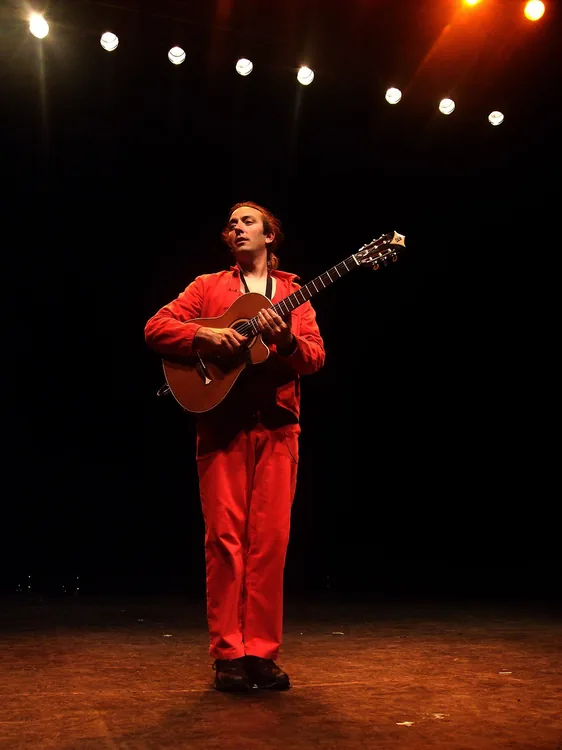
Frédéric Volovitch

Frédéric Volovitch is a French singer and humorist, born on May 18, 1974, in Tours. A member of Les Wriggles, a French-language group encompassing song, theatre, and musical comedy, he gained recognition for his contributions. This group originated in 1995 at the ENSATT in Paris. Volovitch was part of the original five-member lineup from 1995 until 2009. Volovitch's involvement with Les Wriggles began in 1995 and continued through several albums, including Justice avec des saucisses (1997), Les Wriggles partent en live (1999), Ah bah ouais mais bon (2002), Moi d'abord (2005), and Tant pis ! Tant mieux! (2007). The group combined humorous, poetic, provocative, and tender texts, presenting realistic observations through sketches interspersed with songs, and consistently wearing red dungarees during concerts. They engaged with the audience through jokes and interactions, and their performances often explored a wide range of themes, from everyday life to social criticism. Popular songs like "Poupine et Thierry" used allegory to explore cultural conflicts, while "Délit de face, yes!" addressed racism. Following his departure from Les Wriggles in 2006, along with Antoine Réjasse and Franck Zerbib, Volovitch formed the duo Volo with his younger brother Olivier Volovitch in 2001. Volo released several albums including Bien Zarbos (2005), Jours Heureux (2007), Sans rire (2013), Chanson française (2017), and Avec son Frère (2020). Since 2011, Volovitch has performed a solo show, initially titled Est ce qu'il y a des morts? , which combines song, humor, and musical theater. His shows emphasize direct interaction with the audience, precision in music, and observation of daily life, utilizing storytelling, irony, and a taste for narrative. He is scheduled to release the album 'Mine de rien' in 2026 and perform in Achères in April 2027.

Félix Galipaux, comedian from France
Verified Unclaimed
France

Félix Galipaux

Félix Galipaux, born Félix Martin in Bordeaux on December 12, 1860, was a French actor, playwright, and humorist. Louise Fénélon-Galipaux identified him in 1866, after which he was educated in Bordeaux and Paris, ultimately winning a first prize from the Conservatoire de Paris. He initially chose to perform at the Théâtre du Palais-Royal instead of the Comédie-Française, later moving to the Théâtre de la Renaissance. Galipaux died in Paris on December 7, 1931, and is buried in Père-Lachaise Cemetery, marked by a bronze bust. Galipaux’s comedic career was extensive, encompassing approximately forty plays produced in Parisian theatres. His popularity stemmed from his humorous stage monologues, especially 'Communication Téléphonique' (1906), several of which were preserved through recordings. He also collaborated with Henri Pagat under the joint pseudonym Pagalipaux, and he and Coquelin Cadet popularized music hall monologue acts in the 1880s. His style relied on his writing to generate laughter rather than physical traits or pronunciation quirks. He wrote several boulevard plays, comedies, sketches, monologues, and fantasies, and contributed newspaper columns under the pseudonym Félix Mayran. Beyond theatre, Galipaux ventured into early film, appearing in works by Ferdinand Zecca, Georges Méliès, and Pathé Frères, including ‘An Adventurous Automobile Trip’ and early French sound films like 'La Lettre' and 'Au Telephone' (1905). Charles-Émile Reynaud filmed him performing 'Le Premier Cigare' around 1896 or 1897. He also made spoken-word recordings for gramophone records, and starred in films such as ‘Un monsieur qui a un tic’ (1911) and 'Gorgibus et Sganarelle' (1912), with his last film role being in ‘Lorena’ (1918). He is depicted alongside Gabrielle Réjane in an 1893 lithograph by Henri de Toulouse-Lautrec. Galipaux also wrote “Galipettes,” which included funny scenes with Floridor, Cinguy, Dazincourt, and Caméléon. These scenes were about a traveling theater group. After this, Galipaux was given the title Officier de l'Instruction Publique in the Ordre des Palmes Académiques.

Gabriel de Lautrec, comedian from France
Verified Unclaimed
France

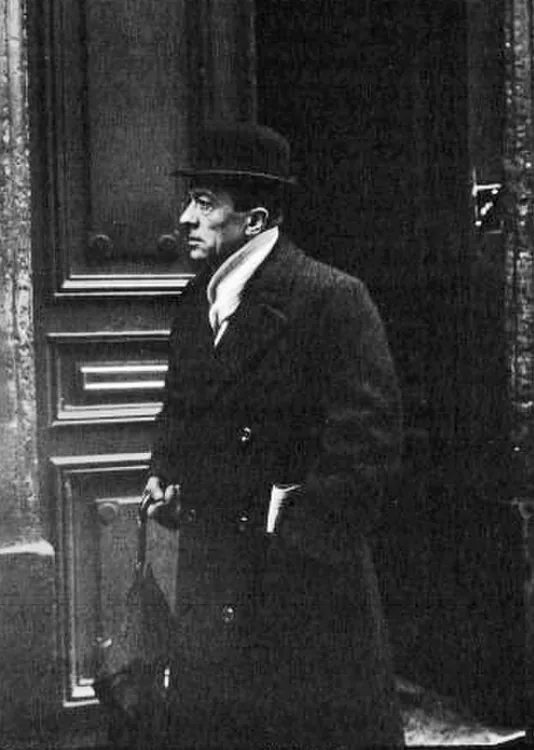
Gabriel de Lautrec

Gabriel de Lautrec, born in Béziers on February 21, 1867, and deceased in Paris on July 25, 1938, was a French writer, chronicler, translator, and poet. A distant relative of the painter Henri de Toulouse-Lautrec, though they did not have close relations, he presented himself as a dandy with a monocle and frequently entertained Parisian society around 1900 with his witty remarks. He earned a degree in literature (licence ès Lettres) and, from 1889 to 1893, was a companion of Alphonse Allais at Le Chat Noir, where he published his first prose writings. De Lautrec’s career began in the early 1890s when he moved to Paris and started contributing to publications like La Vie drôle . He frequented literary cafes in the Latin Quarter and met Alphonse Allais at the Chat noir cabaret, becoming a disciple of Allais. His work is characterized by humor and fantasy, often connected to parascientific and occultist circles. A collection of prose poems, 'Poèmes en prose,' was published in 1898, opening doors to Paris's literary scene. He hosted a salon in Passy where notable figures such as Jean Lorrain, Willy, Jean de Tinan, Alfred Jarry, Oscar Wilde, and Paul Verlaine gathered; he was particularly close to Paul Verlaine, even guarding his body after his death. Between 1890 and 1911, he claimed to have published over two hundred short stories, chronicles, and fantasies in various publications including Le Chat Noir , La Vie drôle , Le Rire , Fantasio , La Revue blanche , Le Sourire , and Le Mercure de France . Throughout his career, De Lautrec translated works by Mark Twain, Havelock Ellis, Alfred Levin, Matthew Phipps Shiel, and Oscar Wilde (in collaboration with Henry-D. Davray), often for Mercure de France . He also co-founded La Petite Semaine in 1900 and the Académie de l’Humour in 1920 with Curnonsky and Courteline. He taught Latin and Greek in Marseille until his retirement in 1929, returning to Paris shortly thereafter. He published his autobiography, Souvenirs des jours sans souci , in 1938. Despite seeking recognition, including a candidacy for the French Academy in 1923, he felt disappointed by not achieving literary recognition. He was awarded the Légion d'honneur in 1936 and left behind published works including 'Poèmes en prose,' 'Les Roses noires,' 'Monsieur de Crac,' and Souvenirs des jours sans souci .

Maxime Godart, comedian from France
Verified Unclaimed
France

Maxime Godart

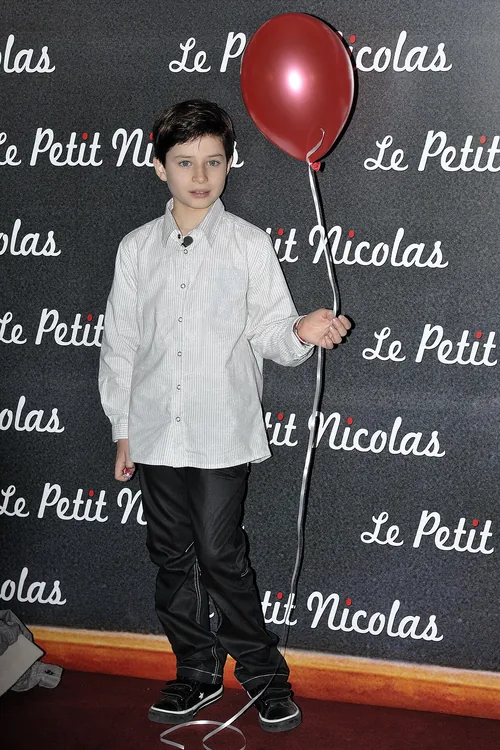
Maxime Godart is a French actor, humorist, screenwriter, and film director. Born in Compiègne, France, on October 2, 1998 (or October 9, 1999, according to other sources), he began his acting career in 2009. At the age of eight, he started taking theater classes at the Noyon cultural center, driven by an early aspiration to become an actor. His determination impressed director Laurent Tirard, who chose him for a significant role after seeing an advertisement online and auditioning for Le Petit Nicolas in 2008. Godart is best known for his portrayal of Petit Nicolas in the 2009 film Le Petit Nicolas , based on the work of René Goscinny and directed by Laurent Tirard. He played the main role, earning the part due to his resemblance to the comic book character and his evident desire to act. The film was released in China Mainland on February 10, 2013 and received nominations for Best Foreign Language Film at both the European Film Awards and the Brazilian Film Awards. He also appeared in Les Meilleurs Amis du Monde (2009) as Bruce and Le Grand Restaurant (2010) as Charles, and had a supporting role in The Best Friends in the World (2010). During this period, he presented an award to The Black Eyed Peas at the NRJ Music Awards in 2010 and participated in the Prix Louis Lumière. Beyond acting, Godart has expanded his creative endeavors. In 2015, he presented a conference by astrophysicist Hubert Reeves in schools across Picardy. He became a godparent of the Coming Alive association in 2017 and appeared in a music video for Christophe Madrolle. He starred in the short films Par un Regard (2019) and Par un regard : chapitre 2 (2019). Godart has also ventured into directing, producing and directing the 2024 short film Constellation , where he also appears as an actor. He attended the premiere of Le Petit Nicolas in Paris and the 81st Venice International Film Festival with Claude Lelouch, and has participated in charity events for organizations like ‘Premiers de Cordée’, which provides sports activities for hospitalized children.

French Comedians and the World of French Comedy

France has a long and distinctive comedy tradition, with humour playing an important role in theatre, cinema, television and live entertainment. French comedians have developed many different forms of comedy over the years, from theatrical performances and classic satire to modern stand-up, sketch comedy and online content.

GiggleTime's directory brings together French comedians, stand-up performers, comedy actors, writers and other personalities associated with French comedy. Browse the profiles above to discover comedians from different generations and learn more about their careers and work.
Stand-Up and Live Comedy in France

Modern stand-up has become an increasingly visible part of the French comedy scene. Comedians perform in dedicated comedy clubs, theatres, cafés and other venues, presenting material that ranges from personal stories and observational humour to social commentary, satire and absurd comedy.

The French live comedy scene is particularly active in Paris, where performers can find numerous venues and audiences for both established shows and new acts. Comedy is also performed throughout cities and regions across France, giving comedians opportunities to develop audiences outside the capital.

French-language comedy also extends beyond France itself, with performers and audiences connected to the wider Francophone world.

The French "One-Man Show" Tradition

One of the distinctive formats associated with French comedy is the one-man show, in which a comedian performs a full-length solo production for an audience.

These shows can combine stand-up, storytelling, theatrical performance, characters and scripted comedy. The format has become an important part of French popular entertainment and has helped many comedians develop a recognisable stage identity.

While contemporary French stand-up continues to evolve, the connection between comedy and theatrical performance remains an important characteristic of the country's comedy culture.

French Comedians in Film and Television

French comedy has a strong presence in cinema and television. Comedians frequently move between live performance, acting, writing and presenting, with many performers building careers across several forms of entertainment.

French television has produced numerous comedy programmes, sketch shows and entertainment formats, while French cinema has a long history of successful comedy films and memorable comic performances.

The relationship between stand-up and screen acting is particularly interesting in France, where a comedian may begin with live performances before moving into films, television or other forms of entertainment.

A Diverse French Comedy Scene

There is no single style that defines French comedy. Performers work across observational comedy, satire, parody, physical comedy, character-based performances, storytelling and improvisation.
Different generations of comedians have also brought different influences to the scene. Established performers continue to appear alongside newer comedians who use podcasts, YouTube, social media and streaming platforms to reach audiences.

This combination of traditional stage comedy and digital entertainment has created more opportunities for emerging French comedians to develop their own audiences and styles.

Discover French Comedians on GiggleTime

Looking for French comedians, French stand-up comedians or comedy actors from France? Explore the GiggleTime directory above to discover performers from different periods and areas of French entertainment.

Search for a particular comedian or browse the profiles to discover new names. Individual pages may include biographical information, career details, performances, photographs and other interesting facts.

Whether you enjoy French stand-up, comedy films, television comedians, one-man shows or classic French comedy, GiggleTime makes it easier to discover the people behind the humour.

Our directory continues to expand with new profiles, giving you more ways to explore the world of French comedy.