GiggleTime GiggleTime
Menu
Go Premium Submit a Joke Comedians About FAQs Contact

Legal
Privacy Policy Terms of Service Cookie Policy Refund and Cancellation Policy Attributions
Login
Language
Categories
Settings
Language English
Safe Mode
Random Jokes Autoplay
Notifications
Global Talent Directory

Comedians Directory

Browse comedian profiles, biographical summaries, country of origin, and official links.

Add a comedian
1532 comedians
Alf Poier, comedian from Austria
Verified Unclaimed
Austria

Alf Poier

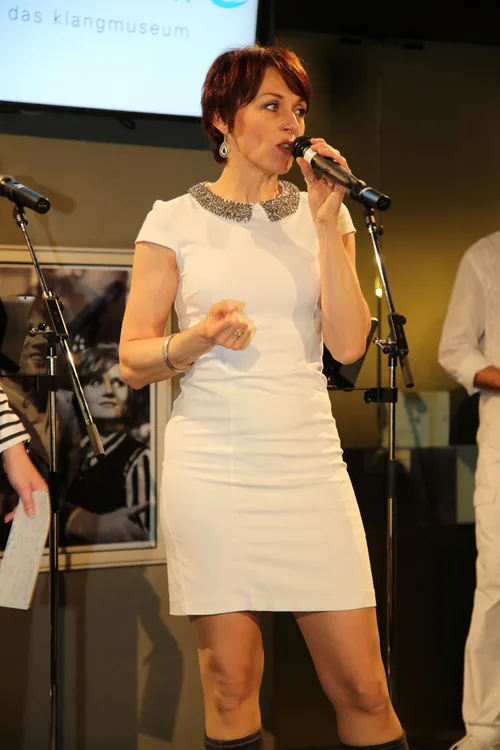
Alf Poier, born Alfred Poier on February 22, 1967, in Judenburg, Styria, Austria, is an Austrian artist and stand-up comedian. He attended elementary school in Sankt Peter ob Judenburg and graduated from the commercial academy in Judenburg in 1987. Before embarking on his artistic career, Poier held various jobs between 1987 and 1995, including night watchman, waitress, office worker, student, and journalist. Poier began performing cabaret in Graz in 1995, initially placing second at the Kleinkunstvogel cabaret competition. His career gained momentum with the release of his first program, 'Himmel, Arsch & Gartenzwerg,' in August 1995. He continued to perform extensively in Austria and Germany following this debut. He also won the German Comedy Awards (Best Newcomer) in 2000 and the Österreichischer Kabarettpreis in 2002. Poier’s work is characterized by a unique blend of cabaret, images, and objects, creating what he calls a Gesamtkunstwerk. He participated in the Eurovision Song Contest with the song 'Weil der Mensch zählt' in 2003, placing sixth and incorporating references to different animals in a parody of the contest. He attempted to represent Austria again in 2005. He has released several albums, including Himmel, Arsch & Gartenzwerg (1996), Zen (2001), Alf singt die schönsten Lieder mit Band (2003), Lustige Lieder der Traurigkeit und Not (2005) and This Isn’t It (2010). He also released several DVDs, such as Mitsubischi (2008), Zen (2007), Kill Eulenspiegel (2007) and Satsang (2009). A song he wrote, 'Good Old Europe Is Dying,' caused controversy due to its lyrics. He opened his private museum, 'Botschaft für Bewusstsein, Scheißdreck und Kunst,' in Eggendorf (Tullnerfeld) in September 2008. After a 26-year career, Poier retired on July 31, 2021, primarily due to health issues, including chronic nausea and gastritis.
Verified Unclaimed
Bulgaria

Dimitar Donski

Dimitar Donsky is a popular Bulgarian stand-up comedian, screenwriter and internet creator known for his direct, self-deprecating and often provocative humor. After studying at Southern Illinois University in the USA for many years, he took his first steps on the stand-up stage there. Upon returning to Bulgaria, Donsky quickly established himself as a recognizable name in contemporary Bulgarian comedy scene. He creates authorial one-man shows and regularly participates in joint comedic evenings with other popular comedians. His distinctive style, which humorously describes as "Sensitive Villager," has brought him great popularity and numerous followers online. Among his most popular projects is the solo show “Daring & Shame” ( "Дързост и срамота" ), with which he tours the country presenting his characteristic view of everyday life, society and human absurdities. In 2026, Donsky attracted additional attention through his participation in the television program „Cherry on Top“ ( „Черешката на тортата” ) on NOVA.

Karl Farkas, comedian from Austria
Verified Unclaimed
Austria

Karl Farkas

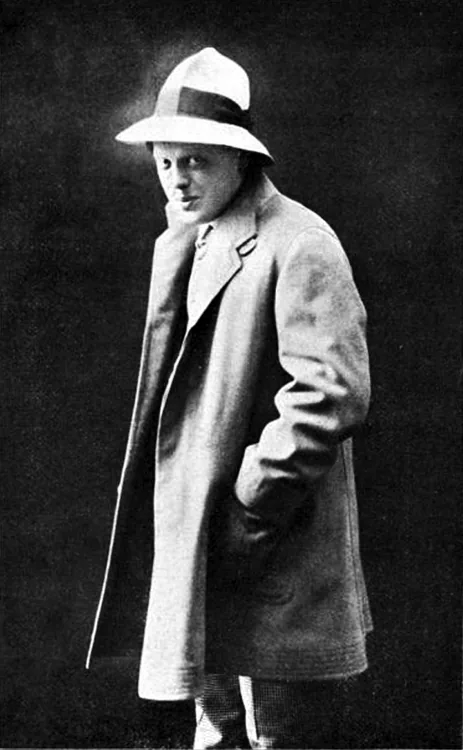
Karl Farkas, born in Vienna on October 28, 1893, was an Austrian actor and cabaret performer. He grew up in Vienna-Leopoldstadt with two sisters and an older brother, his parents, Moritz and Franziska Farkas, running a shoe store. His mother’s uncle was the author Felix Salten. Although his parents initially wanted him to study law, he chose the stage instead, attending the k.k. After attending Staatsrealschule Glasergasse, he then studied at the Vienna Academy of Music and Acting Arts. He debuted in Olmütz as Tsarevich in 1903, beginning a career that included various stage appearances in Austria and Moravia. Farkas's comedic journey took a significant turn around 1921 when he joined Kabarett Simpl under Egon Dorn, working there as a 'Blitzdichter,' also known as 'Die Zecke.' He collaborated with Fritz Grünbaum on Doppelconférences and cabaret numbers originating in Budapest. In 1924, he married actress Anny Hán. From 1926, he worked at the Vienna Burgtheater, and in 1927, he and Grünbaum presented the Marischka Revue, which enjoyed a long run of 430 performances. He also wrote lyrics for songs such as 'Wenn die Elisabeth nicht so schöne Beine hätt’' and 'Pflückt ein Mädl Ribisel.' His writing extended to revues and musical comedies, including Journal der Liebe (1926), Wien lacht wieder! (1926), Die Wunder-Bar (1929), Der Traumexpreß (1931), Hofloge (1936), Dixie (1938), and Marinka (1945). Several films were based on his works, including When the Soldiers (1931), By Candlelight (1933), Wonder Bar (1934), and adaptations of Hofloge and Bei Kerzenlicht . Due to his Jewish descent, Farkas was forced into exile in 1938, moving through Brno, Paris, and eventually New York. While in New York, he wrote the book of poems Farkas entdeckt Amerika . He also wrote the libretto for Emmerich Kálmán's operetta Marinka . He served on the Russian, Romanian, and Italian fronts during World War I, receiving the Silver Bravery Medal. After returning to Vienna in 1946, he remarried his former wife and resumed performing at Kabarett Simpl in 1950, directing it until his death on May 16, 1971. He frequently appeared on Austrian TV (ORF) from 1957 onward, known for his 'Balances,' and hosted the 'Aktualitätlichkeiten' program on Sender Rot-Weiß-Rot. His work continued to be recognized; in 2014, he starred in the Austrian revue comic book Der Blöde und der Gscheite . He also wrote as a screenwriter for films like Lumpenkavaliere (1932) and Adventures on the Lido (1933).

Klas Eriksson, comedian from Sweden
Verified Unclaimed
Sweden

Klas Eriksson

Klas Eriksson is a Swedish actor and comedian, currently 41 years old. Born on August 17th, he celebrates his name day on July 7th and resides in an apartment in Nacka, Sweden, valued between 5,400,000 and 7,100,000 SEK. He previously lived at Katarina bangata 73 in Stockholm and owns a vehicle purchased in April 2002. Eriksson is known as a profile within the comedy group Leif & Billy. His career began with posting short comedy clips on Facebook and Vine. He co-created the YouTube channel 'Jokemock!' with Alfred Svensson, and together they developed the series 'Nordic Hillbillies,' which evolved into 'Leif & Billy.' 'Leif & Billy' was broadcast on Sveriges Television (SVT) and TV4, and Eriksson is best known for his role as Leif Öhman in this program. The series has received recognition, winning a Kristall award and being nominated for others for its humor. He also appeared in 'Leif & Billy' from 2017 to 2023, as well as 'Laxbralla' in 2018 and 'Brorsor 4ever' in 2019. Eriksson’s social media presence is significant; his Instagram account ranked eleventh most powerful in Sweden in 2022, and his channels frequently appear high on the Medieakademin Maktbarometer. He has expanded beyond acting, co-hosting Musikhjälpen in 2022 with Oscar Zia and Tina Mehrafzoon, and 'Smartare än en femteklassare' on Kanal 5/Discovery+ in spring 2024 with Alfred Svensson. His film credits include 'Ett sista race' (2023) and he is slated to appear in 'Bert sabbar allt' in 2025. Eriksson also participated in 'The Island Sverige' in 2022 and appeared in the TV program 'Över Atlanten' in 2020. He sits on the boards of three companies, including Barbro Media AB and Bröderna Öhman Merch AB. Recently, Eriksson and his partner Julia Kvarnberg have experienced profound loss. Their daughter Elsa was born on April 26, 2023, but tragically died shortly after a delivery that lasted over 14 hours. Eriksson described the experience as feeling like the entire universe stopped, initially struggling to look at his daughter before eventually holding her for three hours. Despite this grief, they welcomed a son, Nils, in March 2023, whom Eriksson shared news of on Instagram, expressing feelings of happiness and gratitude while acknowledging the continued grief for Elsa. He will share more about this experience in a 'Sommar i P1' interview, which will be released as a podcast and broadcast on P1.

Liane Augustin, comedian from Austria
Verified Unclaimed
Austria

Liane Augustin

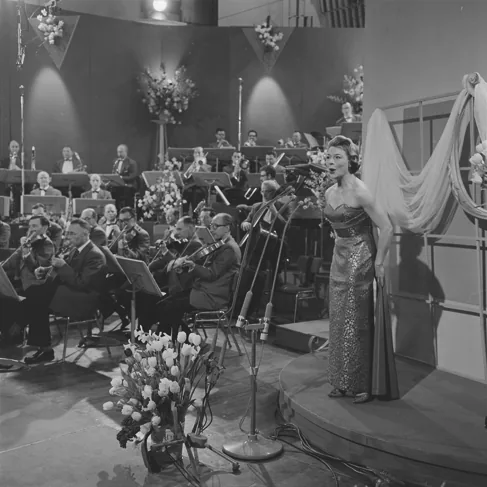
Liane Augustin, born Liane Augustin on November 18, 1927, in Berlin, Germany, was a German-Austrian singer and actress. Her family relocated to Vienna in 1944 due to the impact of bombing raids in Berlin and her father’s career change; her father, Karl Augustin, was a Viennese actor, and her mother was a concert singer from Frankfurt am Main. Inspired by Ilse Werner as a teenager, she received singing lessons and later studied music. Early in her career, around 1946, she performed at an American soldiers' club, and by 1949, she secured a recording contract with Odeon, later transitioning to Elite Special/Austroton. Augustin achieved significant success as a nightclub singer in Vienna’s Boheme Bar after World War II. She frequently performed with the Boheme Bar Trio, consisting of Michael Danzinger (piano), Laszlo Gatti (guitar), and Willi Fantel (bass). Her voice was described as possessing a unique guttural quality, blending playful, vulnerable, lascivious, and sentimental notes. From 1951, the Austrian Broadcasting Corporation (ORF) prominently featured her, providing her with radio shows that extended her fame beyond Vienna. She made numerous recordings, primarily for the Vanguard label, and her first LP was released in the USA by Vanguard Records in 1952. She appeared in several Austrian films beginning in 1953, including Die Fiakermilli , Lavender , The Red Prince , And Who Is Kissing Me? , Liebe, die den Kopf verliert , and Licht auf der Piazza . Augustin’s career included representing Austria at the Eurovision Song Contest in 1958 with the song "Die ganze Welt braucht Liebe," which earned her 8 points and a 5th place finish out of ten participants. She also starred as Polly Peachum in a 1956 recording of The Threepenny Opera , an accomplishment that garnered the Grand Prix du Disque. She performed internationally, including a successful engagement at New York's Town Hall in 1961. She collaborated extensively with Robert Stolz, recording numerous titles with the Vienna Radio Orchestra. She participated in the German Schlagerfestspiele in 1964, though she did not advance to the final round. Liane Augustin died on April 30, 1978, in Vienna.

Michael Niavarani, comedian from Austria
Verified Unclaimed
Austria

Michael Niavarani

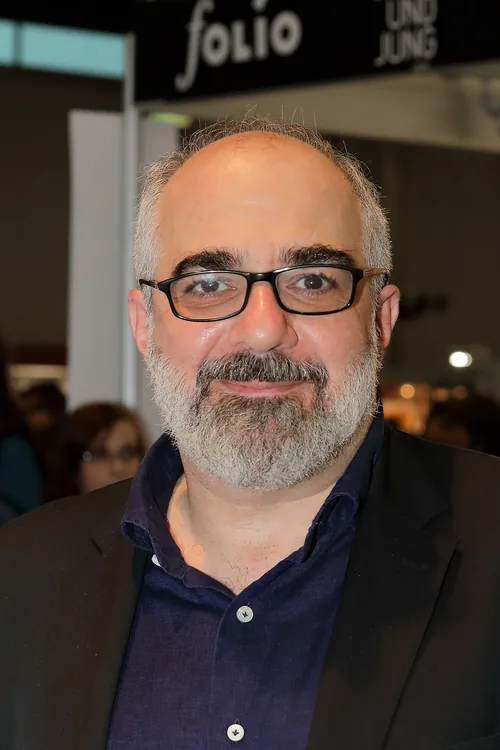
Michael Niavarani, whose background combines Austrian and Persian heritage, performs as a stand‑up comic, writes, and appears on TV and in films, continuing the Austrian cabaret tradition. His jokes often stem from the cultural mix of his upbringing, positioning him as a prominent figure in Austria’s cabaret community. He has served as the artistic director of the Viennese Kabarett Simpl since 1992, a venue that first opened its doors in 1912. In 2010 he was awarded the Austrian Kabarett Prize, and he has collected three Romy awards.

Richard Waldemar, comedian from Austria
Verified Unclaimed
Austria

Richard Waldemar

Richard Waldemar, born Kramer on May 3, 1869, in Vienna, Austria-Hungary, was a famous actor and comedian. He died on December 27, 1946, also in Vienna. Initially, he worked for the railway before pursuing a stage career, attending a theater school to prepare for it. Waldemar began his performance career in 1890 in Troppau and subsequently had engagements in Wiesbaden and Munich. From 1893, he became a fixture in Vienna’s theatrical scene, performing at various venues including the Theater in der Josefstadt, Ronacher, and Carl- and Raimundtheater. He initially focused on serious roles, but later became known as a comedian. His performances extended beyond Vienna, with guest appearances both domestically and internationally. He appeared in numerous silent films starting around 1908, including "Der Stiefelputzer" (1908) and "Ein Walzertraum" (1908), and continued to appear in films throughout his career, reaching a peak in the 1930s. He also starred in sound films such as "Lumpenkavaliere" (1932) and "Hotel Sacher" (1939). Waldemar's comedic talent was evident not only on stage and screen, but also in his recordings. “Cabaret Songs on the Military Situation,” a seven-verse couplet, was recorded in 1915 under commission from the k. k. Österreichischen Militär-, Witwen- und Waisenfonds. These satirical verses vilified the enemy and affirmed troop certainty of victory, with one verse imitating an infantryman writing to his love in Viennese dialect and another featuring the Russian Tsar writing to Hindenburg. He also appeared in the 1926 comedy and romance film The Prince and the Dancer ( Der Balletterzherzog ), directed by Max Neufeld, which faced negative reviews and censorship. Throughout his career, he recorded music on gramophone records. In 1939, he received the Ehrenring der Stadt Wien (Honor Ring of the City of Vienna). He was also included in the ‘Gottbegnadeten-Liste’ (List of Blessed Ones) in 1944, a list used by the Nazi regime to protect artists. Following his death, several places were named after him, including the Richard-Waldemar-Hof and the Richard Waldemar Park, which features a bust of him; he is buried at the Hietzinger Friedhof in a grave dedicated to him.