GiggleTime GiggleTime
Menu
Go Premium Submit a Joke Comedians About FAQs Contact

Legal
Privacy Policy Terms of Service Cookie Policy Refund and Cancellation Policy Attributions
Login
Language
Categories
Settings
Language English
Safe Mode
Random Jokes Autoplay
Notifications
Global Talent Directory

Comedians from Switzerland

The comedian directory of Switzerland — profiles, bios, photos, and social links for comedians from Switzerland.

Add a comedian
Reset
17 comedians
Bernard Haller, comedian from Switzerland
Verified Unclaimed
Switzerland

Bernard Haller

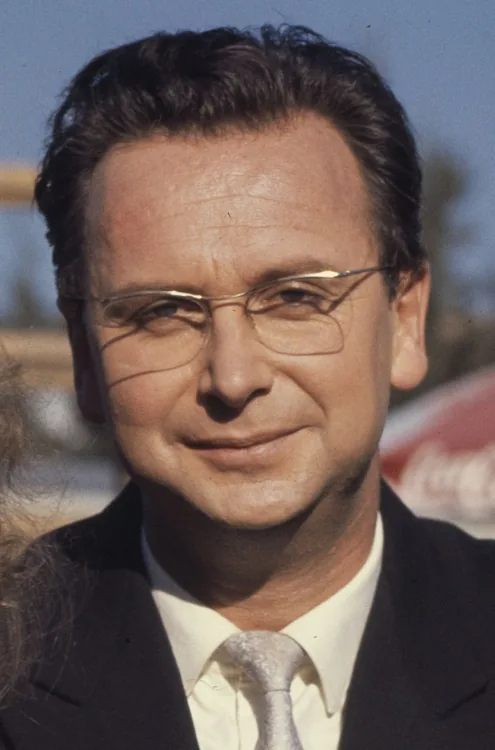
Bernard Haller, born December 5, 1933, in Geneva, Switzerland, was a Swiss actor and comedian. He began his career in Lausanne before relocating to Paris in 1955 with aspirations of becoming an actor. Initially studying veterinary medicine, he later pursued law but did not complete either. Early performance venues in France included cabarets like l'Écluse and la Vieille Grille, and he was part of Jacques Fabbri’s company. Haller also presented Sheila's 'Tournée du siècle' between 1963 and 1964, featuring Frank Alamo and Les Surfs. His early acting roles included minor appearances in films and a voice role as Pollux in the animated series 'Le manège enchanté' in 1964. Haller’s career took off with his first cabaret program, 'Et alors?', which premiered at the Théâtre de Poche in Geneva in 1971. The show was a significant success, running for thirteen months at the Théâtre de la Michodière and attracting 160,000 spectators. He received the Prix du Brigadier in 1972 for 'Et alors?', and again in 1975 from the Société des auteurs et compositeurs dramatiques for his scenic creativity. Between 1971 and 1977, he toured extensively with Jacques Brel, Juliette Gréco, and Marlene Dietrich, traveling to Southern and Central Africa, England, Canada, and the USA. He created six cabaret programs between 1971 and 1994, performing them in both French and German-speaking Switzerland. His comedy style was characterized by wordplay, sound imitations, and he described himself as a 'melankomiker,' or melancholy comedian, often employing alliterations, obsessive repetitions, and linguistic absurdities. Throughout his career, Haller appeared in over 70 television and film productions, including 'Le Journal d'un suicidé' in 1974 and Pierre Richard’s ‘Je sais rien, mais je dirai tout’ in 1973. He co-wrote scripts for two films, 'Le bouffon' and 'L'accompagnateur', in the 1980s. He also played Jesus Christ in 'Le braconnier de Dieu' in 1982. His work is documented on records and in his 1981 book, 'Dits et inédits'. Haller received numerous awards, including the Grand Prix de l’humour in 1983 and was awarded the Order of Arts and Letters (Commander) in 1995. He continued to perform throughout his life, appearing in productions like 'Max mon amour' (1986), 'Bonjour l'angoisse' (1988), and 'Les Thibault' in 2003. His final film was 'Sa majesté Minor' in 2007. Bernard Haller died on April 23, 2009, in Geneva.
Gardi Hutter, comedian from Switzerland
Verified Unclaimed
Switzerland

Gardi Hutter

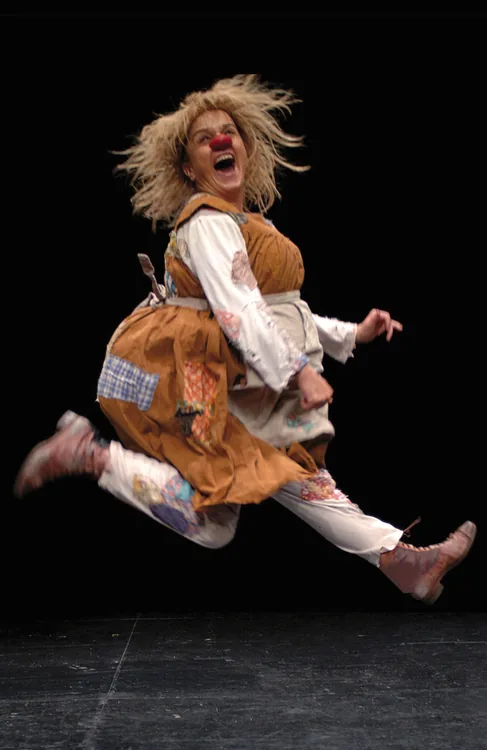
Gardi Hutter, born on March 5, 1953, in Altstätten, Switzerland, is a versatile Swiss artist recognized as a clown-comedian, author, actress, and cabaret performer. She graduated from the Schauspiel-Akademie Zürich in 1977 after studying classical acting and theater pedagogy, demonstrating an early commitment to dramatic arts. Her journey took a significant turn with a three-year 'Clownsgesellenzeit' (clown apprenticeship) at the Centro di ricerca per il teatro (CRT) in Milan, where she was taught by Mario Gonzales, Nani Colombaioni, and Ferruccio Cainero. From 1981, Hutter embarked on an extensive touring career with her 'Clownesken Theater,' performing over 4,000 shows in 35 countries across five continents. Television stations in 17 countries have recorded her performances. Notably, in 1991, she played the Hofnärrin (fool) at the Federal Assembly Chamber of the Swiss Parliament to commemorate Switzerland’s 700-year anniversary, a role that highlighted her unique blend of humor and theatricality. She also co-authored a festival play in 1998 celebrating the 700th anniversary of Altstätten. Hutter's creative output extends beyond live performance; she has written four 'mamma mia!' children’s books, three illustrated by Catherine Louis, and co-wrote the screenplay for the film Hanna & Rocky (1993). She also appeared in Fata Morgana (1989) and starred in the documentary Gardi – l'infinitude du jeu (2012). Her contributions to Swiss theater are recognized through numerous awards, including the Wilhelmshavener Knurrhahn (1987), the Hans Reinhart-Ring (1990), the Prix Walo for “WANDERFUL” in 2014, and twenty-two other art awards. In 2015, she became a member of the Academy of Fools, directed by Slava Polunin. She currently resides in Italian Switzerland and continues to engage audiences through performances and seminars at institutions like the Zurich University of the Arts (ZHdK).

Mousse Boulanger, comedian from Switzerland
Verified Unclaimed
Switzerland

Mousse Boulanger

Mousse Boulanger, born Berthe Sophie Neuenschwander on November 3, 1926, in Boncourt, Switzerland, died on January 16, 2023, in Payerne. Her childhood was spent near the French border, and she was influenced by various dialects within her family. Having completed her secondary education at a cantonal school in Porrentruy with a commercial diploma, she subsequently pursued theatre studies at the École sociale de musique in Geneva. This followed a period as an Au-Pair in Cambridge, which ignited her fascination with museums and Shakespearean plays. She worked as a trilingual secretary in Biel before pursuing a career in the arts. Boulanger’s artistic journey began with acting studies and a performance of a Chekhov play in 1953. In 1953, she met Pierre Boulanger, whom she married in 1955. Together, they embarked on a prolific partnership, producing numerous radio programs from 1956 to 1978, often under the title 'Les Marchands d'images.' They dedicated an episode of their show to Bulgarian literature in 1961 and collaborated with the Centre dramatique national in Lyon, France, on ‘Poésie dans les quartiers’ starting in 1973. Their work included touring with José Azpiazu and his daughter, Lupe, from 1971 to 1974. Boulanger also published several works, including Tendre pays (1967), Reflets (1973), and Ce qui reste du jour (1975), drawing inspiration from Surrealist poets like Paul Eluard. Following Pierre Boulanger’s death in 1978, Mousse Boulanger continued her career. Following her retirement, she had previously been employed as a culture journalist for Westschweizer Radio and participated as a member of the literary jury for the Société jurassienne d'émulation. She appeared on Madame TV in 1969 and was featured in the documentary Plans-fixes in 2000. She released an album, Berceuse pour une maman , in 1975, writing the French lyrics. Boulanger held various positions, including president of the Schweizerischen Schriftstellerverband (SSV) from 1978 to 1982. She received the Prix des écrivains vaudois in 1997, and her legacy continues through the Literaturpreis Mousse Boulanger, established by the Association vaudoise des écrivains (AVE) and awarded for the first time in 2023.

Walter Roderer, comedian from Switzerland
Verified Unclaimed
Switzerland

Walter Roderer

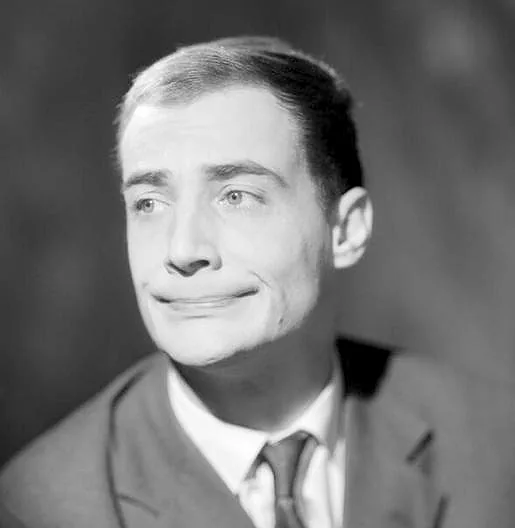
Walter Roderer, born on July 3, 1920, in St. Gallen, Switzerland, was a Swiss actor and screenwriter who enjoyed a long and varied career. Initially intending to become a priest, he studied Greek and Latin before pursuing German studies at the University of Zurich for four semesters. Financial difficulties led him to leave university, and he subsequently took on various jobs including working at the Zürcher Schauspielhaus for 30 francs per evening, in a factory, and as a representative for Bohnerwachs. His early career included minor roles and work with the Cabaret Fédéral, leading to recognition and appearances in Swiss films like Oberstadtgass . He appeared in films such as The Venus of Tivoli (1953) and Der 10. Mai (1957), and starred in the popular 1959 comedy The Model Husband , which achieved a record-breaking 1288 performances. He also acted in The Man in the Black Derby (1960) and The Maddest Car in the World (1975). His work extended beyond Switzerland, gaining recognition in Germany through his appearances in the Dudu-Film series. In 1957, he founded his own touring theater, further solidifying his presence in the entertainment industry. He published his autobiography, Sie müend mi verstoh …, … gelled Sie! Erinnerungen eines ernsthaften Humoristen , in 1987. Later in his career, Roderer achieved significant success with Ein Schweizer namens Nötzli (1988), which led to the sequel Der doppelte Nötzli (1990). He received numerous awards throughout his life, including the Prix Walo as a popular favorite in 1983 and 1988, and the Ehren-Prix Walo in 2006 for lifetime achievement, as well as the Swiss Television Award Lifetime Award in 2010. Roderer retired from the stage in 1993. He also engaged in political activism, campaigning against Swiss accession to the EEA in 1992. Walter Roderer died on May 8, 2012, in Illnau, and a path in that town was subsequently named in his honor. He is remembered for his contributions to Swiss comedy and film.

Swiss Comedians and Comedy

Switzerland has a diverse comedy scene shaped by its multilingual culture and distinct German, French and Italian-speaking regions. Swiss comedians perform in several languages and often draw humour from everyday life, relationships, regional differences and the quirks of Swiss society.

Comedy in Switzerland can be found on television, theatre stages, comedy clubs, festivals and increasingly on digital platforms. The country's relatively small population has not stopped it from developing a strong local comedy tradition, with performers often building audiences across different parts of the country.

Popular Swiss Comedians

Switzerland has produced comedians and entertainers who are well known both nationally and within particular language regions.

Marco Rima is one of the country's best-known comedians and actors. He has built a long career through live comedy, theatre, television and film, becoming particularly popular in German-speaking Switzerland.

Peach Weber is another major name in Swiss comedy. Known for his storytelling, songs and observational humour, he has performed for decades and has become an important figure in Swiss German entertainment.

Massimo Rocchi is a Swiss-Italian comedian, actor and performer whose multilingual background is an important part of his comedy. His performances often play with language, accents and cultural differences.

Other notable Swiss comedians include Emil Steinberger, one of the country's most influential comedy performers, as well as Mike Müller, who has worked extensively as an actor, comedian and television personality. In the French-speaking part of Switzerland, performers such as Thomas Wiesel have helped establish a strong modern stand-up scene.

Stand-Up Comedy in Switzerland

Stand-up comedy has become increasingly visible in Switzerland, particularly in larger cities such as Zurich, Geneva, Basel, Lausanne and Bern. Comedy clubs and theatres regularly host local performers as well as comedians from neighbouring countries.

Swiss stand-up often reflects the country's multicultural character. Depending on the performer and region, jokes may be delivered in Swiss German, standard German, French, Italian or English. This creates an interesting environment where comedians can explore differences between languages and cultures as part of their material.

Everyday Swiss life is another common source of humour. Topics can include work, public transport, bureaucracy, relationships, family life, regional habits and the sometimes unusual expectations associated with Swiss culture.

Comedy Across Switzerland's Language Regions

One of the most interesting aspects of Swiss comedy is the country's linguistic diversity. German-speaking Switzerland has a large audience for Swiss German comedy, while French-speaking Switzerland has its own comedians, clubs and television personalities. The Italian-speaking canton of Ticino also has a distinct comedy tradition.

Because humour is closely connected to language, a joke that works perfectly in one part of the country may have a very different effect somewhere else. Swiss comedians therefore often develop their material specifically for the language and audience they are performing for.

This regional variety gives Switzerland a comedy scene that feels different from a single national tradition. It is more accurate to think of Swiss comedy as several connected scenes sharing the same country.

Swiss Comedy on Television and Online

Television has played an important role in introducing comedians to wider Swiss audiences. Comedy programmes, talk shows, satire and entertainment shows have provided performers with opportunities to develop recurring characters and reach viewers outside the live comedy circuit.

Digital platforms have opened even more possibilities. Swiss comedians increasingly use YouTube, Instagram, TikTok and podcasts to share sketches, short jokes, interviews and clips from live performances.

Online platforms are particularly useful for younger performers because they can reach audiences across Switzerland and beyond without being restricted to a single language region or traditional television format.

Discover Swiss Comedians

Swiss comedy offers plenty of variety, from Swiss German storytelling and French-language stand-up to Italian-language performances and multilingual comedy. The country's regional cultures and languages give its comedians a distinctive range of subjects and styles.

Whether you enjoy observational humour, satire, storytelling, character comedy or modern stand-up, Switzerland has performers worth discovering. Browse GiggleTime to discover Swiss comedians, learn more about individual performers and explore comedy from Switzerland alongside comedians from countries around the world.