Aristide Bruant
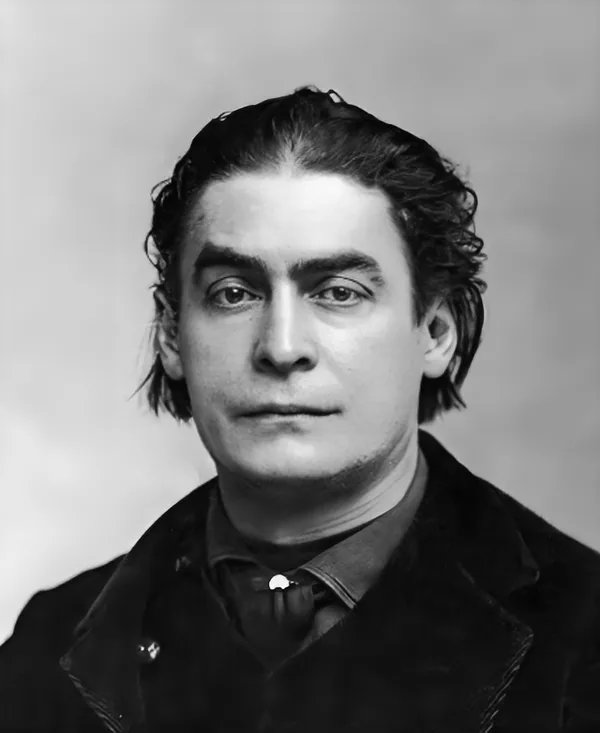
Born May 6, 1851, in Courtenay, Loiret, France, Aristide Bruant was a nightclub owner, cabaret performer and comedian. He came from a bourgeois family, and as a child, he received education including studies in Latin with the local priest. At the age of eleven, he achieved success by winning several prizes in various subjects, including vocal music, at the Imperial Lycée of Sens. Bruant’s early life was marked by financial hardship; his family moved five times between 1863 and 1867. He began composing songs as early as 1862. Following his father's death in 1866, Bruant left home at fifteen to seek employment. He worked as a jeweler’s apprentice and later as a jeweler before briefly serving as a volunteer sharpshooter during the Franco-Prussian War of 1870. Subsequently, he spent four years working for the Northern Railway Company. During this period, he developed his singing and comedy act, performing at cafe-concerts and small venues called 'goguettes'. He gained recognition through these performances and was encouraged to perform at venues like the Robinson, the Concert des Amandiers, and the Concert de l'Époque. Bruant’s stage persona became recognizable, featuring high boots, a long red scarf, a black velvet jacket, plus frequent appearances in a red shirt. Bruant’s artistic peak occurred between 1880 and 1905. He opened his own club, 'Le Mirliton', in 1885, where he employed comedy of insult to entertain his audience. The club also featured a magazine of the same name with illustrations by Henri de Toulouse-Lautrec, who created an iconic poster featuring Bruant. Bruant is credited with creating the chanson réaliste musical genre and is considered one of the greatest poets of Parisian slang (argot). 'Nini Peau d'Chien', 'A la Bastille', and 'Le Chat Noir' are among the songs that gained him considerable recognition. The realist chanson movement, which Bruant helped establish, continued until the mid-20th century, with Édith Piaf considered one of its last interpreters. Following his death in Paris (18th arrondissement) on February 11, 1925, Aristide Bruant was laid to rest in the cemetery of Subligny.