
GiggleTime for Android
Free on Google Play
Get the app
GiggleTime GiggleTime
Menu
Go Premium Submit a Joke Comedians About FAQs Contact Add a comedian
Get the app
Follow us

Legal
Privacy Policy Terms of Service Cookie Policy Refund and Cancellation Policy Attributions
Login
Language
Categories
Settings
Language English
Safe Mode
Random Jokes Autoplay
Notifications
Global Talent Directory

Comedians from France

The comedian directory for France: profiles, bios, photos and social links.

Add a comedian
Reset
214 comedians
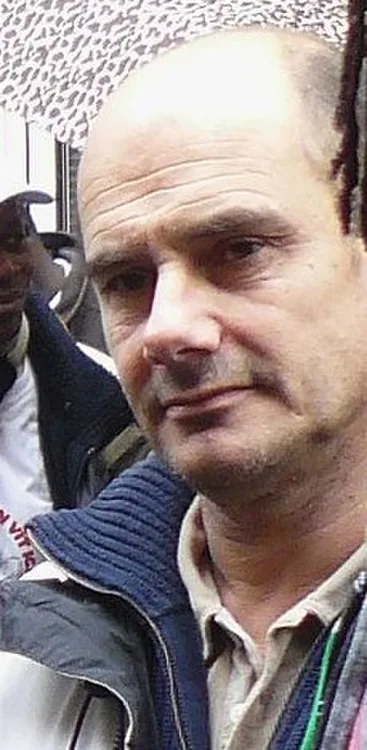
Bernard Campan, comedian from France
Verified Unclaimed
France

Bernard Campan

Bernard Campan is a French individual who works as an actor, film director, and writer. Born on April 4, 1958, in Agen, Lot-et-Garonne, France, he has Italian ancestry. His father was an Italian professor who later received the Chevalier des Arts et des Lettres, while his mother was a French professor. Campan spent his childhood in Tours. Campan's career began with appearances on the television show Le Petit Théâtre de Bouvard in the early 1980s, where he befriended Didier Bourdon and Pascal Légitimus. These friendships led to the formation of the comedy trio Les Inconnus in the late 1980s. From 1984 to 2001, Campan was a member of this popular group. Les Inconnus gained significant recognition for their satirical sketch comedy show La Télé des Inconnus , which aired from 1990 to 1993. He studied theater at the Cours Simon in Paris after obtaining his baccalaureate. Campan’s work with Les Inconnus includes writing and directing Les Trois Frères (1995), which earned the César Award for Best First Film, and co-writing and directing Le Pari (1997). He also played Bernard Latour in Les Trois Frères and Melchior in The Three Magi (2001), marking the end of Les Inconnus’s active period. His acting career extends beyond comedy, with roles in dramas such as Se souvenir des belles choses (for which he received a nomination for Best Actor) and Beautiful Minds . Around 2002, his friendship with philosopher Alexandre Jollien influenced a shift towards more dramatic roles. Campan has appeared in films like Les Misérables: The Story of Jean Valjean , The Tasting , and A Bag of Marbles . He is currently starring in Le Diplôme , a six-episode mini-series airing on TF1, and will appear as Bishop Bienvenu Myriel in the 2025 film Jean Valjean . Campan has explored human vulnerabilities in his work, taking on sensitive roles throughout his career. Campan's career spans three decades and encompasses a wide range of roles, from comedy to drama. He is described as a popular humorist who is also a deep, funny, and serious actor. He married Anne in 1989 and they have two daughters, Nina Louise and Loan. In January 2026, he discussed experiencing a drug addiction on the podcast Sillage , revealing details about a specific year of his life. He recently appeared as a guest on 'Le Jardin secret' to discuss his career, highlighting his long history with cinema.
Channig, comedian from France
Verified Unclaimed
France

Channig

Georges Quilliou, who calls himself Channig on stage, sees the day on 3 0 November 1950 in Brest and became a Breton comedian. caricature of older women from Brittany, employing French constructions borrowed from Breton while reproducing the same vocal inflections.

Christian Marin, comedian from France
Verified Unclaimed
France

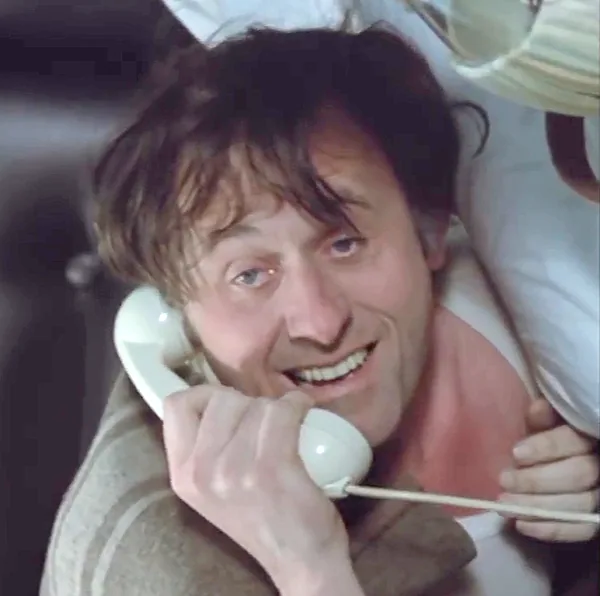
Christian Marin

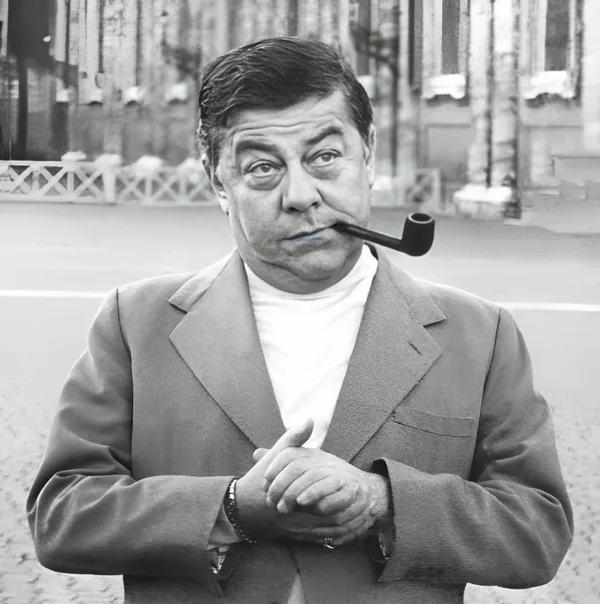
Christian Marin, born on February 8, 1929, in Lyon, France, was an actor who enjoyed a long and varied career. He began his artistic training by studying at the Beaux-Arts in 1949 before attending the Lyon Conservatory. Though he auditioned for the Comédie Française in 1951 without success, he soon found opportunities within the theatrical world. From 1953 to 1955, he was part of Jean Dasté’s Comédie de Saint-Étienne and, around 1955, began performing in Parisian cabarets. He joined Jean Vilar's TNP troupe, where he met Daniel Sorano and Gérard Philipe, demonstrating his early commitment to the performing arts. Marin’s film career began in the early 1960s, with appearances in films such as Les Tortillards (1960), Le Tracassin ou Les Plaisirs de la ville (1961), La Belle Américaine (1961), and All the Gold in the World (1961). He continued to appear in a variety of films, including L'honorable Stanislas, agent secret (1963) and Bebert and the Train (1963). Recognition came with Pouic-Pouic in 1963. Perhaps his most significant contribution was portraying Marshal Albert Merlot in the first four installments of the Le gendarme de Saint-Tropez film series, from 1964 to 1970. He also starred as Lieutenant Ernest Laverdure in the television serial Les Chevaliers du ciel between 1967 and 1969. Throughout his career, he appeared in roughly fifty films directed by Claude Autant-Lara, Costa-Gavras, and Yves Robert. Marin’s work extended beyond film and television; he performed in approximately forty plays, and recorded several 45 RPM records between 1963 and 1972. He declined a fifth role in Le Gendarme et les Extraterrestres in 1978. Later in his career, he appeared in Le Gang des Seniors starting in 2010. He co-wrote his memoirs, Mémoires d’un chevalier du ciel , with Gilles Antonowicz. Christian Marin was a member of the Alphonse Allais Academy and was married to Monique for sixty years; they had four children and eight grandchildren. He passed away on September 5, 2012, in Paris, leaving behind a legacy as a versatile actor best known for his role as 'Merlot' in the Le gendarme film series and his final appearance in Dead Man Talking (2012).

Dieudonné Mbala Mbala, comedian from France
Verified Unclaimed
France

Dieudonné Mbala Mbala

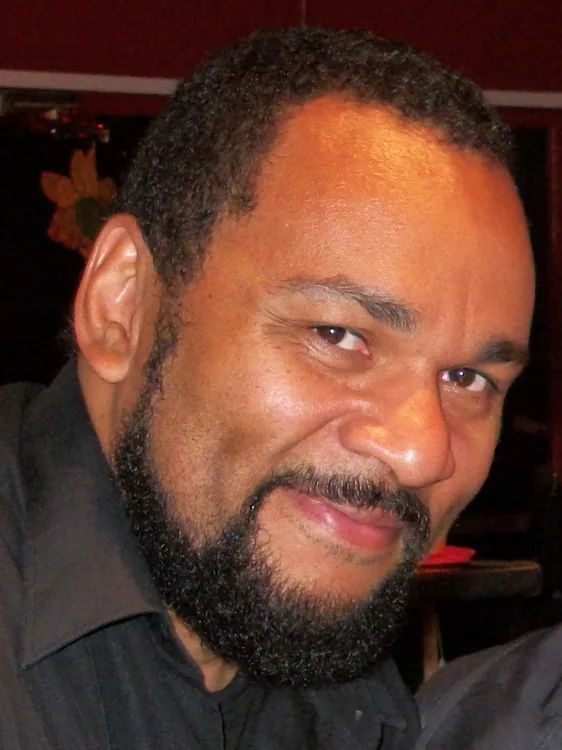
Dieudonné Mbala Mbala, who frequently uses the stage names Dieudonné or Dieudo, is a French entertainer working as a comedian, actor, and political advocate. He was born on February 11, 1966, in Fontenay-aux-Roses, France, the son of a Cameroonian accountant and a French sociologist. Raised by his mother following his parents' divorce when he was one year old, he spent his childhood in the Paris suburbs. After attending Lycée Lakanal de Sceaux and Lycée Michelet de Vanves without completing a diploma, he held a job as a sales representative before embarking on a career in comedy. Dieudonné initially gained recognition in the 1990s as part of the comedic duo Élie et Dieudonné with Élie Semoun. Their humor was initially identified as antiracist, and they created Bonnie Productions together in 1993. He subsequently pursued a solo career, developing socially conscious one-man shows and also appearing in film. From 2006 to 2020, he had a relationship with Noémie Montagne and fathered five children. In the late 1990s, Dieudonné became politically active, initially opposing the far-right, but his views shifted significantly over time. From the 2000s onward, Dieudonné’s statements increasingly attracted accusations of antisemitism and controversy. He ran for legislative elections in Champagny-en-Vanoise in 1997 and 2001, opposing the National Front at first. Later, he became political allies and friends with Jean-Marie Le Pen in 2007, and gradually moved towards the ‘French national socialism’ of Alain Soral and the Front National. In France, Belgium, and Switzerland, convictions have been issued against him for offenses including hate speech, promoting terrorism, denying the Holocaust, and defamation. Notable incidents include a 2003 sketch depicting an Israeli settler as a Nazi and accusations in 2013 of mocking a Jewish journalist. A signature gesture, the ‘quenelle,’ became notorious in 2013. Throughout his career, he has faced frequent restrictions from traditional media outlets, and numerous performances were halted by local governments; specifically, a production between 2013 and 2014 resulted in an official ban from the French government. Media, politicians, and political scientists largely consider him an antisemite, and he identifies as ‘antisestablishment’ and ‘anti-Zionist.’

Francis Blanche, comedian from France
Verified Unclaimed
France

Francis Blanche

Francis Blanche, born François Jean Blanche on July 20, 1921, in Paris, was a multifaceted French artist. He worked as an actor, singer, humorist, and author. His father, Louis Blanche, was a stage actor, and his uncle, Emmanuel Blanche, was a painter. His intellectual gifts were evident from childhood; he finished secondary school at fourteen, a record then for the youngest person in France. A heart attack, resulting from his untreated Type 1 diabetes, caused his death in Paris on July 6, 1974; he was 52 years old. Blanche's career began with early radio appearances in 1944 at Radio-Bretagne in Rennes. He gained prominence in the 1940s and 1950s as part of Robert Dhéry’s theatrical company, Les Branquignols, appearing in the film Ah! Les belles bacchantes (1954) with them. He frequently collaborated with Pierre Dac, forming a comic duo that created works such as Le Sâr Rabindranath Duval (1957). Together, they produced the radiophonic series Malheur aux barbus , broadcast from 1951 to 1952, and later revived it as Signé Furax , which ran from 1956 to 1960 with over 1,000 daily episodes. He was also known for inventing and authoring famous telephone pranks broadcast on the radio. Throughout his career, Blanche performed in numerous stage productions, including Tartuffe and Néron , and appeared in the operetta Chevalier du Ciel (1955). He starred in over twenty films, including Frederica (1942), They Are Twenty (1950), and Les Tontons flingueurs (1963) where he played Maître Folace. He frequently collaborated with filmmaker Georges Lautner, also appearing in Les Barbouzes (1964). Blanche’s comedic style often involved parodying classical music; for example, he created a piece based on Schubert's 'Die Forelle,' and transformed Beethoven's 5th Symphony into a musical tribute to the clothes peg. He authored several works including Mon oursin et moi (1972) and Pensées, répliques et anecdotes (1972). He is buried in Èze cemetery.

Hervé Villechaize, comedian from France
Verified Unclaimed
France

Hervé Villechaize

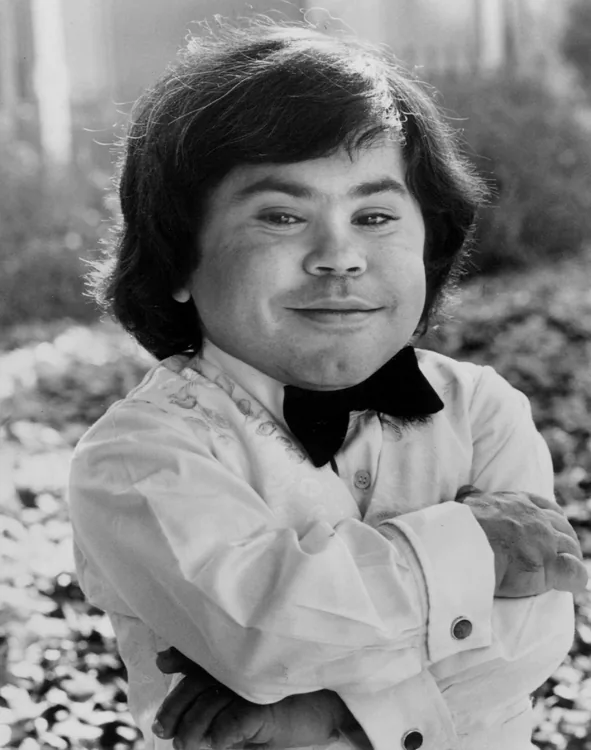
Hervé Jean-Pierre Villechaize, born April 23, 1943, in Paris, was a French actor. His parents were Evelyn Recchionni and André Villechaize; his father was a surgeon who attempted to find a cure for Hervé’s dwarfism, likely caused by an endocrine disorder. Born during the Nazi occupation of Paris, he had German ancestry and three brothers: Philippe, Patrick, and Jean-Paul. He is also the uncle of journalist and television presenter Thomas Villechaize. Villechaize initially pursued a career in art. In 1959, he attended the École des Beaux-Arts, and in 1961, his art was displayed at the Museum of Paris. At age 21, he moved to New York City in 1964 to continue painting and photography, settling in a Bohemian section. He learned English by watching television and worked as an artist, painter, and photographer, also modeling for photos for National Lampoon . He appeared in Off-Broadway productions and worked as an assistant inking comic books for Harvey Comics between 1971 and 1973, including titles like Casper and Richie Rich . His film debut was in 1966 in the Franco-American film Chappaqua . Villechaize gained international recognition for his role as Nick Nack in the 1974 James Bond film The Man with the Golden Gun , and later as Tattoo on the American television series Fantasy Island from 1977 to 1983, appearing in 131 out of 155 episodes. He also voiced Oscar the Grouch's legs on Sesame Street starting in 1977. His career included appearances in Airplane II: The Sequel (1982), The Fall Guy , and Forbidden Zone . A salary dispute led to him being fired from Fantasy Island in 1983. He made a posthumous appearance in a 2015 Heineken James Bond advertisement, and his last television appearance was on The Ben Stiller Show in the fall of 1992. Hervé Villechaize died by suicide on September 4, 1993, in Hollywood, California, at the age of 50; his ashes were scattered at Point Fermin.

Johan Golden, comedian from France
Verified Unclaimed
France

Johan Golden

Johan Golden is a multifaceted figure from Norway, recognized as a comedian, musician, former politician, and radio/television presenter. He initially gained public attention through his work on the radio program XL. Golden’s early career also included a foray into politics, as he ran for Det Politiske Parti in the 2001 Norwegian parliamentary election in Oslo, campaigning with the slogan 'Your slave in parliament'. Beyond these endeavors, he is a member of the band DDR, demonstrating his musical talents. Golden’s comedic partnership with Atle Antonsen has been a significant element of his career. They co-hosted the television program En L.U.N. Aften med Golden og Antonsen on Metropol, and later continued their collaboration on P4 with Misjonen, evolving from their earlier radio program. He also previously hosted Kommisjonen on Kanal 24 alongside Atle Antonsen. Currently, Johan Golden co-hosts the comedy talk show 'Golden Goal' with Henrik Elvestad, which airs on Norwegian TV2. The show focuses on sports and features interviews with athletes, exploring both familiar and unusual sporting activities from around the world. The show 'Golden Goal' premiered in 2006, with notable guests appearing throughout its first season including Åge Hareide, John Shittu, Arne Scheie, Linn Githmark, Tommy Ingebrigtsen, Davy Wathne, Ståle Solbakken, and Gunde Svan. Beyond his television work, Golden is also known for inventive pursuits; in 2011, he and Henrik Elvestad invented bubble foot, a fun variation of football, which they first presented on 'Golden Goal'. The show's exploration of these variations highlights Golden’s playful approach to comedy and entertainment.

Michaël Youn, comedian from France
Verified Unclaimed
France

Michaël Youn

Michaël Youn, born Michaël Benayoun on December 2, 1973, in Suresnes (Hauts-de-Seine), is a multifaceted French entertainer. He is an actor, humorist, singer, director, screenwriter, producer, radio host, and television presenter. His ancestry includes Hungarian, Italian, Jewish Moroccan, and Jewish Algerian roots. Youn's parents are a former math teacher turned business psychologist and a personnel management professional. Youn’s career began early; he started performing on stage at age three and took piano lessons at five. He attended preparatory school and graduated from ESC Nice in 1996 with a master's degree in management. In 1998, having completed training as both an announcer and a theater actor, he began working at the Paris radio station Skyrock, where he presented the morning news program until 2000. He then hosted 'Morning Live' on M6 from July 2000 to March 2002, where he gained recognition through camera pranks and the creation of parodies featuring artists like Jean-Michel Jarre and French rappers. During his time at M6, Youn, along with Vincent Desagnat and Benjamin Morgaine, formed 'The Bratisla Boys' in 2000. The track 'Stach Stach,' which they released in 2002, proved highly popular, topping the French music charts for ten weeks and ultimately ranking as the 30th best-selling CD in France by 2004. He and Desagnat co-wrote and starred in the film 'La Beuze' (2003), where Youn created the fictional music style 'frunkp'. Further comedic ventures include 'Pluskapoil' (2003/04) tour, the role of Iznogoud in the 2005 film adaptation, and the parody act 'Fatal Bazooka,' which topped the charts with 'Fous ta cagoule' in 2006. Youn’s musical career continued with the single ‘Mauvaise foi nocturne’ featuring Pascal Obispo in 2007. He has directed films like 'Fatal' (2010) and 'Vive la France' (2013), often starring in his own projects. Since 2014, Youn has taken on dramatic roles in television and is currently a member of the investigative jury on 'Mask Singer' since 2025.

Mohamed Said Fellag, comedian from France
Verified Unclaimed
France

Mohamed Said Fellag

Mohand Fellag, also known as Mohamed Fellag, sometimes simply Fellag or Mohamed Saïd Fellag, was born on 3 1 March 1950 in Azeffoun, Algeria. He worked as an actor, humorist, director and writer in Algeria, and expressed himself in Kabyle, Arabic and French.

Mouss Diouf, comedian from France
Verified Unclaimed
France

Mouss Diouf

Mouss Diouf, born Pierre Moustapha Diouf on October 28, 1964, in Dakar, Senegal, was a French-Senegalese actor, comedian, and humorist. His family moved to Marseille when he was four years old, and later relocated to Bobigny, Seine-Saint-Denis, France. Initially pursuing boxing, Diouf transitioned to acting, beginning his career in theater with Jérôme Savary in 'Le Bal des Cocus'. Diouf’s filmography spanned several decades and encompassed a wide range of roles. He appeared in films such as ‘Parole de flic’ (1985) and ‘Billy Ze Kick’ (1985), followed by ‘Loulou Graffiti’ in both 1991 and 1992. Further film credits include ‘Les époux ripoux’ (1991), ‘Les secrets professionnels du Dr Apfelglück’ (1991), ‘Berlin Lady’ (1991), ‘Inspecteur Médeuze’ (1993), ‘Le Lyonnais’ (1993), and ‘Acapulco H.E.A.T.’ (1993). He also had roles in 'Lévy et Goliath' (1987) and 'Toubab Bi' (1991). Diouf played a lead role in the film 'The Beast' (La bête) and portrayed Baba in ‘Asterix & Obelix: Mission Cleopatra’. Beyond film, Diouf had a significant presence on television. He appeared in the series ‘Navarro’ in 1991 and held a prominent role as Inspector N'Guma in ‘Julie Lescaut’ from 1992 to 2006. He also participated in 'Les Anges gardiens' (1994) and 'Les Deux Papas et la Maman' (1996), and voiced characters in the animated Disney films 'Atlantis: The Lost Empire' and 'Lilo & Stitch' (2000). Diouf explored his comedic talents through two one-man shows, ‘Avant, quand j'étais noir’ and ‘Naturellement humain’ (2008). He also appeared in the reality show 'La Ferme Célébrités' in 2004 and the series 'Ali Baba' in 2007. Diouf suffered two strokes in 2009, and he died on July 7, 2012, at his home in Marseille due to complications from a stroke. An episode of ‘Julie Lescaut’ was dedicated to his memory following his death.

Nicolas Bedos, comedian from France
Verified Unclaimed
France

Nicolas Bedos

A French entertainer, Nicolas Bedos works as a comedian, writer, director, and actor. Born on April 21, 1979, in Neuilly-sur-Seine, he comes from a family steeped in the arts; his father is humorist Guy Bedos, and his mother is screenwriter Joëlle Bercot. He attended bilingual international school and Lycée Pasteur but left early without graduating. From a young age, Nicolas Bedos harbored aspirations of making movies, and he began his career at age eighteen as a reader and artistic advisor for Canal+, working under Alain de Greef. Bedos gained recognition in 2004 as a playwright, producing four works including the successful 'Sortie de scène,' which toured for two years. He collaborated with his father early in his career, co-writing sketches for a show that toured France in 2000 and contributing to his father’s performance at the Olympia when he was twenty. His television and radio experience, including a radio show on Oui FM and contributions to 'Semaine critique!' and 'On n'est pas couché' from 2010 to 2015, influenced his writing style, incorporating humor into his work. He received a César Award for Best Original Screenplay in 2020. Nicolas Bedos has directed four films: Mr. & Mrs. Adelman (2017), La Belle Époque (2019), OSS 117: Alerte rouge en Afrique noire (2021), and Mascarade (2022). He has written for eight films, composed music for four, and served as an original writer for two. The court found Nicolas Bedos guilty of sexual assault in October 2024 and imposed a one-year prison sentence, including six months suspended, alongside requirements for addiction and psychological therapy. This conviction, which includes placement on France’s sex offenders list, followed allegations dating back to 2018 and included incidents reported in 2023. He denied being a sexual aggressor, attributing his actions to excessive alcohol consumption.

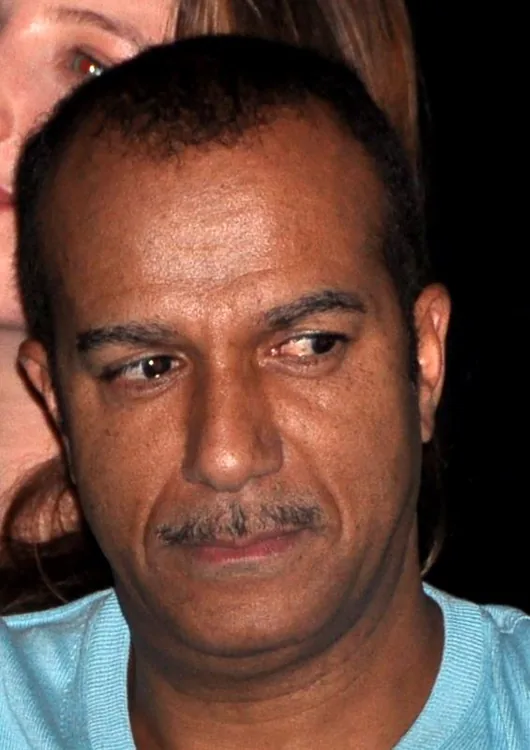
Pascal Légitimus, comedian from France
Verified Unclaimed
France

Pascal Légitimus

A French actor, comedian, and theatre director, Pascal Légitimus entered the world on March 13, 1959, in Paris’s 17th arrondissement. The grandson of comedian Darling Légitimus and nephew of television producer Gésip Légitimus, he has familial ties to a creative background. He also has connections to Étienne Légitimus and is a cousin of Laurent Voulzy. His mother, Madeleine Kambourian, was an Armenian theater costumer, while his father, Théo Légitimus, was an actor of Antillean descent with Ethiopian ancestry. This diverse lineage appears to have influenced his career path. Légitimus’s early involvement in theatre began at Claude-Bernard High School in Paris, where he gained recognition as an actor. In the mid-1970s, he co-founded a theater club with Éric Civanyan and Daniel Schick. He subsequently appeared on Le Petit Théâtre de Bouvard in the early 1980s as part of a group initially called 'Les Cinq de Bouvard'. He achieved significant success starting in 1985 as a member of the comedy group Les Inconnus, which also includes Didier Bourdon and Bernard Campan. The group is known for iconic sketches like ‘Rap-tout’ and ‘Télémagouilles,’ and they released the critically and commercially successful film Les Trois Frères in 1995, winning the César Award for Best First Film. He has been collaborating with Didier Bourdon and Bernard Campan for forty years. Beyond his work with Les Inconnus, Légitimus has pursued various creative endeavors. He wrote, directed, and produced the film Antilles sur Seine . From 1998 to 2003, he starred in the police series Crimes en série , and from 2006 to 2009, he played the patriarch in Les Tricheurs . He has also directed plays such as Plus si affinités and currently stars in Non à l'argent! starting in 2017. In 2011, he performed a stand-up show called Alone Man Show . He is now appearing in Le Duplex , which premiered in February 2024 and will return on September 12, 2024, at the Théâtre de Paris, as well as Le Bémol and Vols au Musée de la Croûte . A book, La Bible des Inconnus , chronicling their forty years of work together, is scheduled for publication on October 2, 2025. He also participates in a webinar called 'Bas les Masques' with Roméo Cournal and has a passion for seashells.

French Comedians and the World of French Comedy

France has a long and distinctive comedy tradition, with humour playing an important role in theatre, cinema, television and live entertainment. French comedians have developed many different forms of comedy over the years, from theatrical performances and classic satire to modern stand-up, sketch comedy and online content.

GiggleTime's directory brings together French comedians, stand-up performers, comedy actors, writers and other personalities associated with French comedy. Browse the profiles above to discover comedians from different generations and learn more about their careers and work.

Stand-Up and Live Comedy in France

Modern stand-up has become an increasingly visible part of the French comedy scene. Comedians perform in dedicated comedy clubs, theatres, cafés and other venues, presenting material that ranges from personal stories and observational humour to social commentary, satire and absurd comedy.

The French live comedy scene is particularly active in Paris, where performers can find numerous venues and audiences for both established shows and new acts. Comedy is also performed throughout cities and regions across France, giving comedians opportunities to develop audiences outside the capital.

French-language comedy also extends beyond France itself, with performers and audiences connected to the wider Francophone world.

The French "One-Man Show" Tradition

One of the distinctive formats associated with French comedy is the one-man show, in which a comedian performs a full-length solo production for an audience.

These shows can combine stand-up, storytelling, theatrical performance, characters and scripted comedy. The format has become an important part of French popular entertainment and has helped many comedians develop a recognisable stage identity.

While contemporary French stand-up continues to evolve, the connection between comedy and theatrical performance remains an important characteristic of the country's comedy culture.

French Comedians in Film and Television

French comedy has a strong presence in cinema and television. Comedians frequently move between live performance, acting, writing and presenting, with many performers building careers across several forms of entertainment.

French television has produced numerous comedy programmes, sketch shows and entertainment formats, while French cinema has a long history of successful comedy films and memorable comic performances.

The relationship between stand-up and screen acting is particularly interesting in France, where a comedian may begin with live performances before moving into films, television or other forms of entertainment.

A Diverse French Comedy Scene

There is no single style that defines French comedy. Performers work across observational comedy, satire, parody, physical comedy, character-based performances, storytelling and improvisation.

Different generations of comedians have also brought different influences to the scene. Established performers continue to appear alongside newer comedians who use podcasts, YouTube, social media and streaming platforms to reach audiences.

This combination of traditional stage comedy and digital entertainment has created more opportunities for emerging French comedians to develop their own audiences and styles.

Discover French Comedians on GiggleTime

Looking for French comedians, French stand-up comedians or comedy actors from France? Explore the GiggleTime directory above to discover performers from different periods and areas of French entertainment.

Search for a particular comedian or browse the profiles to discover new names. Individual pages may include biographical information, career details, performances, photographs and other interesting facts.

Whether you enjoy French stand-up, comedy films, television comedians, one-man shows or classic French comedy, GiggleTime makes it easier to discover the people behind the humour.

Our directory continues to expand with new profiles, giving you more ways to explore the world of French comedy.