GiggleTime GiggleTime
Menu
Go Premium Submit a Joke Comedians About FAQs Contact

Legal
Privacy Policy Terms of Service Cookie Policy Refund and Cancellation Policy Attributions
Login
Language
Categories
Settings
Language English
Safe Mode
Random Jokes Autoplay
Notifications
Global Talent Directory

Comedians Directory

Browse comedian profiles, biographical summaries, country of origin, and official links.

Add a comedian
1635 comedians
Alberto Sordi, comedian from Italy
Verified Unclaimed
Italy

Alberto Sordi

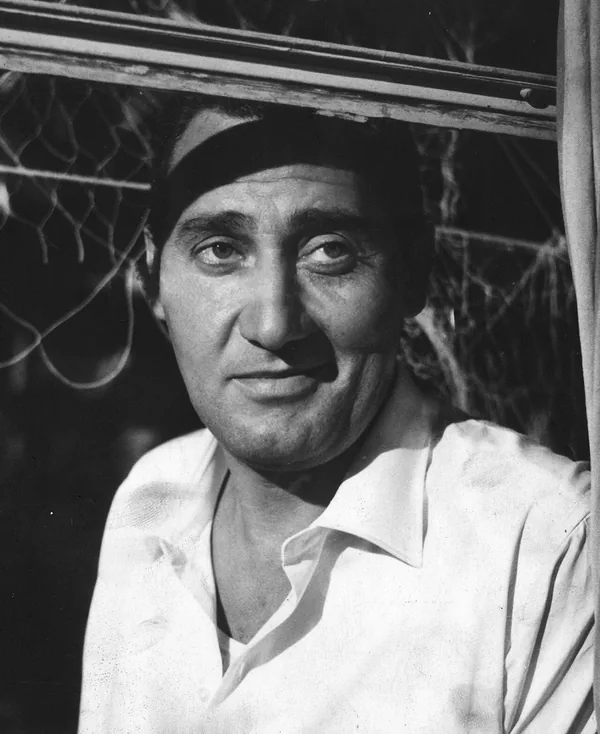
Born on June 15, 1920, in Rome, Alberto Sordi was a multifaceted Italian artist who worked as an actor, comedian, voice dubber, director, singer, composer, and screenwriter. He died in Rome on February 24, 2003. His career spanned over 60 years and encompassed 160 films, with him directing 18 of them. Sordi, recognized as a pivotal figure in commedia all'italiana and one of the most significant actors in Italian cinema, often portrayed changes within Italian society through his performances. Sordi began his career with a 15-year period of small roles as an extra or supporting actor, appearing as an extra in Scipione l'Africano in 1937. He initially pursued musical studies, singing in the Sistine Chapel Choir at age seven and studying opera for several years after his voice changed. Although he briefly studied at the Giulio Romano Commercial Institute in Trastevere and later graduated as an accountant to please his mother, he also attended the Accademia dei filodrammatici in Milan but was expelled due to his Romanesco dialect and perceived lack of talent. He found early success as a voice actor, notably dubbing Oliver Hardy beginning in 1937. His theatrical experience further shaped his comedic abilities. Sordi achieved prominence as a leading actor in the early 1950s and is considered one of the greatest interpreters of Italian comedy. He frequently collaborated with Nino Manfredi, Vittorio Gassman, and Ugo Tognazzi, forming a popular quartet. A prominent trio also included Aldo Fabrizi and Anna Magnani, contributing to Roman cinematic representation. While his early work established him as a comedic force, he began interpreting complex dramatic characters in the 1960s. Throughout his career, Sordi drew inspiration for his characters from Italian society, collaborating with prominent directors, writers, and screenwriters. He won five Nastro d'argento awards, ten David di Donatello awards, and a Golden Globe award. In recognition of his extensive contributions to cinema, he was awarded the Golden Lion for Lifetime Achievement.

Aldo Fabrizi, comedian from Italy
Verified Unclaimed
Italy

Aldo Fabrizi

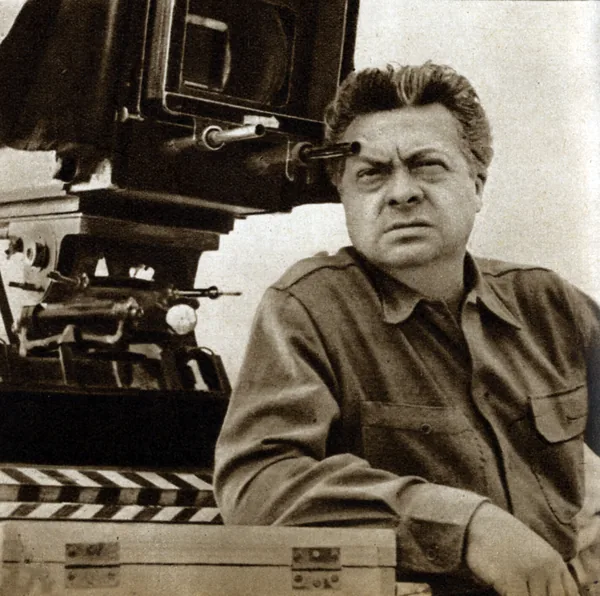
Born in Rome as Aldo Fabbrizi on November 1, 1905, Aldo Fabrizi was an Italian entertainer who worked as an actor, director, screenwriter, and comedian. His father, Giuseppe Fabbrizi, passed away when he was eleven, and his mother, Angela Petrucci, worked as a fruit vendor from Tivoli. Fabrizi began his career in 1931 at a suburban theater in Rome, gaining local success through comical sketches and monologues while performing with the ‘Reginella’ company. He became a prominent figure in the Roman revue and avanspettacolo scene, contributing to the dialect newspaper 'Rugantino' and publishing a book of Roman poems, 'Lucciche ar sole', in 1928. Fabrizi’s career expanded beyond the stage. He debuted on film in 1942 with Avanti c'è posto... and later achieved significant recognition for his role as a heroic priest, Don Morosini, in Roberto Rossellini's Rome, Open City (1945). He also provided voice acting for characters in films such as Maddalena... zero in condotta (1940) and Ladri di biciclette (1948). Throughout the 1950s and 1960s, he frequently collaborated with Totò and Peppino De Filippo, both on screen and stage; Fabrizi and Totò shared a close friendship and enjoyed improvisational acting together. He directed the drama Immigrants in 1948, and won a Silver Ribbon award for his performance in Prima comunione (1950) as well as another for Father's Dilemma . Fabrizi achieved further stage success with the musical comedy Rugantino (1964). Fabrizi’s talent and contributions to Italian entertainment were widely acknowledged. He received a special David di Donatello Award in 1988 for his career, and won two Nastro d'Argento Awards, including one for We All Loved Each Other So Much . He also earned recognition at the 1952 Cannes Film Festival for best screenplay for Cops and Robbers . His performances often portrayed Roman types like cart drivers and tram conductors. Fabrizi toured across Europe, Latin America, and Broadway, briefly having Alberto Sordi in his acting troupe around 1937. He was married to singer Beatrice Rocchi (Reginella) until her death in 1981. Following his death in Rome on April 2, 1990, Poste italiane released a commemorative stamp in Aldo Fabrizi’s memory later that year.

Ambra Angiolini, comedian from Italy
Verified Unclaimed
Italy

Ambra Angiolini

Ambra Angiolini is an Italian actress and singer, born in Rome on April 22, 1977, to Alfredo Angiolini and Doriana Comini. She has two older siblings, Barbara and Andrea. Her career began at the age of 13 as an extra in the TV show Fantastico in 1990 and 1991. She gained early recognition participating in Bulli e pupe in 1992, performing Claudio Baglioni's 'Poster', and subsequently hosting Non è la RAI from 1992 to 1993, a role that significantly boosted her profile. During her time on Non è la RAI , Ambra Angiolini launched a singing career, releasing the single 'T'appartengo' in 1994. This led to the release of her first album, T'appartengo , which achieved considerable success, selling 800,000 copies and earning eight platinum records and one gold record. She continued to release music, with Angiolini (also known as Angelitos ) appearing in 1996, Ritmo vitale in 1997 (followed by a Spanish version in 1998), and InCanto in 1999. Her musical endeavors also included performing at the Viña del Mar International Song Festival in Chile in February 1997 and participating in the musical Emozioni in 2001. She hosted numerous other television shows, including Generazione X , Super , and Sanremo Top 1997 . Ambra Angiolini transitioned to film acting with her debut in Saturn in Opposition (2007). This role proved pivotal, earning her the David di Donatello for Best Supporting Actress, the Nastro d'Argento for Best Supporting Actress, the Ciak d'oro, and a Globo d'oro in 2007. She has subsequently appeared in several films, including Black and White (2008), The Immature (2011), Viva l'Italia (2013), Do You Remember Me? (2014), and The Choice (2015). In 2022, she received another Nastro d'argento for her work in Le fate ignoranti . She lived with Francesco Renga from an unspecified start date until 2015, and they had two children: Jolanda (born 2004) and Leonardo (born 2006). She was in a relationship with Massimiliano Allegri between 2017 and 2021.

Beppe Grillo, comedian from Italy
Verified Unclaimed
Italy

Beppe Grillo

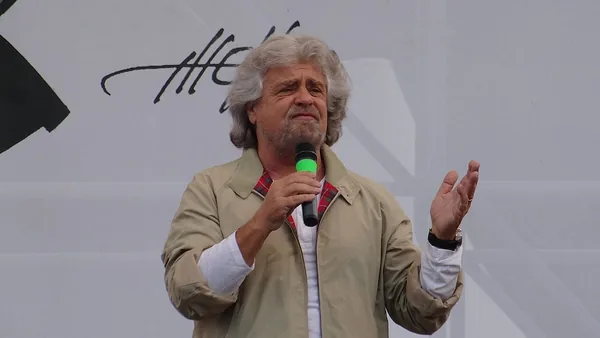
Giuseppe Piero Grillo, known professionally as Beppe Grillo, was born in Genoa, Liguria on July 21, 1948. His parents were Piera Tieghi, a pianist, and Enrico Grillo, who owned a metalworking factory. He initially studied accounting at the 'Ugolino Vivaldi' private institute and briefly attended the University of Genoa’s faculty of economics and commerce, but did not complete his degree. Prior to pursuing comedy, he worked as a clothing salesman and then in his father’s company. Grillo began his career by improvising a monologue at an audition, which led to his discovery by television presenter Pippo Baudo two weeks later. Grillo's early television appearances include Secondo Voi (1977-1978), Luna Park (1979), and Fantastico (1979), where he co-hosted with Loretta Goggi. Throughout the 1980s, he hosted travel shows such as Te la do io l'America (1982) and Te lo do io il Brasile (1984). He also appeared in films like Cercasi Gesù (1982), for which he received a David di Donatello and Nastro d’argento award, Scemo di guerra (1985), and Topo Galileo (1988). In 1986, he starred in prize-winning yogurt advertisements and appeared at the Sanremo Music Festival. A controversial critique of Italian Socialist Party leader Bettino Craxi on television resulted in his temporary banishment from public television. From 2005 onwards, Grillo’s profile significantly expanded with the launch of his blog, beppegrillo.it. It quickly became influential, being recognized by Time magazine and, by 2014, ranking among the top 10 most visited websites globally. In that year, it was updated daily. He collaborated with singer Giorgia on the song 'Libera la mente' in 2007. In 2009, he co-founded the Italian Five Star Movement with Gianroberto Casaleggio, serving as its guarantor and political leader. The party gained a significant portion of the vote – a quarter – in the 2013 elections. He performs on stage both in Italy and abroad, addressing topics such as energy use, corruption, and globalization. Grillo returned to Italian public television in May 2014 on Porta a Porta and maintains blogs in Italian, English, and Japanese.

Bud Spencer, comedian from Italy
Verified Unclaimed
Italy

Bud Spencer

Carlo Pedersoli, known professionally as Bud Spencer, was an Italian actor, swimmer, and water polo player. Born on October 31, 1929, in Naples, he came from parents Alessandro Pedersoli and Rosa Facchetti, who were originally from Darfo Boario Terme and Chiari respectively, both located in the Brescia province of Italy. His father's employment necessitated a relocation to Rome for him in 1940, which substantially altered the course of his childhood. Bud Spencer’s early years included attending elementary school alongside Luciano De Crescenzo, demonstrating an early connection to artistic circles. He pursued education at Sapienza University of Rome, briefly studying chemistry before ultimately obtaining a law degree. Before achieving fame as a comedian, Carlo Pedersoli excelled in athletics. Twice, he competed for Italy in the Summer Olympics; in both 1952 and 1956, he advanced to the semi-finals in the 100 m freestyle event. He also achieved notable success in swimming and water polo, swimming the 100 m freestyle in under one minute on September 19, 1950, and winning a silver medal at the 1951 Mediterranean Games. Further demonstrating his athletic prowess, he won the Italian Championship in water polo in 1954 and secured a gold medal at the 1955 Mediterranean Games. His diverse skillset extended beyond athletics; he registered several patents, earned certifications as a commercial airline and helicopter pilot, and briefly worked in various roles in South America. Bud Spencer’s acting career began with Quel fantasma di mio marito (1950), followed by appearances in films like Quo Vadis (1951) and Siluri umani (1954). However, he is best known for his partnership with Terence Hill, appearing in 18 films together. The name 'Bud Spencer' was a deliberate choice, inspired by Budweiser beer and actor Spencer Tracy. He received the David di Donatello award for lifetime achievement in 2010, recognizing his significant contribution to Italian cinema. On June 27, 2016, Bud Spencer passed away in Rome, remembered for his contributions to both comedy and sports, having received the Caimano d'oro (Gold Caiman) from the Italian Swimming Federation in 2005.

Carlo Verdone, comedian from Italy
Verified Unclaimed
Italy

Carlo Verdone

Carlo Verdone is an Italian actor, comedian, director, and screenwriter, born in Rome on November 17, 1950. His family background includes a father, Mario Verdone, who was a professor of film history and a critic, and a mother, Rossana Schiavina, who was a professor of literature. His paternal grandfather, Oreste, was a chemist from Pozzuoli (Naples). He attended the Collegio Nazareno in Rome, where he met Christian De Sica, and later studied at the Liceo classico in Rome. Verdone earned degrees in Modern Literature from Sapienza University of Rome in 1976-1977, with a thesis on Italian silent film, and in Film Direction from the Centro Sperimentale di Cinematografia in 1974. Verdone started his career with his comic style in the 1970s. He appeared in advertisements for the Carosello show and debuted on television in 1977 in the variety show Non stop . He introduced his characters on television in 1978 in the comedy series Non Stop . Sergio Leone gave him his film debut, and mentored him in filmmaking techniques. He made amateur short films from a young age, including Poesia solare (1969), Allegoria di primavera (1971), and Elegia notturna (1973). His directorial debut was Un sacco bello (1980), followed by Fun Is Beautiful (1980) where he played three characters. He co-wrote Journey with Papà with Sergio Leone, and Troppo forte with Verdone and Leone. Verdone’s work includes the highly regarded Bianco, rosso e Verdone (1981), produced by Sergio Leone and featuring Elena Fabrizi, and its soundtrack composed by Ennio Morricone. He directed Talcum Powder (1982) which won multiple David di Donatello awards, and co-wrote it with Enrico Oldoini. Since the 1990s, his work has explored more serious subjects. He wrote the book Fatti Coatti in 1999. Verdone starred in the Manual of Love film series (2005, 2007, 2011) and appeared in Paolo Sorrentino's The Great Beauty (2013). He directed Blessed Madness (2018), co-writing it with Nicola Guaglianone and Menotti. He has received numerous awards including nine David di Donatello awards, four Globi d’oro awards, eleven Nastri d'argento awards, and two Premi Flaiano awards. In 2017, he was awarded an honorary doctorate in Cultural Heritage and Territory from the University of Rome Tor Vergata. He recently starred in L'Abbiamo Fatta Grossa (2016), where he plays Arturo Merlino, a modest private investigator, alongside Antonio Albanese as Yuri Pelagatti.

Nini Salerno, comedian from Italy
Verified Unclaimed
Italy

Nini Salerno

Roberto Salerno, professionally known as Nini Salerno, is an Italian actor, director, singer, comedian, and cabaret performer. Born in Verona on October 8, 1948, he is connected to radio journalist Paolo Salerno and has a brother, Nicola Salerno, who is part of RADAR and NAD. He is married to Patrizia, whose influence inspired Francesco De Gregori's song 'Rimmel'. Salerno’s career began in 1971 when he became a founding member and participant of the Italian comedy and musical act I Gatti di Vicolo Miracoli. I Gatti di Vicolo Miracoli formed in Verona in 1971, and Salerno remained with the group from that year until their disbandment in 1985. The group quickly gained prominence, performing at the Derby Club in Milan starting in 1971 and participating regularly in RAI variety shows from 1975. They released their debut album, 'I Gatti di Vicolo Miracoli', in 1972, and were directed in satirical and musical shows by Arturo Corso. Salerno also starred in the comedy films Arrivano i gatti and Una vacanza bestiale in 1980. The group achieved significant success with their hit song "Capito?" in 1979, which reached number four on the Italian charts. Following the departure of a member in 1981, the group continued as a trio. After I Gatti di Vicolo Miracoli disbanded in 1985, Salerno continued to work extensively in cinema, television, and theater as an actor, director, and screenwriter. He directed the film Arrivano i miei in 1983 and appeared in films such as Un ufficiale non si arrende mai nemmeno di fronte all'evidenza (1973) and Secondo Ponzio Pilato (1987). Salerno has also appeared in numerous television series, including I ragazzi del muretto (1991), Il commissario Corso (1991), and Un medico in famiglia (1999-2000). He hosted or appeared on various TV shows throughout his career, including Quo vadiz? (1984), Un fantastico tragico venerdì (1986), Amici mostri (1993-1994), and was a regular guest on Buona Domenica (1998-1999). He occasionally reunited with I Gatti di Vicolo Miracoli for film, television, and stage appearances starting in 1997. Currently, Salerno is performing the role of Inspector Gordon in a theatrical adaptation of the TV series Colombo. Salerno’s career extends beyond performance; he has also worked in commercial advertising, appearing in campaigns for Fiat 500X (2015) and Fiat 124 Spider (2016). In 1978, he adopted a two-year-old boy named Garvey Salerno from Martinica. His diverse body of work demonstrates his versatility as an entertainer and his enduring presence in Italian entertainment.

Nino Manfredi, comedian from Italy
Verified Unclaimed
Italy

Nino Manfredi

Nino Manfredi, born Saturnino Manfredi on March 22, 1921, in Castro dei Volsci, Frosinone, was a multifaceted Italian entertainer. Throughout his professional life, he held many positions: actor, voice actor, director, screenwriter, playwright, comedian, singer, author, radio personality, and television presenter. He is remembered as a prominent figure within the commedia all'italiana genre. Manfredi’s parents were Romeo Manfredi and Antonina Perfili, and he spent his childhood in Rome’s San Giovanni neighborhood after attending Collegio Santa Maria as a semiconvittore. Manfredi’s early life was marked by illness; he suffered from tuberculosis in 1937 and spent time in a sanatorium. During this period, he learned to play the banjo and joined the hospital's orchestra, demonstrating an early interest in performing. In 1941, he started his university studies at the Faculty of Law; however, he quickly redirected his attention to acting. He debuted as a presenter and actor in his church’s small theater that same year, and graduated in law in October 1945 with a thesis on self-defense. He graduated from the National Academy of Dramatic Art in June 1947, subsequently making his first stage appearance that same year. During 1948, he performed in plays including Romeo and Juliet and The Storm at the Piccolo Teatro di Milano, and simultaneously commenced his radio career as a comedian and impersonator. Manfredi’s career flourished throughout the 1950s and beyond. He made his film debut in 1949 with Torna a Napoli and collaborated with Eduardo De Filippo, staging three one-act plays at the Teatro Eliseo between 1952 and 1953. From 1951, he formed a comedic trio with Paolo Ferrari and Gianni Bonagura, gaining further recognition through radio variety shows and revues. He hosted Canzonissima alongside Delia Scala and Paolo Panelli starting in 1959, significantly boosting his popularity. He achieved success in musical comedies such as Un trapezio per Lisistrata (1958) and Rugantino (1962). Throughout his career, Manfredi received numerous accolades, including six David di Donatello awards and six Nastro d’Argento awards. He also won the Prix de la première oeuvre at the 1971 Cannes Film Festival for Between Miracles . Nino Manfredi died in Rome on June 4, 2004.

Paolo Villaggio, comedian from Italy
Verified Unclaimed
Italy

Paolo Villaggio

An Italian actor, comedian, film director, and writer, Paolo Villaggio entered the world on December 30, 1932, in Genoa. His parents were Ettore Villaggio, a surveyor from Palermo, and Maria Faraci, a German-language teacher from Venice. Piero, a twin brother of Paolo Villaggio, served as a professor at the University of Pisa. Villaggio’s early life included diverse experiences; he worked as a waiter, BBC speaker, and entertainer on Costa Cruises ships, and later at Cosider, where organizing company events provided inspiration for his character Ugo Fantozzi. Villaggio's career encompassed various creative endeavors. He created memorable characters like Professor Kranz, Giandomenico Fracchia, and most notably, Ugo Fantozzi. His comedy was innovative and surreal, drawing inspiration from commedia dell'arte, and he employed techniques such as neologisms, emphatic adjectives, morphological errors, and bureaucratic terms in his writing. He wrote several satirical books featuring Ugo Fantozzi, with Fantozzi (1971) selling over a million copies and earning him the Gogol Prize in Moscow. The Ugo Fantozzi character evolved into a widely successful cinematic saga, with Villaggio starring in the film Fantozzi (1975), directed by Luciano Salce. He also collaborated with Federico Fellini, Lina Wertmüller, Ermanno Olmi, Mario Monicelli, and Gabriele Salvatores on films, often appearing in dramatic roles. Throughout his career, Villaggio received numerous accolades. The David di Donatello was given to him in 1990; he also received a Nastro d'Argento in 1992 and the Golden Lion at the Venice Film Festival that same year, honoring his lifetime achievements. He also received the Honorary Pardo at the Locarno Film Festival in 2000. Villaggio’s creative output extended beyond film and books; he wrote songs with Fabrizio De André, including 'Carlo Martello torna dalla battaglia di Poitiers' and 'Il fannullone,' and acted in stage plays, playing Arpagone in Molière’s L'Avare in 1996. He also hosted the satirical news bulletin Striscia la notizia in 1996, and previously hosted experimental and avant-garde television programs in the late 1960s. Critics like Goffredo Fofi, Michele Serra, Enrico Giacovelli, and Beppe Grillo compared him to Buster Keaton, Charlie Chaplin, Stan Laurel, and Oliver Hardy. Paolo Villaggio died in Rome on July 3, 2017, from complications of diabetes.

Roberto Benigni, comedian from Italy
Verified Unclaimed
Italy

Roberto Benigni

Roberto Remigio Benigni, born on October 27, 1952, in Castiglion Fiorentino, is an Italian actor, comedian, screenwriter, film director, cabaret performer, singer-songwriter, and actor. His parents were farmers, Luigi Benigni and Isolina Papini, and he later moved with his family to Prato in 1958. He has three sisters: Bruna, Albertina, and Anna. Benigni began his career as a theatrical monologue performer with ironic and irreverent comedy. He debuted on stage in December 1971 at the Teatro Metastasio in Prato performing Il re nudo . Throughout the 1970s, he collaborated with Marco Messeri and performed with Lucia Poli in the Beat '72 company. Giuseppe Bertolucci wrote the monologue Cioni Mario for him in 1975, which proved very successful; this character, a Tuscan farmer, is largely autobiographical. He gained popularity through television appearances, notably in the series Onda Libera on Rai 2 and L'altra domenica (1976–1979). He also wrote 1977’s Berlinguer, I Love You , marking his acting debut. Benigni’s work has spanned various forms of entertainment. He directed the anthology film Tu mi turbi in 1983, where his wife, Nicoletta Braschi, made her acting debut and has starred in most of his directed films. He appeared in several films by notable directors, including Federico Fellini’s The Voice of the Moon (1990), Jim Jarmusch's Down by Law (1986), Night on Earth (1991) and Coffee and Cigarettes (2003), and Blake Edwards’ Son of the Pink Panther (1993). He is best known for Life Is Beautiful (1997), which earned him Academy Awards for Best Actor and Best International Feature Film. No other individual has ever been granted an Academy Award for Best Actor specifically for portraying a role in a film not originally produced in English. His work has occasionally faced censorship, such as when he was censored for referring to Pope John Paul II as "Wojtylaccio" on live television. He starred in Non ci resta che piangere ('Nothing Left to Do but Cry') with Massimo Troisi in 1984 and more recently appeared in Matteo Garrone's Pinocchio (2019) and Woody Allen’s To Rome with Love (2012). He received the Golden Lion for Lifetime Achievement at the Venice Film Festival in 2021.

Tosca D'Aquino, comedian from Italy
Verified Unclaimed
Italy

Tosca D'Aquino

Tosca D'Aquino, an Italian actress, comedian, and television presenter, entered the world in Naples on June 10, 1966. Her parents are Claudio and Adele D'Aquino. She began her career at age 15 with appearances in local television shows, quickly demonstrating an interest in performance. At 19, she moved to Rome to pursue acting, indicating a commitment to developing her craft. D'Aquino attended the Accademia Nazionale di Arte Drammatica Silvio D'Amico and graduated from the Silvio d'Amico Academy of Dramatic Art. Her early roles included appearances in Fantastico (1986) and Fantastico 7 (1986). She made her film debut in Rimini Rimini - Un anno dopo (1988), followed by roles in Street Kids (1989) and Paganini (1989), also known as Kinski Paganini (1989). Throughout the 1990s, she frequently appeared in comedic film roles, gaining popularity through television appearances. She starred in Captain Fracassa's Journey (1990) and Black Holes (1995), and contributed to films like The Graduates (1995) and The Cyclone (1996), notably working with Leonardo Pieraccioni. From 2000 onwards, D'Aquino continued to work in television, appearing in various fiction programs and shows. She co-hosted the RAI show Torno Sabato alongside Giorgio Panariello in the early 2000s. In 2005, she co-hosted the 48th edition of the Zecchino d'Oro. She participated in Notti sul ghiaccio in 2007 and the third edition of the Premio Città dei Cavalieri di Malta in 2009. D'Aquino also explored culinary pursuits, serving as an assistant chef on La terra dei cuochi in 2013 and participating in MasterChef in 2012. She won the second edition of Bake Off Italia Celebrity Edition in 2017 alongside Francesca Piccolo. From 2019 to 2020, she served as artistic director and co-host of the Sabaudia Studios Festival. She has been married twice; first to engineer Mauro Gabrielli with whom she has a son named Edoardo (born 1999), and then to producer Massimo Martino in 2013, with whom she has a son named Francesco (born 2005).