GiggleTime GiggleTime
Menu
Go Premium Submit a Joke Comedians About FAQs Contact

Legal
Privacy Policy Terms of Service Cookie Policy Refund and Cancellation Policy Attributions
Login
Language
Categories
Settings
Language English
Safe Mode
Random Jokes Autoplay
Notifications
Global Talent Directory

Comedians from France

The comedian directory of France — profiles, bios, photos, and social links for comedians from France.

Add a comedian
Reset
211 comedians
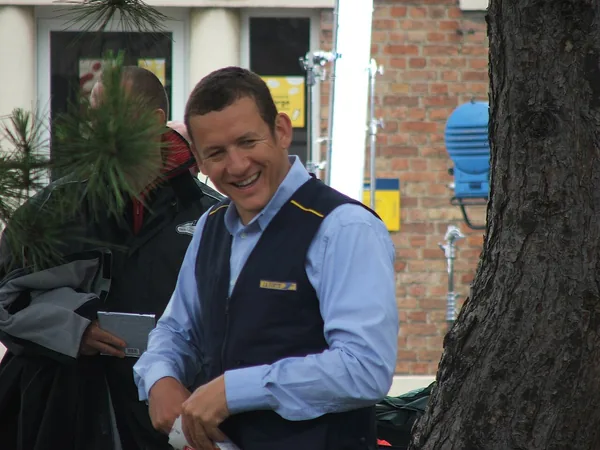
Dany Boon, comedian from France
Verified Unclaimed
France

Dany Boon

Dany Boon, born Daniel Farid Hamidou in 1966, is a versatile French figure working as an actor, director, screenwriter, and producer. He originates from Armentières (Nord), France, and his family background reflects diverse origins; his father, Ahmed Hamidou, was born in Algeria in 1930 and died in Lille in 1992, while his mother, Danièle Ducatel, is French. Boon has five children from three marriages. He converted to Judaism in 2002. Boon's career began in the 1990s as a humorist performing on stage and earning money by working as a mime in Paris. He studied graphic arts at the École supérieure des arts Saint-Luc in Tournai, Belgium. He adopted the stage name Dany Boon inspired by Daniel Boone, an American trapper from a television series. Early performances included open mic nights and street mime to avoid military service. Starting in 1992, he began performing one-man shows, often portraying various characters sharing their mishaps, with sketches based on everyday situations. Patrick Sébastien became his producer in 1993. His breakthrough came in 2008 with Welcome to the Sticks ( Bienvenue chez les Ch'tis ), which he directed and starred in. The film was a major box office success, breaking French records and earning over 26.7 million admissions worldwide, including 20.49 million in France, making it the highest-grossing French film at the national box office. Boon earned €26 million from this project. He has continued to direct and produce popular films, including Raid dingue (2017), which received the César du public award, as well as Rien à déclarer (2010), Supercondriaque (2014), and La Ch'tite Famille (2018). He also voiced Olaf in the French dubbing of the Frozen movies. In 2003, he released Dany Boon à s’baraque et en ch’ti , a show performed in the Ch'ti dialect, and directed the play La Vie de chantier . He received a César Award nomination in 2005 for Best Supporting Actor for his role in Joyeux Noël . Through companies like 26 DB Productions, Boon continues to produce films. In 2022, he was defrauded of €6 million. His comedy style remains rooted in observational humor and character-driven narratives, often drawing on his experiences and the culture of northern France. He appeared in Bimboland in 1998.

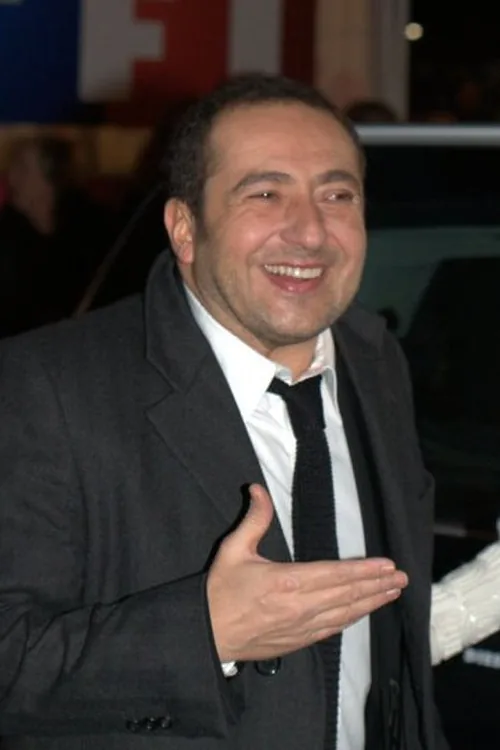
Georges Bernier, comedian from France
Verified Unclaimed
France

Georges Bernier

Georges Bernier, widely recognized as Professor Choron, was a French humorist, writer, and journalist. Born on September 21, 1929, in La Neuville-aux-Bois (Marne), he experienced early hardship, becoming an orphan at the age of eleven after his mother, who worked as a gatekeeper, passed away. He completed his elementary education at that young age and subsequently served for 28 months in the 6th BCCP in Indochina, spending nine years total in airborne troops (TAP). This experience, along with his subsequent affliction with tuberculosis upon returning to France, likely influenced his later satirical work. Bernier’s career in the press began with roles as a colporter and then head of sales for the satirical newspaper Zéro . In 1960, he played a key role in establishing the influential monthly magazine Hara-Kiri alongside François Cavanna and Fred. The magazine's name and initial location stemmed from Rue Choron, which became his pseudonym. He contributed significantly to Hara-Kiri , engaging in writing and photo-editing, and also creating or participating in fake advertisements and photomontages for Les éditions du Square, which was created in 1962 when the editorial team relocated. His involvement extended beyond print media, including appearances on Jean-Christophe Averty’s television show Les Raisins verts and later contributing regularly to Charlie Hebdo after its creation in 1970. Bernier continued to explore various comedic avenues throughout his career. He adapted his "fiches bricolages" for television in 1988 and participated in Jean-Michel Ribes' Merci Bernard . A public argument with Aure Atika occurred on Radio Nova in 1996, demonstrating his willingness to engage in provocative discourse. He also ventured into children’s media, creating the magazine Grodada . He was the father of comedian Michèle Bernier and grandfather of actress Charlotte Gaccio. Georges Bernier died on January 10, 2005, at Necker-Enfants Malades Hospital in Paris and was buried at Montparnasse Cemetery. A documentary, Choron Dernière , was released in 2008 to honor his life and work as a multifaceted figure in French humor.

Patrick Timsit, comedian from France
Verified Unclaimed
France

Patrick Timsit

Patrick Timsit, born on July 15, 1959, in Algiers, Algeria, is a French comedian, writer, and film director. His family moved to mainland France when he was two years old due to the Algerian War. He spent his childhood in his parents' leather goods workshop and obtained a baccalauréat D as an external student after leaving multiple schools. He briefly pursued real estate, opening his own agency in 1983; this experience later informed his comedy sketch 'Les Petites Annonces'. His parents were Jewish Sephardic, and he is of Algerian Jewish ancestry. Timsit's career includes a diverse range of roles both on screen and stage. He played Charles VIII of France in Sans peur et sans reproche (1988) and Michou in La Crise (1992), for which he was nominated for a César Award for Best Supporting Actor. He is particularly known for his involvement with the comedy film Un indien dans la ville . He also appeared in Mayrig (1991) as Garbis and Une époque formidable… (1991). In the early 1990s, he gained recognition for his sharp comedic tone in television appearances. He co-wrote and starred in Pédale douce (1996), earning nominations for a César Award for Best Actor, Best Original Screenplay or Adaptation, and Best Actor again. His comedy frequently addresses sensitive topics such as politics, racism, antisemitism, and the Israeli-Palestinian conflict. Beyond acting, Timsit has also demonstrated his directorial talent. He directed and starred in Quasimodo d'El Paris (1999) and L'Américain (2004). He has provided French dubbing for numerous films, including The Monster (1994), Hercules (1997), Atlantis: The Lost Empire (2001), Shark Tale (2004), and Dragon Hunters (2008). He participated in Rendez-vous en terre inconnue in 2006. He has received four nominations for a César Award, recognizing his contributions to French cinema. He continues to act, with roles in recent films like Dalida (2017), The Last Mercenary (2021), Brother and Sister (2022), and It Takes Two to Tango (2025).

Philippe Meyer, comedian from France
Verified Unclaimed
France

Philippe Meyer

Philippe Meyer, born on December 25, 1947, in Germersheim, Germany, is a multifaceted figure known as a journalist, humorist, writer, radio and television personality. His journey began in 1965 when he started studying law and sociology at the University of Paris-Nanterre. During this period, he also worked as an educator in a juvenile delinquency prevention club in Paris, demonstrating an early interest in social issues. Meyer’s engagement with student activism is evident in his role chairing the strike committee at Nanterre in November 1967 and participating in the May 1968 protests alongside Paul Ricœur. Meyer's intellectual pursuits extended beyond France, as he received a scholarship from the Franco-Quebec Youth Office in 1968 to study juvenile delinquency responses in Quebec. This experience proved formative, leading to relationships with prominent figures like René Lévesque, Denys Arcand, Michel Chartrand, and Gilles Vigneault. He defended his doctoral dissertation, "L'Enfant et raison d'État," in 1977 under the guidance of Annie Kriegel and Philippe Ariès. He also worked as a researcher at the Centre de santé mentale under Professor Philippe Paumelle. From March 1982, Meyer began working on radio stations for public service broadcasting, and hosted 'Télescopages' on France Inter from 1982 to 1989. Meyer’s career in media continued with 'Allegro serioso' on France Culture (1984-1995) and 'Libre examen' (1995-1998). He is particularly recognized for his daily humorous segment on France Inter from 1989 to 2000, which began with 'Happy inhabitants of...' and ended with phrases like 'We are living a modern era'. He hosted 'L'Esprit public' on France Culture from 1998 to 2017, continuing it as a podcast after its termination. He also presented ‘La prochaine fois, je vous le chanterai’ on France Inter from 2000 to 2016. Meyer has appeared in films such as 'It begins today' and 'The Case Picpus,' and the television series 'Maigret.' Recently, he published 'La prochaine fois, je vous l'écrirai,' a book of portraits and tributes, and continues to moderate the podcast 'Le Nouvel Esprit Public,' collaborating with public intellectuals.

Philippe Val, comedian from France
Verified Unclaimed
France

Philippe Val

Philippe Val, born on September 14, 1952, in Neuilly-sur-Seine, is a French journalist, singer, and comedian. His parents were a butcher, René Vol, who later changed his name to Val, and a hairdresser; he was the last of four siblings. He dropped out of school at age 17 to pursue music, demonstrating an early inclination towards artistic expression. Val’s comedic journey began with the duo Font et Val, formed in the 1970s with Patrick Font. They initially performed as engaged songwriters at venues like La Pizza du Marais, Théâtre de Dix heures, and Vrai Chic Parisien, accompanied by Paul Castanier until 1989, and later by Emmanuel Binet. In the early 1980s, he occasionally performed solo shows, sometimes featuring his dog, Jeff. He collaborated with singer Anne Vanderlove in 1973 on her politically charged album 'Non.' He briefly edited La Grosse Bertha in 1991 and co-founded the second iteration of Charlie Hebdo in 1992 alongside Cabu, serving as its editor and director until 1992. He later returned to direct Charlie Hebdo from 2004 to 2009, publishing the Jyllands-Posten Muhammad cartoons in 2005, which led to a 2007 acquittal of inciting hatred charges. He has published several books including 'Vingt ans de finesse' (1992) and 'Malaise dans l’inculture' (2015). Following his departure from Charlie Hebdo in 2009, Val became the director of France Inter, a position he held until 2014. He released albums 'Paris-Vincennes' (1996), 'Hôtel de l’univers' (1999), and 'Philippe Val' (2004). Val has expressed strong political views, drafting a manifesto against antisemitism in 2018 and opposing groups like the Front National and Catholic integrists. He currently serves as a weekly columnist for radio station Europe 1 since 2021. His career reflects a diverse engagement with French culture and society, marked by both creative collaboration and editorial leadership.

Pierre Repp, comedian from France
Verified Unclaimed
France

Pierre Repp

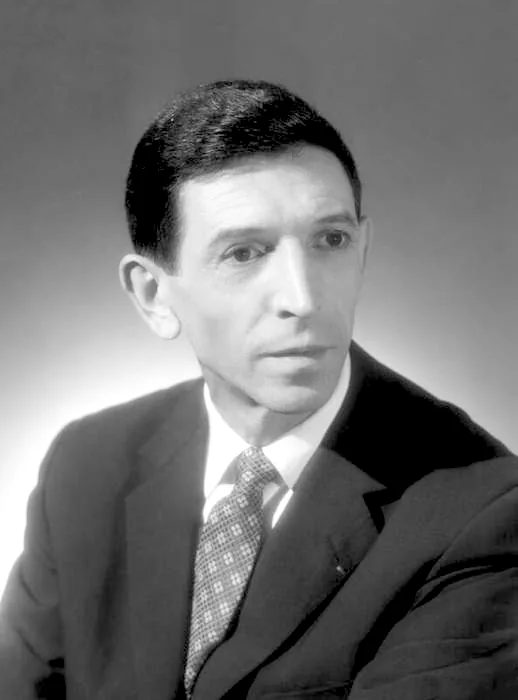
Pierre Repp, born Pierre Alphonse Léon Frédéric Bouclet on November 5, 1909, in Saint-Pol-sur-Ternoise, was a French humorist and actor. He initially studied at the Conservatoire de Lille and earned a Baccalauréat degree before serving in the military in the early 1930s. Following his military service, he relocated to Paris and began his career performing in cabarets. His marriage to Ferdinande Alice Andrée Bouclet, his cousin, occurred on August 14, 1930, in Lille. He frequently performed in music-hall and cabarets both in Paris and on tour, establishing himself as a prominent figure in French entertainment. Repp’s comedy style was characterized by his unique ‘talent de bafouilleur,’ or stammering talent. He humorously simulated stuttering, often replacing words with surprising alternatives and employing wordplay. A particularly famous sketch, "Les crêpes," demonstrated a recipe with comedic mispronunciations and remains a humorous reference, as noted by Stéphane De Groodt. This sketch was also released as a song on a record in 1960, alongside other songs like 'La Machine à laver'. He collaborated with artists such as Boris Vian and Fernand Raynaud, and appeared in numerous theatre plays and TV shows, including Guy Lux’s television shows in the 1970s and Michel Drucker’s shows. His appearances extended to Belgian television on 'Zygomaticorama' as well. Throughout his career, Repp had roles in approximately 100 films, often as a supporting character, including notable titles like ‘Bonjour sourire’ and ‘Les Quatre Cents Coups,’ contributing to his place in French cinema history. He also participated in 'Le Nouveau Testament' alongside Fernand Gravey. In 1982, he performed at the Casino de Paris for the Fondation Perce-Neige. He was a member of the Société des Rosati. Pierre Repp died on November 1, 1986, at almost 77 years old, in Plessis-Trévise and was buried in the new cemetery of Vincennes. In 2018, an essay titled 'Pierre Repp, Bégayer, exister, écrire' by Nicolas Le Golvan explored his life and work.

Ramzy Bedia, comedian from France
Verified Unclaimed
France

Ramzy Bedia

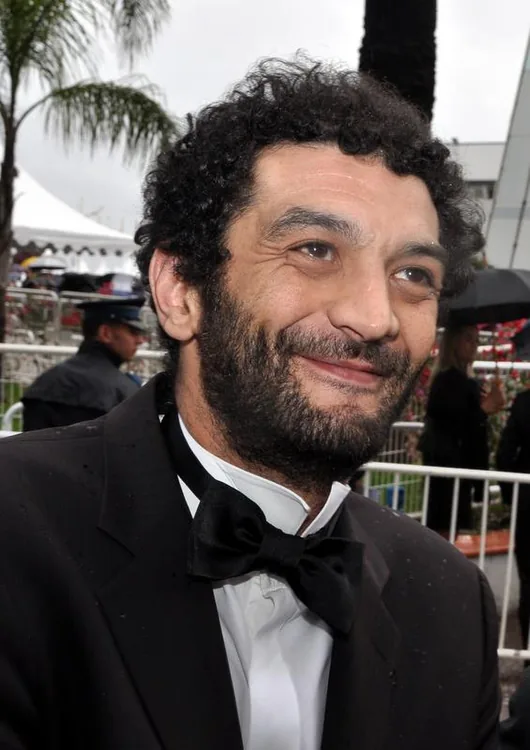
Ramzy Bedia is a French actor, screenwriter, film director, producer, and humorist. Born on March 10, 1972, in the 16th arrondissement of Paris, he has Algerian heritage, his parents originating from Kabylie and Oran. He spent his childhood in Gennevilliers, Hauts-de-Seine, and has a younger sister, Melha Bedia, who also works in entertainment. Bedia began his career as a comedian in 1994, a pivotal year when he met Éric Judor while working at Galeries Lafayette. Bedia gained significant recognition alongside Éric Judor as the comedic duo Éric et Ramzy. Their partnership launched in 1994 and quickly led to success, including their own TV show, Les Mots d'Éric et Ramzy , on M6. They also appeared in the 1998 television series H alongside Jamel Debbouze. The duo’s collaborative efforts extended to film; they co-wrote and starred in La Tour Montparnasse Infernale (2000), with Bedia’s portrayal of a window cleaner marking a breakthrough role. Other notable collaborations include Les Dalton (2004) and Double Zéro (2003). Beyond his work with Judor, Bedia has built a diverse filmography. He acted in Le Ciel, les Oiseaux et... ta mère! in 1999, and subsequently appeared in films such as Once Upon a Time in the Oued (2005), Bled Number One (2006), and Neuilly Yo Mama! (2009). He took on the role of the villain Zorglub in The Adventures of Spirou and Fantasio (2018) and appeared in Taxi 5 (2018) and Call My Agent! (2017). Bedia has also explored different comedic styles, co-writing and directing the experimental comedy Hibou (2016) and Seuls Two (2008), influenced by Quentin Dupieux. In 2011, he reunited with Judor for Halal police d’État . He continues to work in film, including roles in Merveilles à Montfermeil (2020) and Balle perdue (2020). Currently, Bedia is developing a new film, Le jour où tous les Arabes sont partis , which aims to address the topic of immigration through humor.

Verified Unclaimed
France

Richard Cairaschi

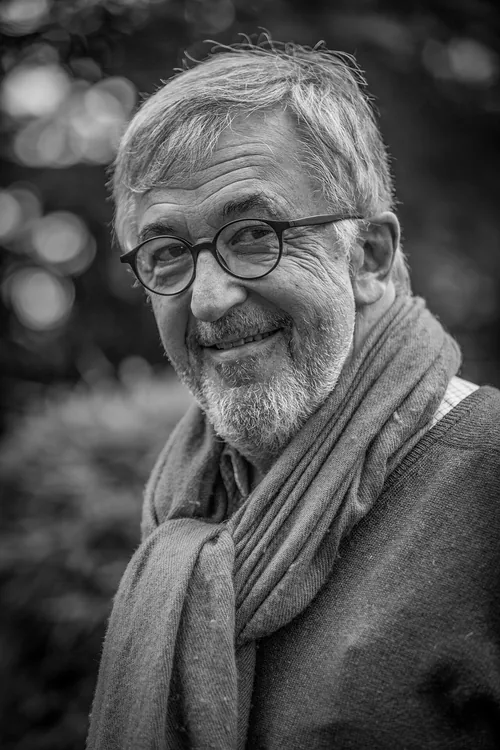
Richard Cairaschi is a French dramatist, director, humorist, writer, and musician. Born in Nice, France, he is a comedian and performer deeply connected to the Nissart region. His family’s roots in the area extend back to the 13th century, and he frequently draws inspiration from places like Sospel, Vieux-Nice, and Berre-les-Alpes. Cairaschi began his career as a graphic designer, creating album covers for Mauris Sgaravizzi. He first performed in Cagnes in 1986, initially playing the mandolin before transitioning to theatre. His debut as an actor occurred with the troupe Débi Débo, which debuted in 1987 and was welcomed by “La Banda dou Païoun.” The radio show 'Le bar des oiseaux,' hosted with Noëlle Perna from 1984 to 1986 on Radio France Côte d'Azur, proved a significant early step. Subsequently, he created the satirical comedy 'Le bar des oiseaux,' a weekly series broadcast on FR3 region with Noëlle Perna from 1986 to 1997; this play brought him success and marked the beginning of his artistic career. Cairaschi’s comedy focuses on characters from the Nissart region, portraying them with kindness and making them endearing. His humor is characterized by a sense of 'pantaï' and a typically Nissarda fantasy. He has written, directed, and performed in numerous plays, including 'L'accordéoniste' (1996) and co-wrote and performed in others such as 'Les chaises de la promenade' (1998), 'Arrête de râler' (1999), 'Le clos' (2001), 'Sur les galets' (2002), 'Festin' (2003 - a musical comedy), '100 ans de Gym' (2004), '3 Z'en 1' (2007), and 'Rattache-moi ou Nissa 1860' (2010). He has also directed plays such as 'La belle époque' (2008) and 'Une page à part' (2006). He has created numerous one-man shows, including 'Perque non' (1984) and more recently 'ISSA' (2020). Cairaschi believes theatre is a way to combine all art forms and has been performing in theatres around Nice for over twenty years. He also published 'Le parler à Nice: petit lexique à l'attention des intéressés' in 2006, and 'La Blette et le Cougourdon' in 2013, reflecting his passion for gourds (courgourdons).

Robert Castel, comedian from France
Verified Unclaimed
France

Robert Castel

Robert Castel, born Robert Moyal on May 21, 1933, in Bab El Oued, Algeria, was a French comedian and actor. His early life was steeped in music; his mother, Lili Labassi, was a singer-songwriter of Chaabi music, and his father, also named Lili Labassi (Élie Moyal), was a master of chaâbi music. Castel began his career accompanying his father playing the tar and guitar, performing Franco-Arabic songs. He initially pursued a musical path before transitioning to acting. Castel began his career in theatre as a member of the Centre régional d'art dramatique troupe based in Algiers. He notably played Robert in the play 'La Famille Hernandez,' which explored the experiences of the Pied-Noir community. His film career began in 1957, at age 24, with appearances in 'Les Amants de demain' and 'Witness in the City.' Throughout the 20th century, he continued to act, appearing in numerous comedies over nearly four decades. He starred in films such as 'Un idiot à Paris' (1967), 'Elle court, elle court la banlieue' (1972), 'Le Permis de conduire' (1973), and 'Le Grand Blond avec une chaussure noire' (1972), and also featured in the TV series 'Les Saintes Chéries.' Castel and his wife, actress Lucette Sahuquet, who died in 1987, frequently performed comedic sketches together, often in a ‘pied-noir’ style. Castel and Sahuquet were a performing duo, opening for notable figures like Frank Sinatra, Marlene Dietrich, and Philippe Clay. They also participated in radio shows such as 'Les Grosses Têtes' and 'Jeux de 20 heures,' and appeared on television programs like 'Les Grosses Têtes’ (RTL) and ‘Les Jeux de 20 heures’ (France Régions 3). In 2011, he contributed to the film 'El Gusto,' playing both a role and performing as a violinist in the orchestra. His involvement in the 2017 documentary 'Les Magnifiques,' which examined French pop culture from the 1960s to the 1980s, highlighted his influence within that era. Castel received the Knight of the Legion of Honour in 2011. After experiencing illness, he passed away on December 5, 2020, at the Hôpital de la Pitié-Salpêtrière in Paris; his burial took place on December 9 at the Cimitière parisien de Pantin.

Romain Bouteille, comedian from France
Verified Unclaimed
France

Romain Bouteille

Romain Bouteille, born in Paris on March 24, 1937, was a multifaceted French artist. He identified as a playwright, actor, comedian, and singer, and his career spanned several decades. From a young age, he demonstrated a desire for artistic freedom, expressing that his vocation was to find work allowing him to operate at any hour without needing a diploma or real work. Bouteille’s early life included participation in scouting. His journey into performance began with his first one-man show at the Théâtre de la Vieille-Grille in 1966. A pivotal moment in Bouteille's career occurred in 1968 when he co-founded the Café de la Gare troupe. This establishment, along with others, helped launch many artists’ careers and he is considered a pioneer of the café-théâtre. The initial group included Coluche, Sotha, Henri Guybet, Patrick Dewaere, and Miou-Miou. A separation from his partner Sotha occurred in 1968 when she married Patrick Dewaere. Bouteille's work often explored anarchist themes; he authored nearly thirty plays inspired by libertarian ideas, and around thirty plays overall. His acting credits include appearances in films such as Le Feu follet and The Distrait , and a role as Simon in Roman Polanski’s The Tenant (1976). Bouteille’s work is documented on IMDb. Later in life, Bouteille continued to contribute to the arts. He married actress Saïda Churchill in 1988, and they had a son named Shams, born in Marseilles in 1997. The family relocated to Étampes, Beauce, in 1997. In December 2014, Bouteille and Churchill established a 50-seat theater called Les Grands Solistes in Étampes. This venue hosted approximately fifty artists, including François Rollin, Albert Meslay, Clair Jaz, Didier Porte, Marc Gélas, Fred Saurel, Paul Adam, Vincent Roca, Christophe Guybet, Jean Vocat, Frédéric Hulné, and Prune Lichtlé. Romain Bouteille died in Corbeil-Essonnes on May 31, 2021, at the age of 84 due to respiratory failure.

Régis Laspalès, comedian from France
Verified Unclaimed
France

Régis Laspalès

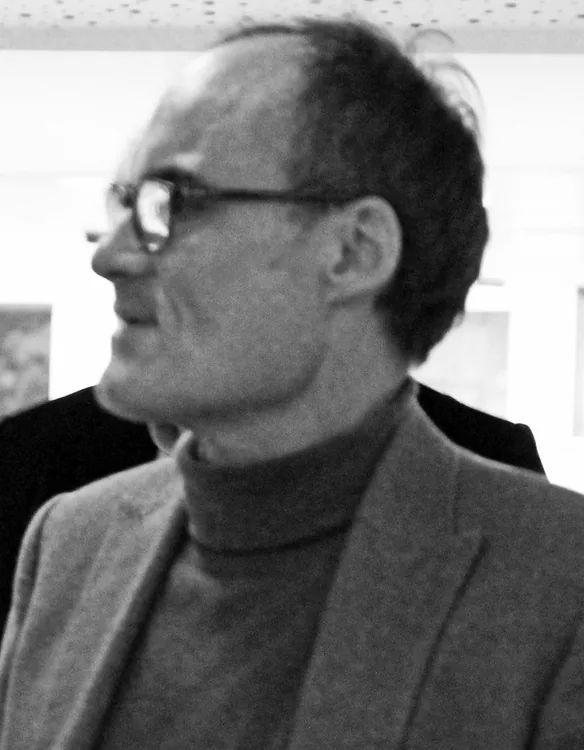
Régis Laspalès is a French comedian and actor, born on February 25, 1957, in Paris’s 14th arrondissement. His family originates from Burgundy, specifically Nuits-Saint-Georges (Côte-d'Or). After attending Lycée Montaigne, he pursued his education at the École des Beaux-Arts in Paris, where he earned a plastic arts degree specializing in sculpture. Following this, he pursued acting studies at Cours Simon, which he considered his true vocation. Before embarking on his comedic career, Laspalès served in the Marine Nationale as an assistant to the mess hall. Laspalès’s professional journey began in 1981 when he and Philippe Chevallier created their first show, 'Pas de fantaisie dans l'orangeade'. Philippe Bouvard later found them, and they first appeared on television in 1982 as part of ‘Le Théâtre de Bouvard’ broadcast on Antenne 2. The comedic duo, Chevallier et Laspalès, became well-known for their unique phrasing, frequently imitated by other performers. They co-manage the production company 'Pipo et Mario'. In 1999, they received the SACEM Humor Award. He has also taken on solo roles, notably starring as Landru in Laurent Ruquier's play of the same name in 2005 and appearing in ‘À droite, à gauche’ from 2016 to 2018. Laspalès primarily resides in Paris, near Montparnasse, and owns a house in Premeaux-Prissey. He also has vineyards in Premeaux-Prissey and produces wine, connecting him to his family's Burgundian roots. His father was an inventor and photographer who won a medal at the Lépine competition for a ‘snowless ski’, and his mother was a painter. In 2026, he returns to the stage solo with 'Régis Laspalès parle enfin', signifying a shift in his career. He is known as a dedicated fan of David Bowie and enjoys motorsport, having owned sports cars like Lotuses and English cars, and claims to have never missed a Formula 1 World Championship.

French Comedians and the World of French Comedy

France has a long and distinctive comedy tradition, with humour playing an important role in theatre, cinema, television and live entertainment. French comedians have developed many different forms of comedy over the years, from theatrical performances and classic satire to modern stand-up, sketch comedy and online content.

GiggleTime's directory brings together French comedians, stand-up performers, comedy actors, writers and other personalities associated with French comedy. Browse the profiles above to discover comedians from different generations and learn more about their careers and work.

Stand-Up and Live Comedy in France

Modern stand-up has become an increasingly visible part of the French comedy scene. Comedians perform in dedicated comedy clubs, theatres, cafés and other venues, presenting material that ranges from personal stories and observational humour to social commentary, satire and absurd comedy.

The French live comedy scene is particularly active in Paris, where performers can find numerous venues and audiences for both established shows and new acts. Comedy is also performed throughout cities and regions across France, giving comedians opportunities to develop audiences outside the capital.

French-language comedy also extends beyond France itself, with performers and audiences connected to the wider Francophone world.

The French "One-Man Show" Tradition

One of the distinctive formats associated with French comedy is the one-man show, in which a comedian performs a full-length solo production for an audience.

These shows can combine stand-up, storytelling, theatrical performance, characters and scripted comedy. The format has become an important part of French popular entertainment and has helped many comedians develop a recognisable stage identity.

While contemporary French stand-up continues to evolve, the connection between comedy and theatrical performance remains an important characteristic of the country's comedy culture.

French Comedians in Film and Television

French comedy has a strong presence in cinema and television. Comedians frequently move between live performance, acting, writing and presenting, with many performers building careers across several forms of entertainment.

French television has produced numerous comedy programmes, sketch shows and entertainment formats, while French cinema has a long history of successful comedy films and memorable comic performances.

The relationship between stand-up and screen acting is particularly interesting in France, where a comedian may begin with live performances before moving into films, television or other forms of entertainment.

A Diverse French Comedy Scene

There is no single style that defines French comedy. Performers work across observational comedy, satire, parody, physical comedy, character-based performances, storytelling and improvisation.

Different generations of comedians have also brought different influences to the scene. Established performers continue to appear alongside newer comedians who use podcasts, YouTube, social media and streaming platforms to reach audiences.

This combination of traditional stage comedy and digital entertainment has created more opportunities for emerging French comedians to develop their own audiences and styles.

Discover French Comedians on GiggleTime

Looking for French comedians, French stand-up comedians or comedy actors from France? Explore the GiggleTime directory above to discover performers from different periods and areas of French entertainment.

Search for a particular comedian or browse the profiles to discover new names. Individual pages may include biographical information, career details, performances, photographs and other interesting facts.

Whether you enjoy French stand-up, comedy films, television comedians, one-man shows or classic French comedy, GiggleTime makes it easier to discover the people behind the humour.

Our directory continues to expand with new profiles, giving you more ways to explore the world of French comedy.