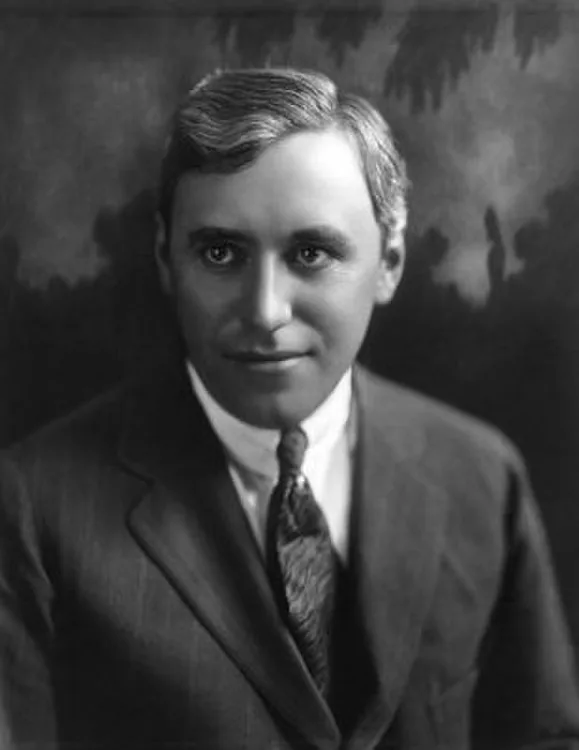
Mack Sennett, born Michael Sinnott on January 17, 1880, in Danville, Quebec, was a significant figure in the development of American comedy. His parents were John Sinnott and Catherine Foy. The Sinnott family emigrated to the United States in 1894 when he was fourteen years old. He initially pursued a career as an opera singer while living in Northampton, Massachusetts, after moving to Connecticut at age seventeen. Prior to entering film, he held various jobs including working in a steel factory and as a boxing trainer, demonstrating a varied early life. Sennett began his film career in 1908 with the American Mutoscope and Biograph Company, initially acting, singing, and dancing. Griffith entrusted him with directing comedies at Biograph. He gained recognition for playing Sherlock Holmes in a series of eleven parodies between 1911 and 1913. In 1912, he co-founded Keystone Studios in Edendale, California, alongside Adam Kessel and Charles O. Bauman; the studio boasted the first fully enclosed film stage. This marked a pivotal moment as Keystone Studios became known for its slapstick routines, including pie-throwing and car chases, prominently featured in the popular “Keystone Cops” films. The studio also launched the careers of numerous actors, including Charlie Chaplin, Mabel Normand, Harry Langdon, Roscoe Arbuckle, Harold Lloyd, and Gloria Swanson. Sennett’s work at Keystone Studios, which became part of the Triangle Film Corporation in 1915, established him as the ‘King of Comedy’. He also made short films with his “Bathing Beauties.” He had big problems early in the 1930s, like losing all his money and trouble adjusting to sound films. Despite these setbacks, Sennett continued to create comedies, focusing on the Smith family and family-oriented stories after 1926. He received an honorary Academy Award in 1938 for his contributions to film comedy techniques, and later earned an Oscar for Wrestling Swordfish (1932) and a nomination for The Loud Mouth (1932). Mack Sennett became a U.S. citizen on March 24, 1932. His final film appearance was in 1949’s Down Memory Lane . He died on November 5, 1960, in Woodland Hills, California, and posthumously received a star on the Hollywood Walk of Fame that same year.