Diego Caposotto
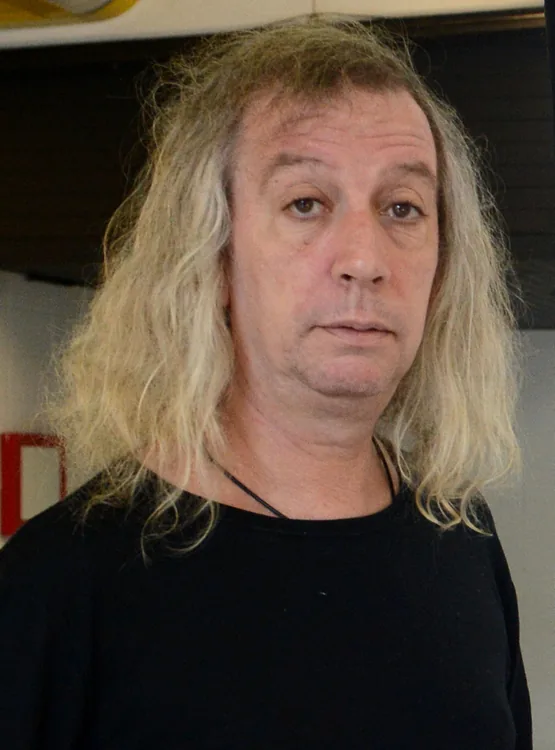
Diego Esteban Capusotto, born in Argentina, works as an actor, humorist, writer and driver. His career has been distinguished by leading the programs Cha Cha Cha, all for two pesos and Peter Capusotto and his videos.
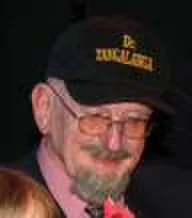
Julio Victorio De Rissio, who the public knew as Dr. Tangalanga, was an Argentine comedian born in Buenos Aires on November 10, 1916, in the Balvanera neighborhood. His parents were Italian-Argentine immigrants, and he spent his formative years within that community. Initially, he worked in a shoe factory and later as a shoemaker, marrying at age 25. However, his career took an unexpected turn in 1958 when he began recording prank calls to entertain a friend who was ill. This accidental beginning would eventually define his professional life. Dr. Tangalanga’s comedy centered around prank phone calls to strangers, often targeting businesses and feigning complaints that escalated into arguments and insults. His style frequently incorporated Argentine Lunfardo vernacular, absurd scenarios involving a fictional relative, and the use of vulgar language and double entendres. A particularly memorable call involved a football field owner, concluding with the phrase “Oíme, me hizo mierda este hijo de puta.” He released over 40 albums of these prank calls, beginning in 1989, and they sold over 250,000 copies between 1989 and 2013. Critics like Carlos Loiseau and Alejandro Rozitchner acknowledged his work. Notably, the album 'Dr. Tangalanga es mundial' (1998) featured Octavio for the first time. While his career experienced a pause after 1965 following his friend’s death, Dr. Tangalanga resumed recording in 1980 during his recovery from hepatitis. His popularity grew through informal distribution networks in Argentina during the 1980s. Later releases included '40 Años Currando' (2004), which was exclusively released in Mexico, and a live recording from La Tristienda Club that appeared as an official bootleg in 2006. He also occasionally used the names Raúl Tarufetti or Licenciado Varela. Dr. Tangalanga died on December 26, 2013, leaving behind a legacy as, according to some, the most famous prank call artist in the Spanish-speaking world.
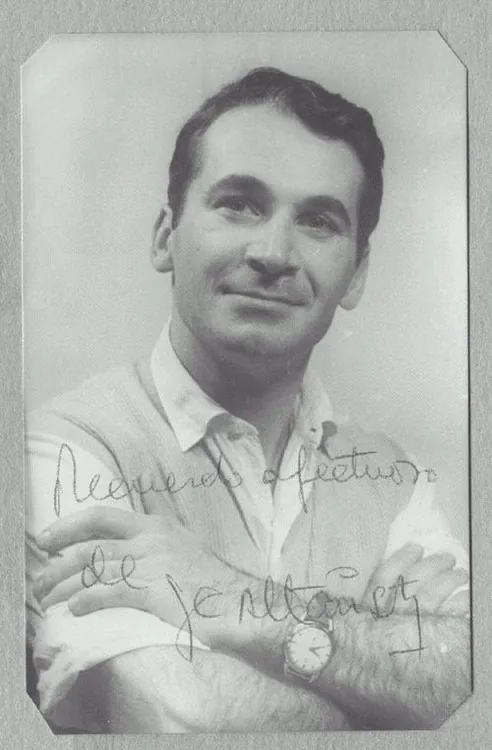
Juan Carlos Altavista was an Argentine actor, comedian, singer, and radio host. His career began at the Teatro Infantil Lavardén in Buenos Aires, where he worked alongside Julia Sandoval and Beba Bidart. He received formal acting training from Narciso Ibáñez Menta, Francisco Petrone, and Luis Sandrini. Altavista’s path to prominence involved the development of a memorable character, Minguito Tinguitella, conceived by Juan Carlos Chiappe. This character, a scavenger who worked at a dump driving an old dustcart and often wearing a beret and espadrilles, proved crucial to his success. Minguito Tinguitella brought Altavista widespread recognition through performances in radio and theater. He achieved further success with the character on television, notably appearing in Polémica en el bar alongside Fidel Pintos, Javier Portales, Vicente La Rusa, Mario Sánchez, and Adolfo García Grau. The character also starred in numerous films between 1942 and 1988. Altavista frequently portrayed Minguito in these film appearances, honoring his father by adopting his clothing style during performances. He also hosted the radio show El Clan del Aire from 1976 to 1989, and Cada mañana con Mingo on Radio Continental in the 1980s. Altavista’s later work included the three-episode television series Supermingo , based on a radio character, which aired on Channel 11 in Buenos Aires from 1987 to 1988. This series earned an Argentores award. He received a Konex Diploma for Merit as one of Argentina's most important comedic actors in 1981, and also a Konex de Platino. Tragically, Juan Carlos Altavista died on July 20, 1989, from a heart attack while filming Vamos Mingo, todavía! , caused by Wolff–Parkinson–White syndrome. He left behind three children: Maribel, Ana Clara, and Juan Gabriel.
Juan Carlos Calabró served as an actor, announcer and humorist in Argentina. Throughout an extensive and outstanding career in different areas of the show, he reached great fame and is remembered for having created and incarnate television characters such as Johnny Tolengo, Renato el Contra - also called "El Contra" and "Aníbal" - among others, which consolidated him as one of the more comedians famous of the country.
Juan Carlos Mesa, born Diego Isidro Mesa in Córdoba, Argentina, on May 15, 1930, was an Argentine humorist, screenwriter, and director. He died in Buenos Aires on August 2, 2016, at the age of 86, due to kidney failure caused by diabetes. His career spanned several decades, encompassing radio, television, film, and animation, leaving a significant mark on Argentine comedy. Mesa’s early career began in radio in Córdoba, where he created and wrote 'La Troupe de la Gran Vía' in 1956. He continued writing for various programs, including ‘Los sueños del gordo Porcel’ and collaborating with Héctor Maselli, Carlos Garaycochea, and Jorge Basurto at Canal 9. His work during this period included writing monologues for comedians like Pepe Biondi, Carlos Balá, and Alberto Olmedo, as well as political monologues for Tato Bores. He also contributed to the comedic program 'La Matraca,' which ran from 1965 to 1966. His style of humor is described as 'humor blanco,' employing techniques like grotesque, caricature, wordplay, and exaggeration. Mesa achieved wider recognition through his involvement in several notable projects. He collaborated on the film scripts for 'El veraneo de los Campanelli' in 1971 and its sequel in 1972. Palito Ortega’s ‘Dos locos en el aire’ marked his debut as a lead writer in 1976. Subsequently, in 1980, he gained considerable recognition as a radio personality through his program 'Tenis de mesa,' which cleverly referenced his surname. The show 'Mesa de noticias,' which premiered in 1983 and ran until 1987, featured Gianni Lunadei as his co-star and proved to be exceptionally popular. Throughout his career, he engaged in collaborative projects on multiple films alongside Alberto Olmedo and Jorge Porcel. Later, he partnered with his brother Edgardo and son Juan Martín for ‘El Surtidor.’ His professional achievements were acknowledged by several accolades, encompassing Bamba awards, an Excelencia award, and two Martín Fierro awards—one for best program and another for best hosting. In 2007, he voiced Noah in the award-winning animated film 'El arca,' and returned to Radio Mitre in 2006 with a segment called ‘Río con Mesa.’ He was also awarded the Gobbi de Oro prize by the National Tango Academy in 2010, reflecting his broader artistic contributions including writing lyrics for tangos and poetic texts.
Nelly Láinez, an Argentine comic actress, earned recognition for appearing in a succession of oddly titled Argentine comedy films and television productions, most prominently the 1974 movie Vampires Prefer Fatties.
Nicolás Diego Vázquez Mantovani es un artista argentino que actúa en televisión, teatro y cine, y también trabaja como humorista, conductor de programas y cantante.
Albania
1
Armenia
2
Austria
28
Australia
45
Azerbaijan
1
Belgium
13
Bulgaria
31
Benin
2
Bolivia
1
Brazil
24
Canada
107
Switzerland
17
Chile
8
Cameroon
1
China
7
Colombia
2
Czech Republic
7
Germany
188
Denmark
17
Dominican Republic
1
Algeria
2
Estonia
5
Egypt
4
Spain
74
Finland
15
France
214
United Kingdom
329
Ghana
3
Greece
18
Guatemala
1
Hungary
7
Indonesia
8
Ireland
28
Israel
9
India
11
Iraq
3
Iran
6
Italy
136
Jamaica
1
Japan
35
Kenya
3
Korea, South
20
Kazakhstan
1
Lebanon
5
Lithuania
1
Latvia
1
Morocco
17
Myanmar
1
Malta
1
Malawi
2
Mexico
28
Malaysia
7
Nigeria
19
Nicaragua
2
Netherlands
2
Norway
12
Nepal
3
New Zealand
9
Peru
2
Philippines
35
Pakistan
7
Poland
8
Portugal
7
Qatar
1
Romania
1
Serbia
3
Russia
9
Saudi Arabia
4
Sweden
101
Slovenia
4
Slovakia
2
Thailand
2
Tunisia
4
Turkey
5
Taiwan
1
Ukraine
7
Uganda
7
United States
213
Uruguay
1
Uzbekistan
1
Vietnam
1
South Africa
2
Argentina has a distinctive and influential comedy culture, with humour playing an important role in theatre, television, cinema, radio and live entertainment. Argentine comedians are known for a wide variety of styles, including stand-up, satire, observational comedy, sketch performances and improvisation.
GiggleTime's directory brings together Argentine comedians, stand-up performers, comedy actors, writers and other personalities connected to comedy and entertainment in Argentina. Explore the profiles above to discover comedians from different generations and learn more about their careers and performances.
Stand-up has become an important part of Argentina's live comedy scene, with performers appearing in comedy clubs, theatres, cultural spaces and dedicated comedy events.
Argentine stand-up comedians often draw material from everyday experiences, relationships, family, work and life in Argentina. Personal storytelling and observational humour are common, while other performers explore satire, social subjects, absurd humour and improvisation.
Buenos Aires is a major centre for Argentine comedy, with a large concentration of theatres, comedy clubs and entertainment venues. Stand-up and other forms of live comedy can also be found in cities and communities throughout the country.
Humor argentino has a long tradition that extends well beyond modern stand-up. Theatre, radio and television have all played important roles in developing Argentina's distinctive approach to comedy.
Argentine comic performers have worked with everything from scripted sketches and theatrical characters to improvisation and satire. The country's theatre culture has also provided comedians with opportunities to develop longer performances rather than relying solely on short-form comedy.
This connection between live theatre and popular entertainment continues to influence contemporary Argentine comedians.
Television and radio have historically been important platforms for Argentine comedy. Sketch programmes, sitcoms, variety shows, talk shows and other entertainment formats have introduced comedians to audiences throughout the country.
Many Argentine performers have built careers across several areas, combining comedy with acting, writing, presenting or producing. Some became household names through television, while others established themselves primarily through theatre or live performances.
Radio and audio entertainment have also played a significant role in Argentine humour, with comedians and entertainers using conversation, characters and improvisation to create comedy for listeners.
The Argentine comedy scene continues to evolve as younger performers experiment with new formats and ways of reaching audiences.
Alongside traditional theatres and comedy venues, comedians now use podcasts, YouTube, social media and streaming platforms to publish sketches, stand-up clips, interviews and original comedy. These platforms allow performers from outside Buenos Aires to reach audiences across Argentina and internationally.
The result is a comedy landscape where established performers and emerging voices can develop audiences through both live performance and digital content.
Looking for Argentine comedians, Argentine stand-up comedians or comedy performers from Argentina? Browse the GiggleTime directory above to discover performers from different generations and areas of Argentine entertainment.
Use the search feature to find a particular comedian or explore the directory to discover new names. Individual profiles may include biographical information, career details, performances, photographs and other interesting facts.
Whether you're interested in Argentine stand-up comedy, humor argentino, comedy actors, television comedians or famous comedians from Argentina, GiggleTime makes it easier to discover the people behind the country's comedy scene.
The directory continues to grow as new Argentine comedians and comedy personalities are added.