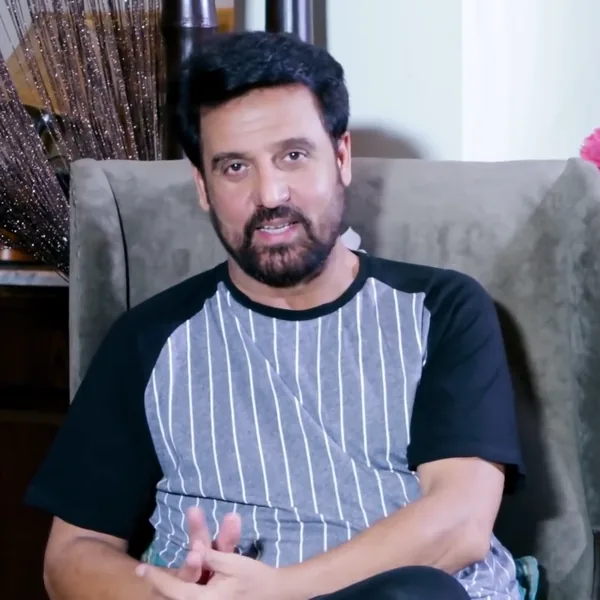
Afzal Khan
Afzal Khan, widely known by his stage name Jan Rambo, works in Pakistan as a film and television actor and also performs as a comedian, while taking on roles as a director, producer, and host.
Abid Kashmiri, a Pakistani performer, appeared in movies, television series and on stage, gaining recognition for his humor. His career spanned Pakistani cinema, TV dramas and theatrical productions, performed in Urdu and Punjabi.
Hina Dilpazeer Khan, a Pakistani entertainer, showcases diverse talents including acting, comedy, television presenting, directing and singing. Widely considered among Pakistan's most popular comedians and actresses, Hina Dilpazeer Khan was born in Karachi, Pakistan, on January 16, 1969. Her family relocated to the UAE due to her father’s employment, but she returned to Karachi in 2006. While living in the UAE, she pursued a radio career, writing and performing radio plays. Dilpazeer's professional screen debut occurred in 2008 with Burns Road Ki Neelofar , for which she earned the 2009 Kara Film Festival Award for Best Supporting Actress. She has since appeared in numerous television series and films, including prominent roles in Annie Ki Ayegi Baraat (2012), Mohabbat Jaye Bhar Mein (2012), and Mitthu Aur Aapa (2012). She is particularly known for her role as Momo in the comedy-drama Bulbulay , which premiered in 2009 and became one of the most watched comedy dramas in Pakistan. Her portrayal of Momo has garnered positive feedback globally and developed a cult following. Beyond Bulbulay , Dilpazeer has played over 40 characters in Quddusi Sahab Ki Bewah (2012–2014), portraying Shakooran, and acted as Saeeda in Burns Road Ki Neelofar . Her film credits also include 7 Din Mohabbat In (2018) and Parey Hut Love (2019), the latter of which was among the highest-grossing Pakistani films. She has received Lux Style Award nominations for her performances in Tum Ho Ke Chup (2011) and Mohabbat Jaye Bhar Mein (2012). Anil Kapoor, a Bollywood actor, has praised her adaptability and called her an "Art Diva," even referring to her as his guru. Dilpazeer is approximately 54 years old in 2020 and has a son named Mustafa Dilpazeer Khan, born when she was 23.
Moin Akhter, born December 24, 1950, and passing away on April 22, 2011, was a Pakistani artist recognized for his diverse talents including television, film, and stage work. He demonstrated skill in humor, comedy, impersonations, hosting, writing, singing, directing, and producing. Muhammad Mehboob, born in Karachi, Pakistan, was the son of a family that had established itself there following the 1947 partition. His father, Muhammad Ibrahim Mehboob, operated a printing press and also engaged in garment contracting. Akhter began performing at a young age, first appearing on stage at age 13 in a production of 'The Merchant of Venice' where he played Shylock. He made his television debut on September 6, 1966, impersonating Anthony Quinn and John F. Kennedy. Before pursuing performing arts, he briefly worked as a mechanic. He rose to fame during the era of Radio Pakistan alongside Anwar Maqsood and Bushra Ansari, and started his stand-up comedy career in his teenage years with stage performances. He gained widespread recognition for his screen persona 'Rozi' and is considered a unique parodist and the “king of Urdu comedy.” Among his notable works was the popular drama 'Rozi' (1990), an adaptation of 'Tootsie', where he portrayed a dual role. He appeared in over 400 episodes of the talk show 'Loose Talk' (2002), impersonating numerous personalities including Saddam Hussein and Manmohan Singh. He also starred in dramas such as ‘Mr. Tabedaar’ (1993) and ‘Mr. K2’ (1995). Alongside Umer Sharif, he presented stage productions including ‘Bakra Qiston Pe’ and ‘Buddha Ghar Pe Hai’. Akhter hosted events with dignitaries including King Husain of Jordan, Prime Minister Dawoodi Al-Joza, Presidents Zia-ul-Haq and Ghulam Ishaq Khan, Zulfiqar Ali Bhutto, and Pervez Musharraf. In 1996, he was honored with the Pride of Performance award; subsequently, in 2004, he received the Sitara-e-Imtiaz award. His autobiography, 'One Man Show', was published posthumously in 2025. Many modern Pakistani comedians credit him for shaping their craft.
Born Mohammad Saeed Khan, he rose to prominence under the stage name Rangeela and built his career in Pakistan as an actor, comedian, director, and producer.
Shakeel Siddiqui, hailing from Pakistan, performs stand‑up comedy on TV, acts in both theatrical productions and movies, and also directs stage works while writing his own plays.
Zeba Shehnaz is a multifaceted Pakistani entertainer, recognized as an actress, comedian, host, and voice actress. Born on July 11, 1952, in Lahore, Pakistan, she began her journey in the entertainment industry as a child actress on PTV in the 1960s, despite initial criticism for women pursuing such careers. Her career gained prominence in the late 1970s, marking a significant period of growth and recognition within Pakistani television and film. Shehnaz is particularly known for her extensive work in comedy. She portrayed 108 characters in the popular PTV show Fifty Fifty (1978), collaborating with Ismail Tara and Majid Jahangir, and received a special award for her performance at the First Indus Drama Award in 2005. Her comedic collaborations extended to numerous shows and theater plays with Moin Akhter, as well as performances on stage, including Bakra Qiston pay alongside Umer Sharif, which was well-received by audiences across Pakistan, India, and abroad. She frequently portrayed comedic characters in her plays, working alongside other prominent figures such as Anwer Maqsood, Safirullah Siddiqui (Lehri), and Moen Akhtar. Throughout her career, Zeba Shehnaz has appeared in a variety of television dramas including Baityaan , Umrao Jan Ada , Mera Yaar Miladay where she played the character of Salma, Ishq Tum Se Hua , Mohay Piya Rang Laaga , Kabhi Band Kabhi Baja , and Ghaffar's at Dhorajee . She also acted in films such as Munda Bigra Jaey (1995), for which she won a Nigar Award for Best Supporting Actress in 1995, and earlier films like Abla (1931), Talvar ka Dhanni (1938), Laila Majnu (1931), Heer Ranjha (1932), Dost (1944) and Wah Ri Dunya (1937). She has also lent her voice to characters, notably portraying the Parrot in 3 Bahadur: The Revenge of Baba Balaam . In 2021, she received the national award Tamgha-e-Imtiaz. Currently, Zeba Shehnaz dedicates her time to social work with organizations like Kiran Hospital, Indus Hospital, Husaini Blood Bank, and Jafriya Disaster Management Cell Welfare Organisation, helping the poor.
Albania
1
Armenia
2
Argentina
36
Austria
27
Australia
52
Azerbaijan
1
Bangladesh
1
Belgium
13
Bulgaria
57
Benin
2
Bolivia
1
Brazil
27
Belarus
2
Canada
125
Democratic Republic of the Congo
3
Switzerland
17
Cote d'Ivoire
1
Chile
15
Cameroon
1
China
8
Colombia
4
Cuba
4
Czech Republic
7
Germany
188
Denmark
17
Dominican Republic
1
Algeria
2
Ecuador
2
Estonia
5
Egypt
10
Spain
74
Ethiopia
1
Finland
15
France
214
United Kingdom
365
Georgia
1
Ghana
3
Greece
18
Guatemala
1
Croatia
2
Haiti
1
Hungary
7
Indonesia
23
Ireland
31
Israel
10
India
47
Iraq
3
Iran
6
Iceland
4
Italy
136
Jamaica
1
Japan
37
Kenya
3
Korea, South
20
Kazakhstan
3
Lebanon
5
Sri Lanka
1
Lithuania
1
Latvia
1
Morocco
17
Myanmar
1
Malta
1
Malawi
2
Mexico
28
Malaysia
7
Nigeria
19
Nicaragua
2
Netherlands
2
Norway
12
Nepal
3
New Zealand
9
Peru
2
Philippines
35
Poland
8
Portugal
7
Qatar
1
Romania
1
Serbia
4
Russia
9
Saudi Arabia
4
Sweden
101
Singapore
3
Slovenia
4
Slovakia
2
El Salvador
1
Syria
1
Thailand
2
Tunisia
4
Turkey
5
Taiwan
1
Ukraine
11
Uganda
7
United States
213
Uruguay
4
Uzbekistan
1
Venezuela
5
Vietnam
1
South Africa
3
Zimbabwe
1
Pakistan has a long and influential comedy tradition shaped by theatre, television, film, radio and stand-up performance. Pakistani humour often combines satire, wordplay, exaggerated characters and observations about family life, relationships, politics and social customs. Comedy is performed in several languages, including Urdu, Punjabi, Pashto and Sindhi, giving the country's entertainment industry a remarkable variety of comedic voices. From legendary stage performers to modern television stars and digital creators, Pakistani comedians have built audiences both in Pakistan and among the country's large diaspora.
One of the most important figures in Pakistani comedy is Umer Sharif, widely regarded as one of the country's greatest comedians and stage performers. Known for his energetic delivery, improvisation and memorable characters, Sharif became famous through Urdu stage comedy and films, particularly during the 1980s and 1990s. His stage productions attracted enormous audiences and influenced generations of performers. He also became known internationally, performing for Pakistani communities in countries including the United States, Canada and the United Kingdom. His contribution to Pakistani comedy was so significant that he is often described as one of the pioneers who brought modern stage comedy to a mass audience.
Another legendary performer is Moin Akhter, an actor, comedian, impersonator and television host whose career spanned several decades. He became famous for his remarkable ability to create different characters and accents, as well as his work alongside Anwar Maqsood and Bushra Ansari. Their television programmes combined comedy, satire and sharp writing, producing some of the most memorable moments in Pakistani television. Anwar Maqsood, in particular, became famous for his sophisticated satire and clever observations about Pakistani society and public life, while Bushra Ansari established herself as one of the country's most versatile comic actresses and entertainers.
Pakistani television has continued to produce major comedy stars. Sohail Ahmed, known for his Punjabi and Urdu comedy, has enjoyed a long career in stage, television and film. His character Azizi became especially popular for its humorous observations and social satire. Rauf Lala, Iftikhar Thakur, Amanullah Khan and Nasir Chinyoti are other important names associated with Pakistani stage comedy, particularly the vibrant theatre scene of Lahore. Punjabi stage performers have developed a distinctive style based on improvisation, exaggerated characters and interaction with the audience, making live theatre an important part of Pakistani comedy culture.
The modern comedy scene also includes television actors and stand-up performers who have introduced different styles of humour. Ahmed Ali Butt, Vasay Chaudhry and Ali Gul Pir have worked across television, film, writing, music and comedy. Vasay Chaudhry is particularly known for creating and writing Bulbulay, one of Pakistan's most popular sitcoms, while Ahmed Ali Butt has appeared in numerous comedy productions and television programmes. Ali Gul Pir has developed a distinctive form of satirical comedy through music and online content, often using humour to comment on social behaviour and contemporary Pakistani culture.
Stand-up comedy has grown significantly in Pakistan, particularly among younger audiences in cities such as Karachi, Lahore and Islamabad. Comedy clubs, open-mic events and university performances have provided opportunities for performers to develop material based on relationships, family expectations, cultural differences and everyday experiences. Digital platforms have accelerated this growth, with comedians and sketch creators able to reach audiences directly through YouTube, Instagram, TikTok and other social networks. This has also helped Pakistani comedy reach viewers in the Middle East, Europe, North America and other regions with large Pakistani communities.
From the legendary stage performances of Umer Sharif and the television legacy of Moin Akhter to contemporary stand-up, satire and digital comedy, Pakistan has developed one of South Asia's most recognisable comedy traditions. Its comedians combine linguistic creativity, strong characters and observations about everyday life to create humour that can be both entertaining and socially reflective. Explore Pakistani comedians on GiggleTime to discover legendary performers, television favourites, stage comedians and emerging voices from Pakistan's diverse comedy scene.