GiggleTime GiggleTime
Menu
Go Premium Submit a Joke Comedians About FAQs Contact

Legal
Privacy Policy Terms of Service Cookie Policy Refund and Cancellation Policy Attributions
Login
Language
Categories
Settings
Language English
Safe Mode
Random Jokes Autoplay
Notifications
Global Talent Directory

Comedians from Germany

The comedian directory of Germany — profiles, bios, photos, and social links for comedians from Germany.

Add a comedian
Reset
188 comedians
Friedrich Beckmann, comedian from Germany
Verified Unclaimed
Germany

Friedrich Beckmann

Friedrich Beckmann, born January 13, 1803, in Breslau, was a German comic actor and character comedian. He demonstrated comedic talent as a boy and debuted on stage at age seventeen in 1820, portraying the silent Danish king Harald in Kotzebue's Der Schutzgeist . Following this initial appearance, he worked as a choir member and inspector at the Breslau Theater from 1820. His career progressed when Heinrich Schmelka recommended him to the Königsstädtisches Theater in Berlin in 1824, where he was engaged. Initially performing small comic parts, Beckmann steadily gained popularity with audiences and received more significant roles. Beckmann’s fame largely stemmed from his play Eckensteher Nante im Verhör , written in 1833. The play, which reached a 46th edition in Berlin in 1876, featured Beckmann in the title role and was performed throughout Germany. He based the character Eckensteher Nante on a role in Karl von Holtei's play Ein Trauerspiel in Berlin . Throughout his career, he made guest appearances at the Theater an der Wien in 1841 and 1845, eventually being engaged by Franz Pokorny in 1845. Beckmann contributed to a Berlin version of a previously Vienna-dominated German-language farce. In 1838, he married Adele Muzzarelli, a popular soubrette, and they last appeared together on August 31, 1846. From 1846 until his death on September 7, 1866, Beckmann was a leading member of the Burgtheater in Vienna. He quickly gained popularity there, rising from a local performer to a character comedian. He debuted at the Hofburgtheater (Burgtheater) in November 1846 and worked as a first comedian, also directing plays. Beckmann performed at various theaters including the Burgtheater, Josefstädter Theater, and Leopoldstädter Theater, often alongside figures like Alois Pokorny and Franz Pokorny. Following Friedrich Beckmann's passing, Adele Muzzarelli created the Friedrich Beckmann Foundation, intended for the benefit of German actors. Streets named Beckmanngasse were established in Vienna in 1894, and an oil portrait by Gustav Gaul from 1873 resides in the Burgtheatergalerie.
Ilka Bessin, comedian from Germany
Verified Unclaimed
Germany

Ilka Bessin

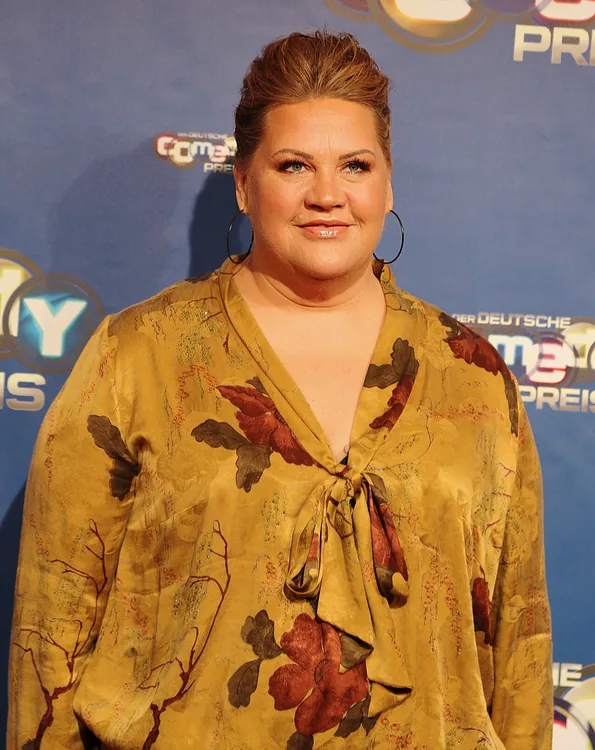
Ilka Bessin is a German comedian and actress, born on November 18, 1971, in Luckenwalde, Brandenburg, Germany. Her parents were a truck driver and a seamstress, and she has an older sister. Bessin’s background includes diverse work experiences, including training as a cook from 1988 to 1990, working as a chef until 1989, and later as a bartender and discothèque manager after the fall of the Berlin Wall. Bessin’s comedic performances are largely defined by her portrayal of Cindy aus Marzahn, a character created for and representing the Berlin district of Marzahn. Cindy is portrayed as an overweight, long-term unemployed woman with a pessimistic view on life and dating, recognizable by her flaming pink velour track suit, curly blond hair, and over-the-top makeup. Bessin drew inspiration for this character from Kurt Krömer’s Pummelfee. From the beginning of 2009 until April of that same year, Bessin appeared on Sat.1’s comedy series Schillerstraße, taking on the role of landlady Ilka. From 2009 to 2012, she hosted a weekly show on RTL called Cindy aus Marzahn & Die jungen Wilden. She toured extensively, with tours including Schizophren – Ich wollte ’ne Prinzessin sein (2007-2008), Nicht jeder Prinz kommt uff’m Pferd (2009-2012), and PINK IS BJUTIFUL (2013-2014). Throughout the period from 2007 to 2012, Bessin was recognized with six German Comedy Awards; these included Best Newcomer in 2007, recognition as Best Female Comedian for 2009, 2010 and 2011, and the award for Best TV-Soloprogramm in 2009. She ended her portrayal of Cindy aus Marzahn in June 2016.

Ingolf Lück, comedian from Germany
Verified Unclaimed
Germany

Ingolf Lück

Ingolf Lück is a German comedian, actor, director, and entertainer born in Bielefeld, North Rhine-Westphalia, in April 1958. Lück’s journey into comedy began with the co-founding of the children's theater group Zick-Zack-Theaterbande in 1979, alongside Andreas Liebold. Following its dissolution in 1982, he established the ensemble Das Totale Theater, which presented a mix of cabaret, clowning, and music shows. He initially gained attention through parodies of stars and television presenters. In 1985, he transitioned to television, hosting the ARD music video show 'Formel eins' and appearing in the film Feel the Motion . You're Dead! (1987) and Peng! Du bist tot! (1986). Lück achieved widespread recognition for his appearances in the Sat.1 “Wochenshow” from 1996 to 2002. He also hosted the German version of Don't Forget Your Toothbrush , titled Pack die Zahnbürste ein . Throughout his career, he has starred in numerous TV films including Kein Mann für eine Nacht (1999), Thrill – Spiel um dein Leben (2000), Crazy Race (2003), The Chocolate Queen (2005), and Chubby Me (2007). He has also appeared in sitcoms like 'Das Büro' and 'Der Doc'. Lück’s solo play, ‘Caveman,’ proved particularly successful from 2002 onwards. More recently, he presented the monodrama "Seite Eins" in Dinslaken on November 15, 2022, which critiques mass media practices and features the character Marco, a boulevard journalist, alongside Lea, a musician releasing her first CD. He won the eleventh season of “Let's Dance” in 2018 with partner Ekaterina Leonova, becoming the oldest winner. He received the Verdienstorden des Landes Nordrhein-Westfalen in 2016 and an honorary prize at the German Comedy Award in 2014. Currently, he resides in Cologne.

Mario Barth, comedian from Germany
Verified Unclaimed
Germany

Mario Barth

Mario Wolfgang Barth, born on November 1, 1972, in Berlin-Mariendorf, is a German comedian. He grew up as one of six children in Berlin-Mariendorf, with his father from Ulm and his mother from Oberbayern. Having finished a telecommunications electrician apprenticeship with Siemens in Berlin, he pursued acting studies for a short time in 1995 and took part in comedic training sessions, notably at the Köln Comedy Schule. Barth gained early stage experience with short appearances on television shows like NightWash and Quatsch Comedy Club. Beginning in the first months of 2001, his stage production 'Männer sind Schweine, Frauen aber auch!' (Men are Pigs, but Women Too!) has been running continuously. A live DVD of 'Männer sind Schweine, Frauen aber auch!' in 2005 reached number 3 on the German Album Charts and went platinum, later earning twelve platinum and one gold record awards. He received the German Comedy Award for his program 'Männer sind primitiv, aber glücklich!' in 2006. Barth has achieved considerable recognition for his live performances. In July 2008, he set a world record as the 'Live Comedian with the Most Viewers,' performing for approximately 70,000 people at the Berlin Olympic Stadium, and again in June 2014 with 116,498 attendees. He released a single 'Mensch Berlin' with Paul Kuhn following the 2008 stadium event. From 2009, he presented the comedy program 'Willkommen bei Mario Barth' on RTL; furthermore, since 2013, he has hosted 'Mario Barth deckt auf!'. He continues to perform, hosting 'Mario Barth & Friends' since 2019. He is also active as a sole proprietor and managing partner of several production companies.

Matze Knop, comedian from Germany
Verified Unclaimed
Germany

Matze Knop

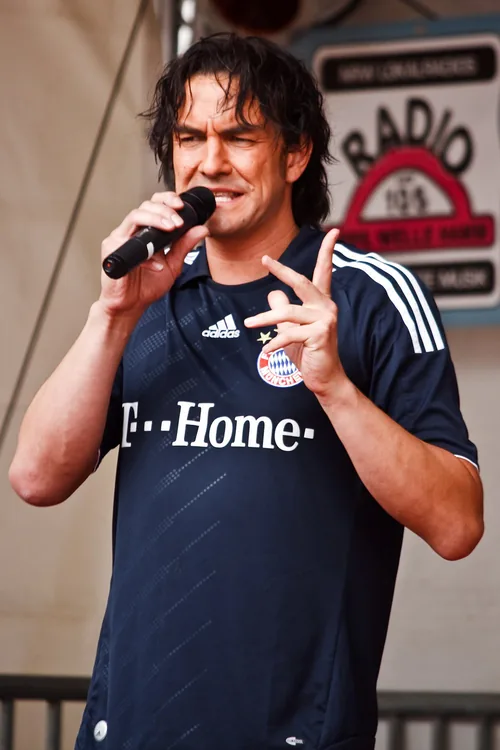
Matze Knop, born Matthias Knop on November 11, 1974, in Lippstadt, Germany, is a German comedian and impersonator. He grew up in Lippstadt with his younger brother Timo. His father was a youth soccer coach at Borussia Lippstadt, and he has an uncle who is the chairman of a Mau Mau club near Lippstadt. Knop began his media career as a radio editor at Radio Bielefeld after studying journalism at the University of Dortmund. He initially gained recognition with the comedy persona 'Supa Richie' in the late 1990s, achieving greater fame through several comedy songs that charted in the German singles charts. He received a Musikpreis Echo award nomination in the Comedy category in 1998. He also worked as a voice actor, notably dubbing Adam Sandler in the film Waterboy . His early work included appearances on radio, television and music charts. Throughout his career, Knop has hosted several television and radio shows, including Knops Spätshow on Sat.1 in 2002 and Clipfish TV on RTL in 2007. He frequently appeared on Dings vom Dach . He tours regularly with stage programs such as Operation Testosteron (2009-2012), Platzhirsche – Männer, Machos, Muttersöhnchen (from 2012), and currently Mut zur Lücke (since 2021). He also co-hosts the podcast Echte Champions XXL with Oliver Pocher, Reiner Calmund, and Tobi Holtkamp. He is a football parodist and expert for ARD, ZDF, Sky, and Sport 1, and hosts the show 'Matze und der Fußball'. Beyond his comedic work, Knop is an avid football player, having played since age six and continuing to play actively for RW Horn. He supports the 'Kinderlachen e.V.' charity and runs the Matze Knop Foundation, which supports disadvantaged children. He currently lives near his parents' home in Lippstadt with his girlfriend and keeps a gratitude journal daily.

Max Adalbert, comedian from Germany
Verified Unclaimed
Germany

Max Adalbert

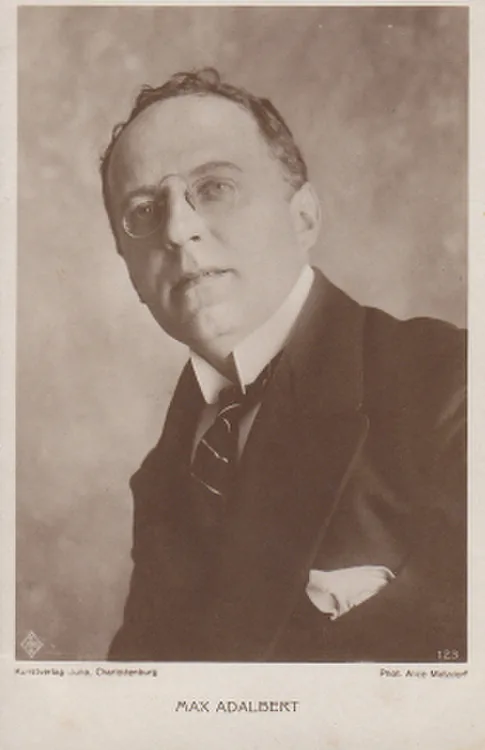
Johannes Adolph Krampf, known under the stage name Max Adalbert, was a German actor for stage and screen, de r He was especially known for his comedic performances. He participated in more than forty productions from the era of silent and sound film and worked on m in the cabaret.

Michael Kessler, comedian from Germany
Verified Unclaimed
Germany

Michael Kessler

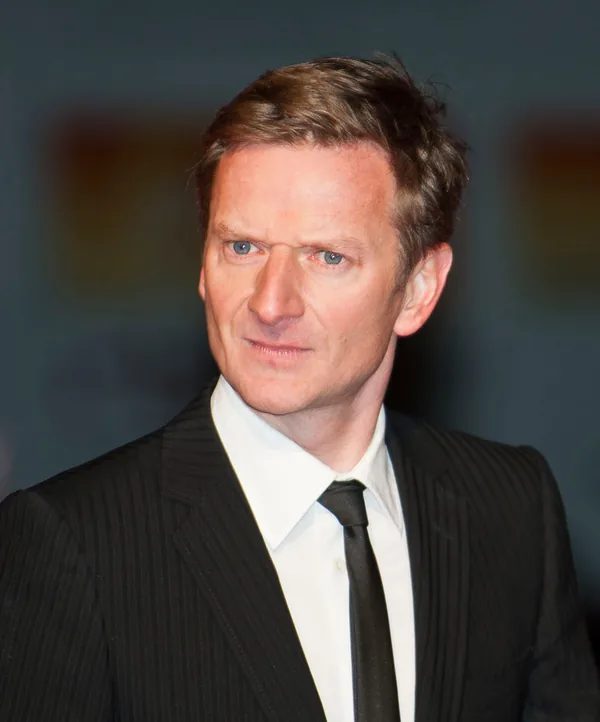
Michael Kessler is a German actor, comedian, theater director, author, and moderator. Born on June 24, 1967, in Wiesbaden, he grew up as the third of three children, with a father who was an optician and a mother who was a homemaker. He attended Gymnasium am Mosbacher Berg in Wiesbaden, graduating with his Abitur in 1986 and participating in the school’s theater club. Kessler gained early stage experience performing at the Hessian State Theater Wiesbaden. After earning a diploma from the Westfälische Schauspielschule Bochum from 1988 to 1992, he began his professional acting career. He performed at Schauspielhaus Bochum, Schauspiel Frankfurt, Nationaltheater Mannheim, and Schauspielhaus Zürich. During his studies, he played Georg Zierschnitz in Frühlings Erwachen and Raoul in Die Jungfrau von Orléans . From 1992 to 1995, Kessler was engaged at the Nationaltheater Mannheim, appearing in plays like Der Raub der Sabinerinnen , Die heilige Johanna , and Gespenster . He made his film debut in 1991 as 'Klausi' in Manta, Manta , gaining recognition for this role alongside his subsequent appearance in the comedy series Switch . Kessler’s career expanded into television and theater with numerous roles. He appeared in shows like Siebenbirken , Schwarz greift ein , and Hotel Mama starting in 1992. From 2005 to 2009, he starred in the play Männerhort in Berlin, and later performed at the Komödie am Kurfürstendamm. He hosted Berliner Nacht Taxe on RBB Fernsehen from 2006 to 2009, producing 42 episodes. Kessler has also provided voice work for films like Rango , The Smurfs 2 , and Angry Birds , and contributed to audio plays and television shows. He received the German Comedy Award in 2008 in the category 'Best Actor' and has been recognized with other awards including the Deutscher Fernsehpreis, Grimme-Preis, and Romy. Currently, he continues to perform on stage and appears in various film and television productions, including Ein Fall für die Erdmännchen and is scheduled to film Nord Nord Mord and Rent a Black in 2026.

Mike Krüger, comedian from Germany
Verified Unclaimed
Germany

Mike Krüger

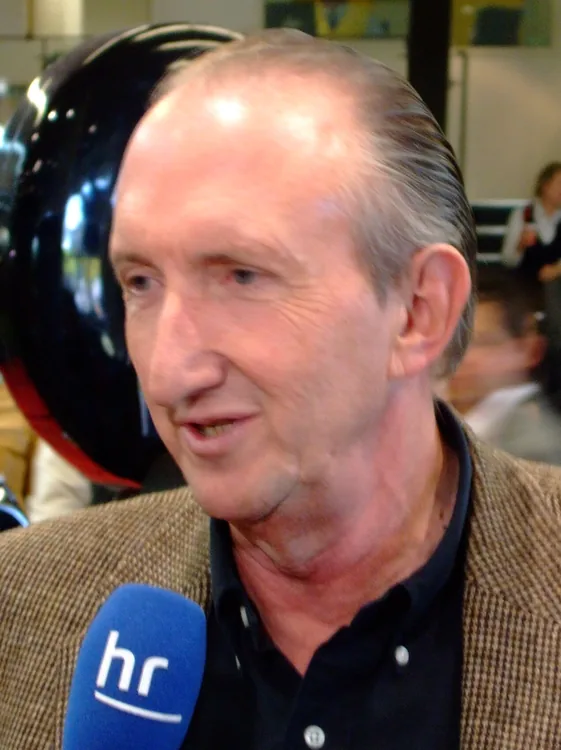
Mike Krüger, born Michael Friedrich Wilhelm on December 14, 1951, in Ulm, is a German comedian, actor, kabarett artist, and singer. He experienced a difficult childhood, growing up in Hamburg after his mother’s death and attending boarding school where corporal punishment was practiced; he used humor to cope with these challenging times. After initially training as a concrete builder and studying architecture, he pursued a show career, receiving early support from Rudi Carrell who invited him to appear on "Am laufenden Band" in 1975. Krüger gained fame through popular comedy hits, successful films, and television shows, entertaining millions of viewers for decades. He achieved chart success with songs like "Mein Gott, Walther" (1975) and "Der Nippel" (1980). His comedy combines classic humor with musical elements and charm, often incorporating well-known songs into his act. He starred in several films, including Piratensender Powerplay (1981), Die Supernasen (1983) alongside Thomas Gottschalk, Zwei Nasen tanken Super (1984), Seitenstechen (1985) directed by Dieter Pröttel, and Geld oder Leber! (1986). He also appeared in Die Einsteiger (1985) and Die Senkrechtstarter (1989), reprising his role as Mike in the latter. Throughout his career, Krüger hosted numerous television shows, including "Vier gegen Willi" (1987-1989), "Der Comedyflüsterer" (2007), and “Klüger mit Krüger (AT)” (2006). He also appeared in commercials for Hagebau Markt starting in 2009, and composed music for a Mercedes-Benz Transporter commercial in 2011. Considered a major cult figure in German comedy, he continues to entertain fans with live performances and humorous stage shows filled with nostalgia. In 2015, he published his autobiography "Mein Gott, Walther" and appeared at the Frankfurt Book Fair to present it. While he retired from show business in recent years, his last television appearance was in 2017, leaving behind a legacy of decades of entertainment.

Mirja Boes, comedian from Germany
Verified Unclaimed
Germany

Mirja Boes

Mirja Boes, born September 3, 1971, in Viersen, Germany, is a German comedian, actress, and singer. She grew up in the Boisheim district of Viersen and graduated from Dülken Municipal School in 1991. Her studies included Italian, Spanish, and music/media studies at Heinrich-Heine University Düsseldorf from 1991 to 1994, as well as musical theater at the Leipzig Academy of Music and Theatre from 1992 to 1994. Boes began her performance career early, joining Compagnia 82 in 1994 and Die Fabulösen Thekenschlampen in 1996. She also performed with Frizzles’ improvisational theatre. She initially gained attention performing as Möhre, releasing her first single, '20 Zentimeter', in 2000 and another, 'Wir ham doch keine Zeit ...', in 2003. She released comedic party music and spoken comedy tracks under the stage name Möhre, and performed at the Discothek Oberbayern in Mallorca from summer 2001. She was also a member of the 'Mallorca All-Stars' group. From 2002 to 2006, Mirja Boes appeared regularly on television with Ralf Schmitz, Mathias Schlung, and Markus Majowski in 'Die Dreisten Drei'. She has had guest appearances on numerous shows including TV total, Elton.tv, Anke Late Night, Open Muzzle, Clueless Genius, and the Gong Show. She starred in films like 'Siegfried' (2005) and 'Impy's Island' (2005), as well as 'African Race' (2008). She hosted 'Karaoke Showdown' from 2006 to 2007, and played the lead in the RTL series 'Angie' from 2006 to 2008. She released her memoir, 'Boese: Unspeakably Embarrassing', in January 2009, and toured with 'Ich bin Boes' from February to April 2010. She won the 2007 German Comedy Award as part of the 'Frei Schnauze' ensemble and the 2008 German Comedy Award (Best Comedian). Mirja Boes continues to work in comedy and entertainment. She hosted 'Alles Lüge mit Mirja Boes' on 1 Live radio starting in March 2008, and has appeared in shows like 'Der Nächste, bitte!' (2015) and 'Quatsch Comedy Club'. In 2024, she won the fifth season of LOL: Last One Laughing and the tenth season of The Masked Singer. She is currently returning with a new tour, described as potentially the worst ever but possibly enjoyable for those who appreciate humor. She is referred to as the "Queen of Quatsch" and her new program is called "carpfe diem – Lutsche den Tag!". Her work incorporates stories from everyday life and situational humor, and she explores topics like aging, daily challenges, and experiences in telephone waiting loops.

Paul Biensfeldt, comedian from Germany
Verified Unclaimed
Germany

Paul Biensfeldt

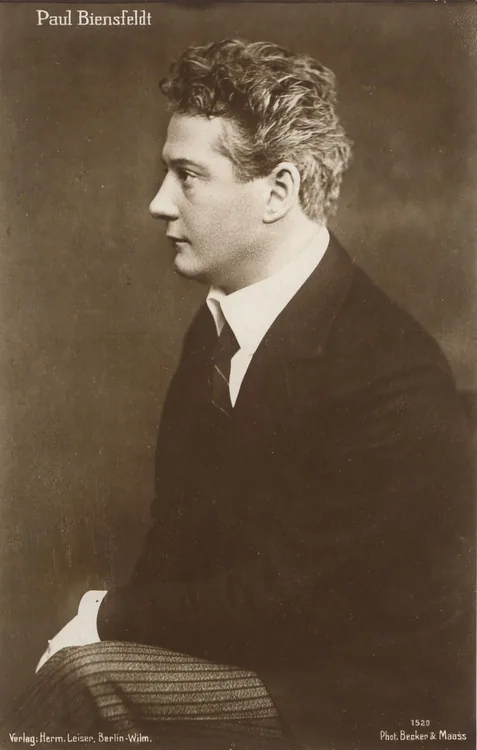
Paul Biensfeldt was a German-Jewish actor who contributed significantly to the German theater and film landscape for over four decades. Born on March 4, 1869, he spent forty years as part of the Berlin theater scene. His career began in 1893 with a breakthrough performance in Max Halbe's play 'Jugend' at the Residenztheater. Subsequently, he worked under Otto Brahm and later under the influential Max Reinhardt at the Deutsches Theater, becoming a regular performer on that stage. He was a popular ensemble player at Reinhardt’s theater for 25 years, frequently portraying comedic roles. Biensfeldt's versatility extended to both stage and film, appearing in over 100 silent and sound productions between 1913 and 1933. Prominent directors such as Fritz Lang, Ernst Lubitsch, Friedrich Wilhelm Murnau, Paul Leni, Robert Wiene, and Joe May frequently cast him. While often playing supporting roles as characters like servants, dance teachers, police officers, or nobles, he also enjoyed larger roles in the early 1910s. Notable silent film appearances include portraying the father of Lil Dagover and a magician who transforms into a cactus in Fritz Lang's 'Der müde Tod'. He often acted alongside Henny Porten. His comedic talent was recognized by playwright Carl Sternheim, who specifically wrote the role of Krey in his 1913 comedy 'Bürger Schippl' for Biensfeldt. He showcased a range of performances, including playing the chamberlain Lebel in Lubitsch’s ‘Madame Dubarry’ and exhibiting “camp obeisance” and “playful subservience” as a sidekick to Emil Jannings in films such as Anna Boleyn (1920) and Das Weib des Pharao . Other notable film appearances include roles in Die ideale Gattin (1913), Die Geliebte Tote (1919), Waxworks (1924) – where he was part of an all-star cast including Emil Jannings and Conrad Veidt – Der Goldene Schmetterling (1926), and Fiaker Nr.13 (1926), in which he portrayed a caring cab-driver and foster father. In one performance, he performed a comic song as the jester, transitioning from smugness to terror before being whipped due to the king’s offense. Paul Biensfeldt died on April 2, 1933, and was buried at the Wilmersdorf Waldfriedhof Güterfelde in Berlin.

Sig Arno, comedian from Germany
Verified Unclaimed
Germany

Sig Arno

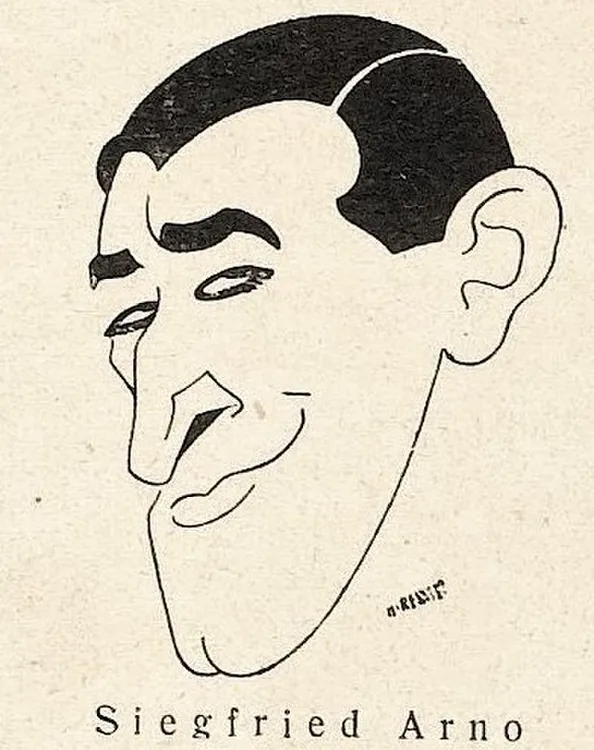
Sig Arno, born Siegfried Aron on December 27, 1895, in Hamburg, Germany, was a German-Jewish film actor and stage comedian. His parents were Louis Aron and Emilie Elise Adele Amanda Bez. He attended the Talmud-Tora School in Hamburg and trained as a fashion designer at the Hamburger Kunstgewerbeschule. Arno became a member of the Hamburger Theaterverein and performed at the Harburger Stadttheater from 1913/14, followed by the Hamburger Neuen Operetten-Theater from 1914 to 1916. He served as a soldier on the Western Front from late 1916. Arno’s career began in earnest before 1920 when he was already a well-known stage comedian in Germany. After World War I, he performed at the Flora-Theater in Altona (1918-1920) and subsequently worked at the Neues Deutsches Theater in Prague during 1920/21. By the end of 1921, he moved to Berlin, appearing at the Thalia-Theater and later the Metropol-Theater. He made his film debut in Die rote Katze in 1921 and frequently appeared in comedies from the mid-1920s, often partnering with Kurt Gerron as a comedic duo. Between 1923 and 1929, he recorded Schlager, operetta, and film songs for Homocord, Electrola, and Orchestrola. He is best known for his role as Toto in The Palm Beach Story (1942), though he appeared in approximately 90 films in Germany and over 50 in Hollywood. Due to the rise of Adolf Hitler, Arno emigrated from Germany in 1933, working in Europe until 1939 before moving to Hollywood. He appeared in films such as Pardon My Sarong and The Mummy's Hand , and had notable roles in The Bells of Notre Dame (1939), The Great Dictator (1940), and A Guy Named Joe (1942). He frequently played waiters or maitre d's. Arno appeared on Broadway three times, including in Song of Norway (1944-46) and Time Remembered , for which he was nominated for a Tony Award in 1958. He became an American citizen in 1945 and received the Filmband in Gold at the German Film Awards in 1966. Sig Arno died on August 17, 1975, in Woodland Hills, California, from Parkinson's disease; his ashes were scattered at sea.

German Comedians and the Comedy Scene in Germany

Germany has a diverse comedy culture that includes stand-up, Kabarett, sketch comedy, television, film and live stage performances. German comedians work across many different styles, from observational humour and satire to character comedy, storytelling and improvisation.

GiggleTime's directory brings together German comedians, stand-up comedians, comedy actors, cabaret performers and other personalities from the world of German comedy. Browse the profiles above to discover comedians from different generations and learn more about their careers and performances.

Comedy and Stand-Up in Germany

Stand-up comedy has become an increasingly popular part of entertainment in Germany, with comedians performing in comedy clubs, theatres, festivals and other live venues.

German stand-up covers a wide range of subjects and styles. Performers may draw material from everyday life, relationships, work, cultural differences and personal experiences, while others focus on satire, social observations or deliberately absurd humour.

Berlin, Hamburg, Cologne and Munich are among the cities with active comedy communities, but German comedians perform throughout the country. The growth of comedy clubs, touring shows and online platforms has also created more opportunities for new performers to reach audiences.

Kabarett and German Satire

One of the most distinctive parts of German comedy is Kabarett, a form of performance traditionally associated with political and social satire.

Kabarett performers often use humour, irony and commentary to examine current affairs, society and everyday life. Although Kabarett has its own traditions and style, modern German comedy includes many performers who move between different formats, combining elements of cabaret, stand-up and theatrical performance.

This long-standing tradition gives German comedy a particularly broad range, from light entertainment and observational humour to more satirical performances.

German Comedians on Television and Film

Television has played a major role in making German comedians familiar to large audiences. Comedy series, sketch programmes, panel shows, late-night formats and entertainment programmes have provided platforms for performers from different backgrounds.

German comedians and comedy actors are also active in cinema, theatre and voice acting. Some performers have built careers primarily through television, while others began with live comedy before moving into acting, writing or presenting.

Germany's entertainment industry also includes performers from different regions and cultural backgrounds, contributing to the variety of voices found within contemporary German comedy.

Comedy in German and Beyond

German is the main language of the country's comedy scene, but German-language comedy also reaches audiences in Austria, Switzerland and other parts of the German-speaking world.

At the same time, digital platforms have made it easier for German comedians to reach international audiences. YouTube, podcasts, social media and streaming services allow performers to publish sketches, stand-up clips, interviews and other comedy content without relying solely on traditional television or live venues.

This changing media landscape has helped introduce a new generation of German comedians to wider audiences.

Discover German Comedians on GiggleTime

Looking for German comedians, German stand-up comedians or comedy performers from Germany? Explore the GiggleTime directory above to discover comedians working across stand-up, television, film, theatre and other forms of entertainment.

Use the search feature to find a particular comedian or browse the profiles to discover new performers. Individual profiles may include biographical information, career highlights, performances, photographs and other interesting details.

Whether you're interested in German stand-up comedy, Kabarett, comedy actors, television comedians or emerging German comedy talent, GiggleTime makes it easier to discover the people behind the humour.

The directory continues to grow as new German comedians and comedy personalities are added.