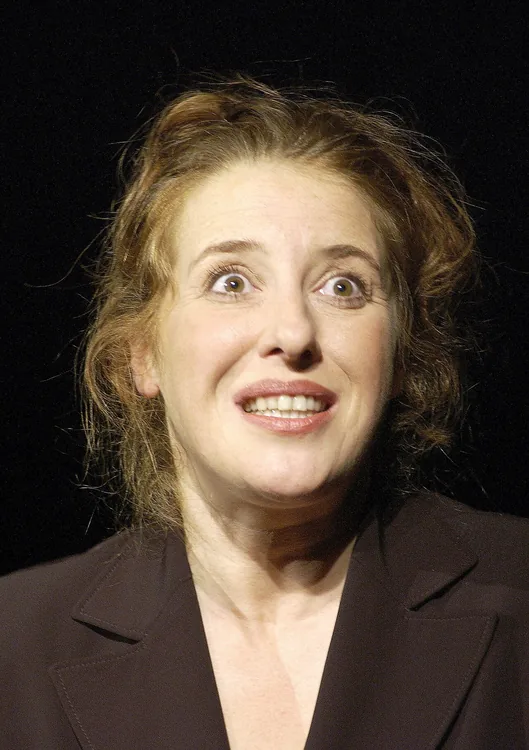
GiggleTime GiggleTime
Menu
Go Premium Submit a Joke Comedians About FAQs Contact

Legal
Privacy Policy Terms of Service Cookie Policy Refund and Cancellation Policy Attributions
Login
Language
Categories
Settings
Language English
Safe Mode
Random Jokes Autoplay
Notifications
Global Talent Directory

Comedians from Germany

The comedian directory of Germany — profiles, bios, photos, and social links for comedians from Germany.

Add a comedian
Reset
188 comedians
Corner species of Hirschhausen, comedian from Germany
Verified Unclaimed
Germany

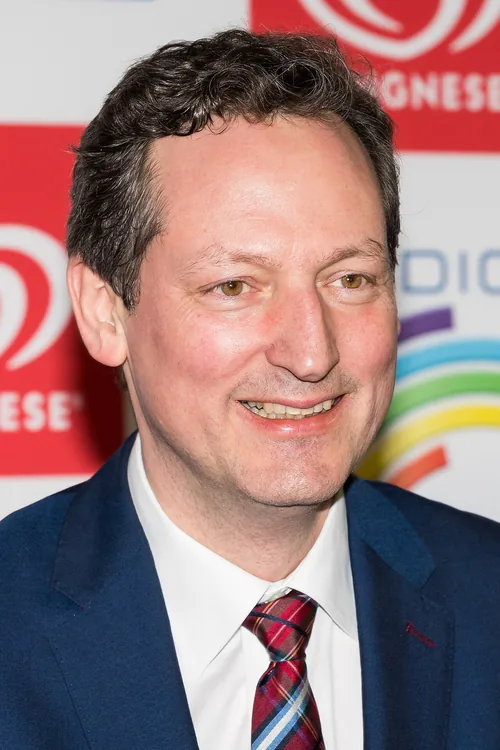
Corner species of Hirschhausen

Eckart Axel von Hirschhausen works as a doctor in Germany, moderates television formats, performs as a cabaretist and comedian, produces web videos as well as television programs, works as a science journalist and is active as an author. The doctoral doctor and honorary professor explains health topics in generally understandable language and has been dealing with the Climate change.

Dorkas Kiefer, comedian from Germany
Verified Unclaimed
Germany

Dorkas Kiefer

Dorkas Kiefer is a German actress, singer, and comedian. Born on June 21, 1972, in Offenbach am Main, she grew up in Braunfels. Her brother, Vinzenz Kiefer, also works as an actor. She began her performance journey at a young age, performing in a children's musical in Wetzlar at the age of nine. Dorkas received training in various artistic disciplines including singing, piano, ballet, tap, and dance. In 1988, she signed with composer Ralph Siegel and released six singles. She achieved recognition by placing third in the German pre-selection for the Eurovision Song Contest 1989 with 'Ich hab Angst'. Further musical success came in 1994 when she represented Germany as part of the group Mekado at the Eurovision Song Contest, again placing third. Her acting career began in 1996 with a role in the soap opera 'Unter uns', and she has since appeared in fifteen film and television productions. Tanja was a significant character she played in the 1999 movie, 'Eden in the Flames of War'. Additionally, she took on the part of Kriemhild within the 2005 film 'Siegfried', and also played Sheila in the 2008 fantasy production, 'The Legend of the Loch Ness Monster'. She hosted the show 'Singles 2000' in 2000 and toured as a guest singer with Udo Lindenberg. Since 2007, she has voiced the role of Anna Siebert in the audio drama soap '…und nebenbei Liebe'. Her performance in the 2013 drama 'Between Us' was a starring role. Furthermore, she featured in both the 2015 comedy 'Toilet Story' and the television series 'Lanes', where she embodied the character Phantom. She is credited as a comedian for a TV show. Dorkas Kiefer currently lives in Heiligenhaus and frequently collaborates with directors Thomas Nennstiel and Martin Kinkel, as well as actors Fiona Coors, Rainer Hunold, Marcus Mittermeier, and Radost Bokel.

Henning Wehn, comedian from Germany
Verified Unclaimed
Germany

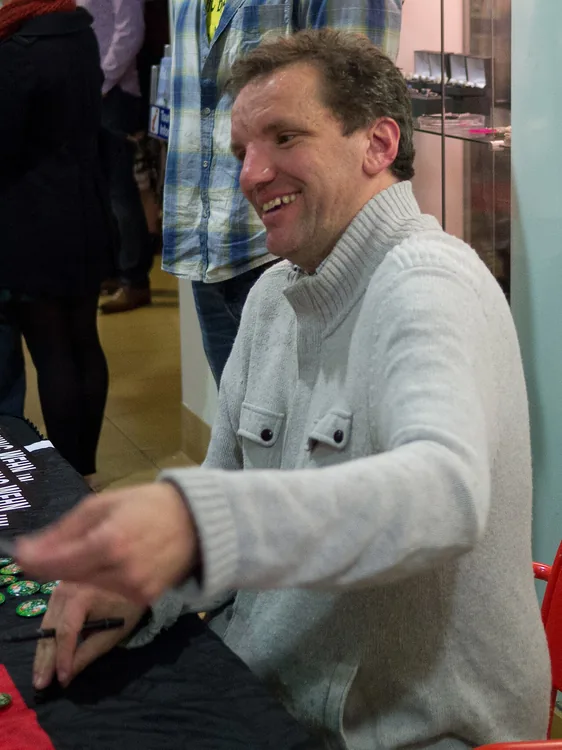
Henning Wehn

Beginning his career as a warm-up comedian for acts like Stewart Lee, Henning Wehn is now a German stand-up comedian working in the UK. Born on April 10, 1974, in Hagen, West Germany, he initially studied Business Administration in Münster before briefly working in customer relations and then in marketing for Wycombe Wanderers. Before becoming a comedian, Henning Wehn relocated to the UK to work within the marketing sector. From October 2003, he has presented himself as the 'German Comedy Ambassador in London,' a title he continues to hold. Wehn’s comedy style combines dry humour with German stereotypes and observations on British life. He frequently tours and performs with fellow German comedian Otto Kuhnle, and has also performed stand-up comedy tours worldwide. His shows have included 'My Struggle' (2011), 'No Surrender' (2012-2013), and 'Westphalia Is Not an Option' (2016-2017), among others. He is known for analyzing jokes in detail and explaining punchlines extensively, often using a German accent when telling jokes. In 2015, he explored the cultural divide between East and West Germany in a BBC World Service documentary called 'Wall in the Head'. His comedy frequently uses German stereotypes, exaggerating them to hold up a mirror to his British audience. Wehn has gained recognition through various avenues. He initially gained recognition in Germany through a comedy format on the Lokalradio Antenne Münster. He has appeared on several British panel shows, including 8 Out of 10 Cats, Have I Got News for You, and QI, and is a recurring panellist on BBC Radio 5 Live's Fighting Talk and Radio 4's The Unbelievable Truth. He presented 'An Immigrant’s Guide to Britain' in 2015, and co-hosted the travelogue 'The Road to Rio' with Mark Watson in 2014. He has also recorded 'Henning Knows Best' for BBC Radio 2, and hosts the podcast 'In the Membrane' with Jake Wood. In 2005, he won the Hackney Empire New Act of the Year award, and in 2004, he secured the Bracknell Comedy Festival New Act Competition. He is likely the only German stand-up comedian in the UK, and performs his own shows at numerous British comedy clubs.

Ingo Oschmann, comedian from Germany
Verified Unclaimed
Germany

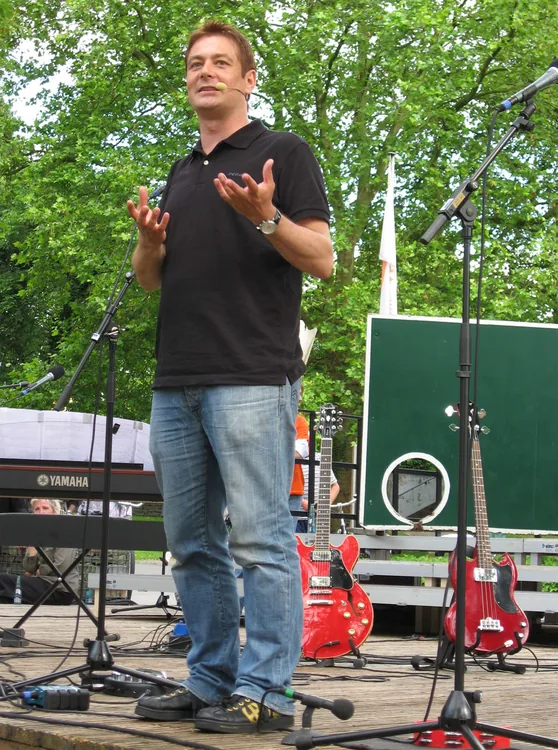
Ingo Oschmann

Ingo Oschmann is a German comedian, entertainer, and magician born in Bielefeld on August 3, 1969. He began his performance career in 1992, initially performing magic at children's birthday parties, weddings, and festivals. His early training included workshops in acting, pantomime, and improvisation at the Comedy School in Cologne in 1993. This foundation helped him create magic and acting seminars for both children and adults starting in 1996. He is described as a humorist and entertainer who has been working in these fields for over 30 years. Oschmann’s comedy style blends stand-up, improvisation, and magic, engaging both children and adults. His first solo program, 'Kommunikaze,' premiered in 2000, and it earned him the Swiss Comedy Award in 2001. In 2003, he secured victory on the German Sat.1 casting show Star Search; this success resulted in 'Wenn Sie lachen, ist es Oschmann!' (When you laugh, it's because of Oschmann!), his own television comedy program, which ran for two seasons in 2004. He hosted the clip and comedy show 'WWW - Die Witzigsten Werbespots der Welt' from 2005 to 2007. Critics have described his performances as "furios," “sensationell,” and “Weltklasse.” He also created and hosted the monthly 'Figaro Comedy Show' in Bielefeld from 2001 to 2006, later renamed 'Church of Comedy'. Beyond television and stage work, Oschmann has expanded his creative endeavors. In 2007, he released a DVD of his live performance and published a cookbook called 'Schönen Abend!' with Jürgen von der Lippe, which he also performed live at the Theater an der Kö and later released as an audiobook. He toured internationally, performing sold-out shows in Hong Kong in April 2008 and later touring with his program 'Wunderbar, es ist ja so!' from 2009 onward. As well as working as a moderator across Europe and Asia, Oschmann established 'Wunschkind,' a merchandising and publishing house. Currently, he is touring with his program "Scherztherapie" (Joke Therapy) and provides voiceover work for Stimmgerecht productions, represented by Agentur Stimmgerecht.

Jochen Busse, comedian from Germany
Verified Unclaimed
Germany

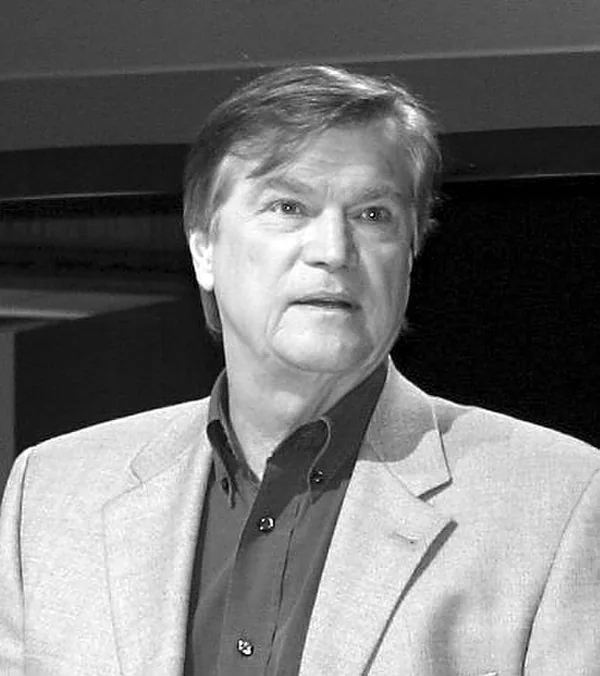
Jochen Busse

Jochen Busse, born January 28, 1941, in Iserlohn im Sauerland, is a German television actor and one of Germany’s most well-known comedians. He grew up in Iserlohn and Melle near Osnabrück, the son of a factory owner who produced curtain sets. Throughout his life, Busse has pursued the goal of becoming an actor. He left secondary school just before taking his final exams and studied acting privately in Munich, funding his studies with odd jobs. Busse began his performance career early, debuting as a stage actor at the Kammerspiele in Munich in 1960, also making his first television appearance that same year. He appeared in over 80 television productions from 1960 onward and has amassed a career spanning 120 film and television productions. Early on, he gained experience as a cabaret artist at the Student Cabaret 'Die Knallfrösche' and appeared in Friedrich Hollaender’s ‘Hoppla, auf’s Sofa’ in 1962. He was active at the Düsseldorfer Kom(m)ödchen for three years and later became a member of the Münchner Lach- und Schießgesellschaft from 1976 to 1991, also contributing as part of their writing team. His acting roles include appearances in Ellenbogenspiele (1969), The Young Tigers of Hong Kong (1969), Perrak (1970), When the Mad Aunts Arrive (1970), Angels with Burnt Wings (1970), Aunt Trude from Buxtehude (1971), Trouble with Trixie (1972), and 11 Uhr 20 (1970). He is also known for playing Kriminalassistent Siebenlist in the ZDF crime series 'Mordkommission' starting in 1972, and Heinz in the film drama 'Mit 17 weint man nicht'. Busse is particularly recognized for moderating the German comedy show 7 Tage, 7 Köpfe from 1996 to 2005, a role for which he received a special award for popularity and endurance at the 2004 German Comedy Awards. He also appeared in 86 episodes of Das Amt as Hagen Krause. He debuted with a solo program called 'Wie komm ich jetzt da drauf?' in 2014. Throughout his career, he has collaborated with authors Dietmar Jakobs and Lars Albaum, performing a new comedy every two years, and has created two cabaret programs with Henning Venske. He is also directing, as seen with ‘Achtung Deutsch’, which won the ‘Monika Bleibtreu Preis’ in 2014. Currently, at age 85, he performs on stage and continues to tour with the show 'Weisse Turnschuhe', where he plays a very agile pensioner named Günther. Despite his age, he regularly climbs stairs, including 48 steps three times daily for his performances, managing this climb without difficulty thanks to years of yoga practice, inspired by The Beatles.

Kalle Pohl, comedian from Germany
Verified Unclaimed
Germany

Kalle Pohl

Kalle Pohl is a German comedian and actor, born Karl-Heinz Pohl on August 20, 1951, in Düren, Germany. He grew up in Merzenich, a village near Düren, and comes from a musical family, beginning accordion lessons as a child. Furthermore, he acquired proficiency in guitar, vocals, and spontaneous musical creation. At first, his career path involved training as a chef and in commerce, followed by a short stint as a police officer, prior to commencing his classical guitar studies at the Cologne University of Music. Pohl's career began with various endeavors including a cooking apprenticeship, work as a postman, and training as a merchant. In 1975, he participated in establishing the Atelier Theater in Cologne; approximately 1980 marked the premiere of his inaugural solo cabaret show. He performed as a comedian and actor in Germany, playing the guitar and working as a radio host for WDR. From 1985 to 1996, he wrote cabaret texts for Harald Schmidt and Gaby Köster among others. He released an LP titled 'Wanna be a Schlagerstar' in 1980 and performed the cabaret show 'Musik ist meine Welt' in 1980. Starting in 1996, Pohl gained wider recognition as a comedian and became a regular fixture in German television. He appeared in the comedy series 'Manngold' from 1996 and was part of the team for RTL’s ‘7 Tage, 7 Köpfe’ from 1997 to 2005, which won several awards including a Bambi in 1998 and a Goldener Löwe in 1998. He also received a Goldener Gong in 1999 for the team behind '7 Tage 7 Köpfe' and a special German Comedy Award in 2004. His comedic persona often involves his fictional cousin, Hein Spack. He starred in the sitcom ‘Kalle kocht’ (2003-2004) and has acted in various television shows like 'Großstadtrevier,' 'Ritas Welt,' and 'SK Kölsch,' as well as films such as 'Peanuts' and 'Hans im Glück.' He also appeared in 'Brennende Herzen' and 'Der Schiedsmann'. In 2010, he participated in 'Das perfekte Promi-Dinner' (VOX) and in the 'Tatort' episode 'Zwischen den Ohren' in 2011. From 1981 to 1986, he wrote instructional guides and musical transcriptions for both guitar and accordion. After 50 years, he ended his stage career following a cancer diagnosis and wrote a memoir titled 'Wenn es ernst wird, bleib ich Komiker'.

Kurt Krömer, comedian from Germany
Verified Unclaimed
Germany

Kurt Krömer

Kurt Krömer is a German comedian and actor, born Alexander Bojcan on November 20, 1974, in West Berlin’s Neukölln district. His family has Bohemian and Moravian roots. He began performing under the pseudonym Kurt Krömer in 1992, inspired by a former German teacher. Before pursuing comedy, he left school after the 10th grade, briefly trained as a tailor's assistant, and worked as a cleaner and construction worker for two years. Krömer’s career began with appearances in 'Die Kuhnle + Krömer Show' from 1996 to 1997. He attended the TuT – School for Dance, Clown and Theatre in Hannover from October 1996 to December 1997, identifying as a ‘Neoclown’ and citing Louis de Funès, Klaus Kinski, Andy Kaufman, and Leo Bassi as inspirations. From 2003 to 2005, the 'Kurt Krömer Show' was broadcast by rbb, succeeding the format 'Bei Krömers'. He hosted 'Die Kurt Krömer Show' on rbb Fernsehen from 2004 to 2005 and 'Bei Krömers' from 2005 to 2006. The latter featured interviews with family members and won the German Television Award in 2006. He appeared in films such as 'Wo ist Fred?' (2006) and 'Life Is Too Long' (2010), and co-directed the road movie 'Polen für Anfänger' with Steffen Möller in 2010. Throughout his career, Krömer has received numerous awards and recognition. He won the German Comedy Award for Best Newcomer in 2005, the Deutscher Fernsehpreis for Best Comedy in 2006, the Zeck-Kabarettpreis – newcomer award Fresh-Zeck in 2006, the Deutscher Kleinkunstpreis in 2007, and the Das große Kleinkunstfestival – Berlin-Preis in 2007. He also won the 1 Live Krone for best comedy in 2009 and the Grimme-Preis for best entertainment for 'Krömer – Die internationale Show' (2011) and 'Chez Krömer' in 2020 and 2022. In 2023, he won the Deutscher Podcast Preis for Best Newcomer for 'Feelings'. He has recently participated in 'LOL: Last One Laughing' in 2021 and 2023, sharing the victory in 2023. Krömer currently co-hosts 'Chez Krömer', which began in September 2019, and a new format called 'Krömers letzte Stunde' is planned for ZDF.

Luise Kinseher, comedian from Germany
Verified Unclaimed
Germany

Luise Kinseher

Luise Kinseher is a German cabaret artist and actress, born on January 4, 1969, in Geiselhöring. Her parents were a painter and a mother from Krummau (Sudetendeutsch). She studied German philology, dramatics, and history at Ludwig-Maximilians-Universität (LMU) in Munich, completing her master's thesis in 1994 on Sigi Zimmerschied. Kinseher gained early stage experience as a cabaret artist in 1992. During the period spanning 1993 through 1998, she participated as an ensemble member with the Iberl-Bühne located in Munich-Solln, contributing to more than 800 performances. Her first solo program, 'Ende der Ausbaustrecke - Silent Thrill of Kabarett,' premiered in 1998. She has since developed eight cabaret programs including 'Schnop – der Weg ist weg' (2001), 'Glück & Co' (2004), 'Hotel Freiheit' (2007), 'Einfach reich' (2010), 'Ruhe bewahren' (2014), 'Mamma Mia Bavaria' (2018), 'Wände streichen. Segel setzen' (2022) and 'MARY FROM BAVARY – Endlich SOLO!' (2025). Her comedy style is characterized by vocal modulation, varied facial expressions, and rapid role-playing, often portraying different characters. She frequently performs as her alter ego, Famous Mary from Bavary, sometimes referred to as 'MAMA BAVARIA' from the Nockherberg. Kinseher’s work extends beyond the stage; she has appeared in television shows like Café Meineid and München 7, playing key roles such as Hanna Graf and Thekla Eichenseher respectively, and in films such as Vorne ist verdammt weit weg and Good Times. She regularly reviews the Bavarian Television program 'Nix für ungut' as Gabi Blümel. From 2010 to 2018, she represented Bavaria on the Nockherberg, first playing the role of Bavaria in the traditional singspiel 'Derblecken' in 2010 and becoming the first woman to deliver the Salvator speech in 2011. She has received numerous awards throughout her career, including the Passauer Scharfrichterbeil (1999), Mindener Stichling (2002), Deutscher Kleinkunstpreis (2002), Bayerischer Kabarettpreis (2014), and Deutscher Kabarettpreis in 2023. She currently lives in Munich and has been performing on German-speaking cabaret stages since 1998; she will premiere her new solo program, 'MARY FROM BAVARY - Endlich SOLO!', in the fall of 2025.
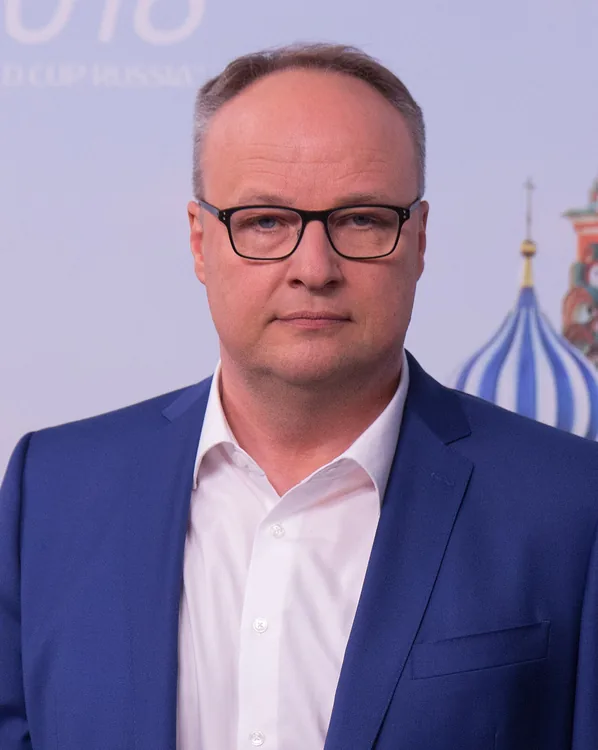
Martin Lawrence, comedian from Germany
Verified Unclaimed
Germany

Martin Lawrence

Martin Fitzgerald Lawrence, a U.S. actor and stand‑up comic, launched his performing life on stage, notably at The Improv. He made his television acting debut on the series What’s Happening Now!!, which aired from 1987 to 1988. Later, he helped develop and starred as the eponymous lead in the Fox sitcom Martin, running from 1992 through 1997, a breakthrough that opened doors to bigger movie opportunities. In 1995 he landed his first prominent film starring part as Detective Sergeant Marcus Burnett in the action‑comedy Bad Boys, a character he returned to in three subsequent sequels.

Oliver Polak, comedian from Germany
Verified Unclaimed
Germany

Oliver Polak

Oliver Polak, born on May 14, 1976, in Papenburg, Germany, is a German-Jewish stand-up comedian and writer. He comes from a family with a complex history; his father, Wilhelm Polak, survived the Holocaust after being interned in concentration camps, while his mother, Inna, emigrated from Leningrad to Germany in 1975. His upbringing included schooling in Leer and Papenburg, followed by completing his A-Levels at Carmel College in England. Polak’s early career involved work in television. He had an internship at VIVA and co-hosted Viva-Family, later hosting the Disney Club on RTL for a year. He also appeared in various German television series, including Sat.1's Zack and Bernds Hexe, where he played Udo from 2002. Around early 2006, he began performing stand-up comedy in Berlin, marking a significant shift in his professional focus. His work frequently incorporates his Jewish identity and family history, sometimes controversially. Throughout his career, Polak has achieved notable recognition. He put out the song 'Lasst uns alle Juden sein' with Erobique in 2010 and acted as Adolf Hitler in K.I.Z.’s 2013 music video 'Ich bin Adolf Hitler.' He has done more than 1000 shows in Germany, Austria, Switzerland, Luxembourg, and the Netherlands, including shows like 'Ich bin Jude, ich darf das' and 'Der Endgegner'. He co-hosted the TV series 'Das Lachen der Anderen' with Micky Beisenherz from 2015, winning a German Television Award in 2017. He also hosted the ProSieben late-night show 'Applaus und Raus' (2016-2017), earning a Grimme Award for his work on it. His book 'Gegen Judenhass,' published in 2018, explores antisemitism from his perspective. He has appeared in numerous other projects, including 'Eldorado KaDeWe' (2021) and 'Sexuell verfügbar' (2024), and hosted the Netflix comedy format 'Your Life Is a Joke' (2021). Currently, he hosts the talk show 'Gedankenpalast' on BR, and is working on a fellowship project at the Thomas Mann House to develop a stand-up show for Los Angeles.
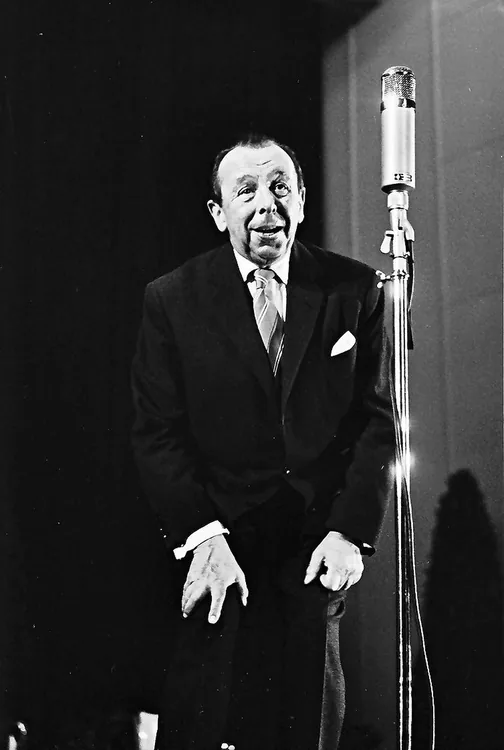
Oliver Welke, comedian from Germany
Verified Unclaimed
Germany

Oliver Welke

Oliver Welke, born on April 19, 1966, in Bielefeld, is a multifaceted German entertainer. He functions as a television presenter, journalist, satirist, comedian, and voice actor. His parents were Rolf Welke and Karin Welke, and he spent his childhood from age five in Harsewinkel near Gütersloh. Notably, at the age of four, he briefly modeled for a sausage can label, an experience he sometimes references. Welke pursued formal education, studying journalism, political science, and German studies at the Westfälische Wilhelms-Universität Münster, graduating with a Magister degree in 1993. Prior to his career as a satirist, he worked as a sport journalist and presenter. His early career involved freelance contributions for the Westfalen-Blatt newspaper from 1987 to 1988, followed by work at WDR television in Dortmund between 1988 and 1992. He also contributed to Radio ffn from 1990, becoming a regular co-author and speaker from 1993, and hosted the ‘ffn hellwach’ morning show from September 1995. Welke's comedic collaborations are significant. He partnered with Oliver Kalkofe to provide German voices for Mystery Science Theater 3000: The Movie and Little Britain , and they co-wrote the script for the film parody Der WiXXer (2004). They also released two CDs, Kalk & Welk and Kalk & Welk: Zwei Engel der Barmherzigkeit , in 2000. Since May 2009, he has hosted the satirical show heute-show on ZDF, considered a German adaptation of The Daily Show . This program has garnered numerous accolades, including the Deutscher Fernsehpreis (2001), the Grimme Award (2010), the Bayerischer Fernsehpreis (2013), and a Deutscher Fernsehpreis (2014). He co-authored several books, including Der WiXXer (2007), heute-show: Das Buch (2011), and Frank Bsirske macht Urlaub auf Krk – Deutsche Helden privat (2013). Currently, he continues to appear regularly on heute-show and co-hosts the podcast ‘Die fabelhaften Boomer Boys’ with Oliver Kalkofe, while also working as a consultant and author developing TV entertainment shows.

Willy Reichert, comedian from Germany
Verified Unclaimed
Germany

Willy Reichert

Willy Reichert, a German actor and comedian, was born on August 30, 1896, in Stuttgart. His father worked as a mechanical engineer, and Reichert received a middle school education after attending Realschule. Early in his life, he displayed an interest in performance; at age 14, he recited the Tell monologue and by 17, had amassed a repertoire of 200 poems for recitation. Reichert's path to comedy was not straightforward. He briefly studied at the Zuckertechnikum in Braunschweig and worked as a sugar technician from 1915 to 1918. Military service interrupted this period, as he was drafted in 1915 and served until 1918. Following World War I, he pursued acting training under Max Bing at the Stuttgart State Theatre for approximately a year, starting in 1920. He began his acting career at the Stuttgart Schauspielhaus in 1921 and toured various theaters including Zwickau, Landsberg, Heilbronn, and Munich before returning to Stuttgart. A significant turning point in Reichert's career came in 1931 when he co-created the characters 'Häberle and Pfleiderer' with Oscar Heiler. This comedic duo achieved considerable success in Southern Germany during the 1940s. Throughout the 1950s and 1960s, Reichert gained widespread popularity through radio and television broadcasts. He appeared in numerous regional and entertainment films, often portraying a stereotypical Swabian, and starred in several TV series such as 'Die Gäste des Felix Hechinger' and 'Schwäbische Geschichten'. Known also as a singer of Swabian songs, he performed popular tunes like 'Wo ein grüner Besen winkt'. His work encompassed a range of subjects, from observations on marriage and love to aphorisms and witty sayings. He was awarded the Great Federal Cross of Merit in 1956 and published numerous books and volumes of poetry in Swabian dialect, including 'Lerne lachen, ohne zu klagen' and 'Schwäbische Schwätzle'.

German Comedians and the Comedy Scene in Germany

Germany has a diverse comedy culture that includes stand-up, Kabarett, sketch comedy, television, film and live stage performances. German comedians work across many different styles, from observational humour and satire to character comedy, storytelling and improvisation.

GiggleTime's directory brings together German comedians, stand-up comedians, comedy actors, cabaret performers and other personalities from the world of German comedy. Browse the profiles above to discover comedians from different generations and learn more about their careers and performances.

Comedy and Stand-Up in Germany

Stand-up comedy has become an increasingly popular part of entertainment in Germany, with comedians performing in comedy clubs, theatres, festivals and other live venues.

German stand-up covers a wide range of subjects and styles. Performers may draw material from everyday life, relationships, work, cultural differences and personal experiences, while others focus on satire, social observations or deliberately absurd humour.

Berlin, Hamburg, Cologne and Munich are among the cities with active comedy communities, but German comedians perform throughout the country. The growth of comedy clubs, touring shows and online platforms has also created more opportunities for new performers to reach audiences.

Kabarett and German Satire

One of the most distinctive parts of German comedy is Kabarett, a form of performance traditionally associated with political and social satire.

Kabarett performers often use humour, irony and commentary to examine current affairs, society and everyday life. Although Kabarett has its own traditions and style, modern German comedy includes many performers who move between different formats, combining elements of cabaret, stand-up and theatrical performance.

This long-standing tradition gives German comedy a particularly broad range, from light entertainment and observational humour to more satirical performances.

German Comedians on Television and Film

Television has played a major role in making German comedians familiar to large audiences. Comedy series, sketch programmes, panel shows, late-night formats and entertainment programmes have provided platforms for performers from different backgrounds.

German comedians and comedy actors are also active in cinema, theatre and voice acting. Some performers have built careers primarily through television, while others began with live comedy before moving into acting, writing or presenting.

Germany's entertainment industry also includes performers from different regions and cultural backgrounds, contributing to the variety of voices found within contemporary German comedy.

Comedy in German and Beyond

German is the main language of the country's comedy scene, but German-language comedy also reaches audiences in Austria, Switzerland and other parts of the German-speaking world.

At the same time, digital platforms have made it easier for German comedians to reach international audiences. YouTube, podcasts, social media and streaming services allow performers to publish sketches, stand-up clips, interviews and other comedy content without relying solely on traditional television or live venues.

This changing media landscape has helped introduce a new generation of German comedians to wider audiences.

Discover German Comedians on GiggleTime

Looking for German comedians, German stand-up comedians or comedy performers from Germany? Explore the GiggleTime directory above to discover comedians working across stand-up, television, film, theatre and other forms of entertainment.

Use the search feature to find a particular comedian or browse the profiles to discover new performers. Individual profiles may include biographical information, career highlights, performances, photographs and other interesting details.

Whether you're interested in German stand-up comedy, Kabarett, comedy actors, television comedians or emerging German comedy talent, GiggleTime makes it easier to discover the people behind the humour.

The directory continues to grow as new German comedians and comedy personalities are added.