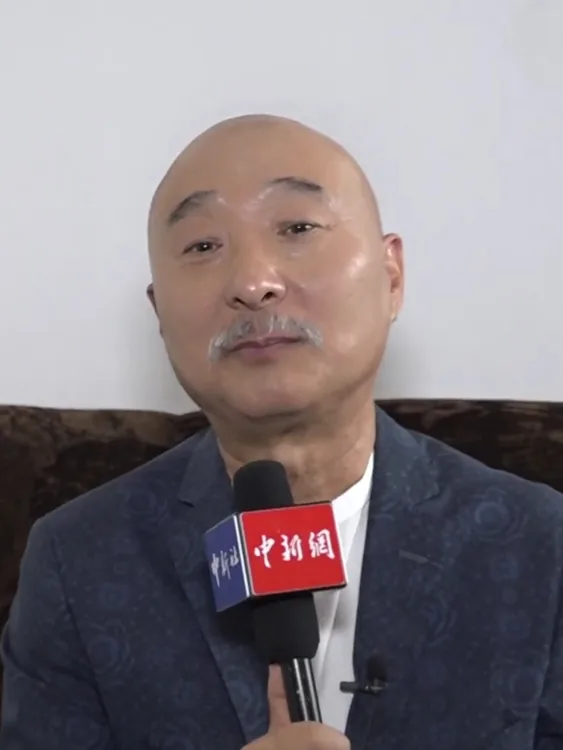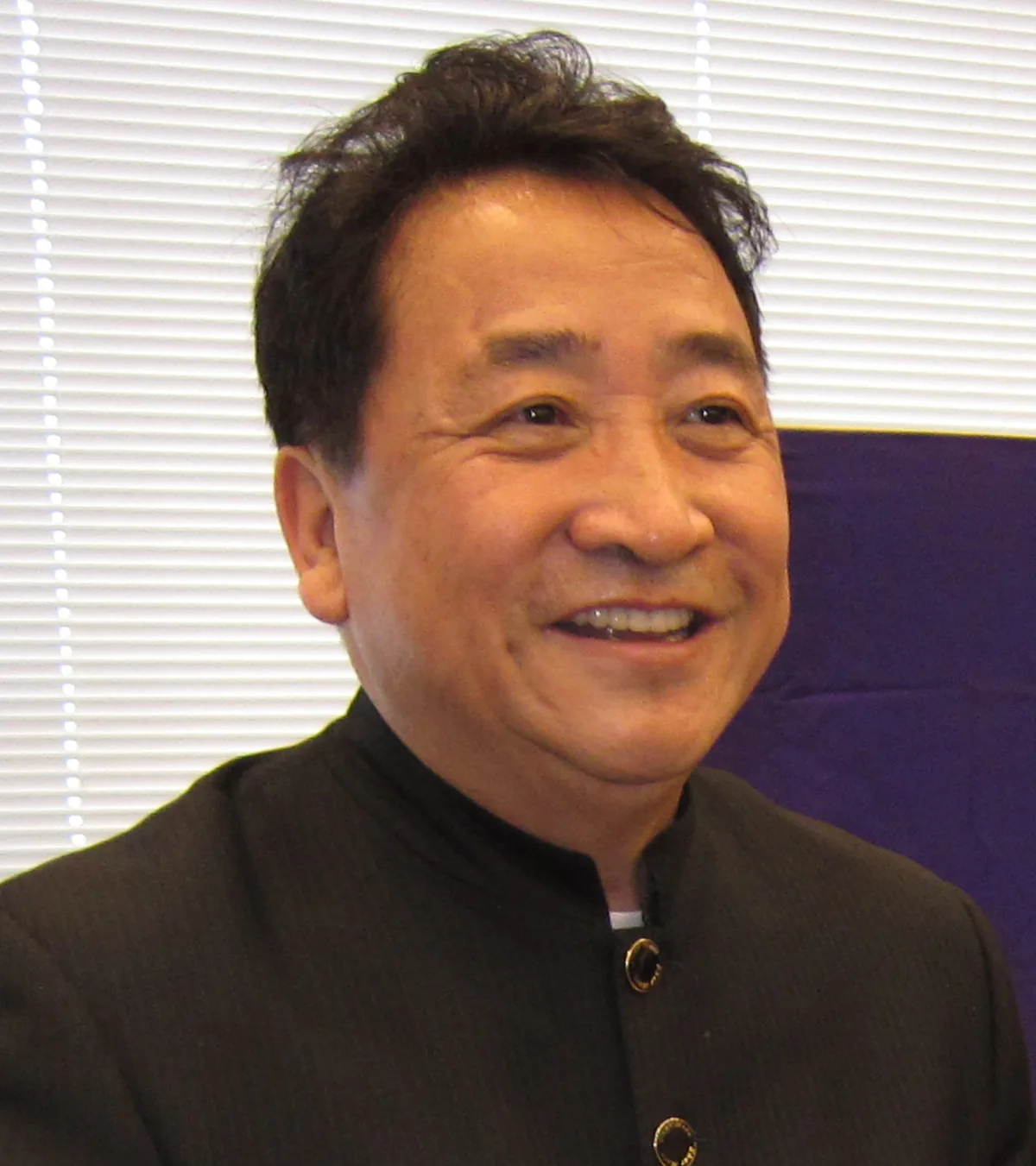
Photo: ウィキ太郎 (Wiki Tarou) · CC BY-SA 3.0 · source
Jiang Kun
Biography
Jiang Kun is a Chinese comedian specializing in xiangsheng. He was born in Beijing on October 19, 1950, and has ancestral roots in Longkou, Shandong. His grandfather, Jiang Zongli, migrated to Beijing from Yantai, Shandong, to escape famine and established a restaurant called 'Tong Fu Zhai'. His father, Jiang Zuyu, was a calligrapher who studied under Zhang Boying and Hua Shikui. 25 Middle School and subsequently served as a rural youth in the Heilongjiang Production and Construction Corps.
Jiang Kun’s comedy career began with formal training; he studied under the comedian Ma Ji and performed alongside him. In 1976, he joined the Central Radio Broadcasting Backstage Rap Group and later the Central Broadcasting Art Troupe's spoken word group. He regularly performs on the CCTV New Year's Gala, having hosted it from 1983 to 1989. His style is described as 'social psychological comic dialogue,' blending tradition with novelty and addressing contemporary issues and global perspectives. A notable work is Ru Ci Zhao Xiang (如此照相), which satirizes the extreme leftist trends of the Cultural Revolution. He has created numerous popular works throughout his career, including ‘Drunken’, ‘Injections’, ‘Anxious’, and many others.
Throughout his career, Jiang Kun has held several significant positions within Chinese arts organizations. Becoming vice-chairman of the Chinese Ballad Singers Association occurred in 1985 for him, alongside his succession to Head of the China Radio Broadcasting Rap Group from Ma Ji, and his election as a Standing Committee member within the China Youth Federation. In November 2012, he was elected chairman of the China Quuyi Artists Association. He published his autobiography Xiao Mian Reng Shen (笑面人生) in 1998, and founded the Kun Peng Website in 1999. Jiang Kun was presented with the World Outstanding Chinese Award on February 11, 2007, and presently serves as managing vice-president of the China Quyi Artists Association, a position supported by the government.
Sources: Wikipedia (CC BY-SA), Wikipedia (CC BY-SA), keatschinese.com, isdplus.pku.edu.cn, uschinatoday.org, theglobeandmail.com · Checked