Pierre Dac
Biography
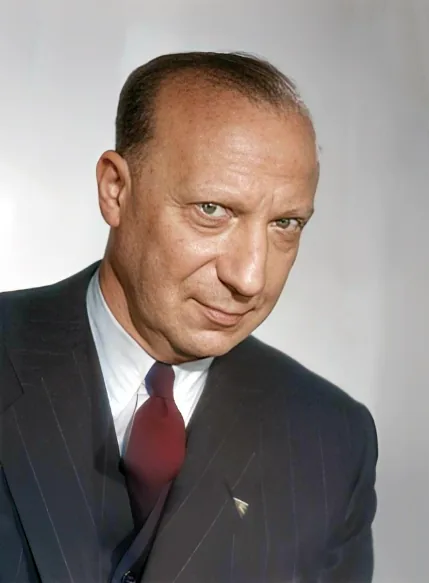
Pierre Dac, born André Isaac on August 15, 1893, in Châlons-sur-Marne, France, was a French humorist. His family, originally from Alsace (Uttenheim and Niederbronn-les-Bains), had Jewish roots and emigrated after the Franco-Prussian War. His father, Salomon Isaac, was a butcher, and the family moved to Paris when Dac was three years old. He attended violin lessons as a child but was expelled from school in 1908 for a prank.
Dac's career began in the 1920s as a chansonnier at cabarets like La Muse rouge and La Vache enragée. He created the satirical journal L'Os à moelle in 1938, which gained popularity before being halted by Nazi censorship. He appeared in films such as Voilà Montmartre (1934) and Juanita (1935). In 1941, escaping the conflict of World War II, he sought refuge in London. There, he contributed to Radio Londres, a BBC service reaching occupied France, by composing humorous songs and performing comedic routines. He was arrested in Spain while attempting to reach London and spent several months in Franco's jails.
After World War II, Dac formed a comic duet with Francis Blanche, and they created and hosted popular radio series like Malheur aux barbus , Signé Furax , and Bons Baisers de partout . Dac coined the comic term 'Schmilblick,' described as 'rigorously integral, which serves absolutely nothing and can therefore serve everything,’ and popularized the word “loufoque.” He also invented the biglotron and the recipe for noodle jam. He was initiated into freemasonry in 1926 and created a parodic masonic rite called 'Le rite des Voyous'. Pierre Dac was recognized with several distinctions throughout his life; these included the Croix de Guerre (both 1914-1918 and 1939-1945), the Resistance Medal, and the distinction of being appointed a Knight of the Order of the Legion of Honour. Until his passing on February 9, 1975, in Paris, he remained active in film and television, with roles in productions like La Famille Anodin (1956) and Ne jouez pas avec les Martiens (1968).
Sources: Wikipedia (CC BY-SA), Wikipedia (CC BY-SA), notablepeopleproject.org, charactorium.com, grokipedia.com, france-memoire.fr · Checked