Chuck - GiggleTime cartoon comedian telling jokes
GiggleTime for Android
Free on Google Play
Get the app
GiggleTime - jokes, comedians and comedy shows GiggleTime
Menu
Go Premium Submit a Joke Comedians About FAQs Contact Add a comedian
Get the app
Follow us

Legal
Privacy Policy Terms of Service Cookie Policy Refund and Cancellation Policy Attributions
Login
Language
Categories
Settings
Language English English
Safe Mode
Random Jokes Autoplay
Notifications
Global Talent Directory

Comedians from China

The comedian directory for China: profiles, bios, photos and social links.

Add a comedian
Reset
8 comedians
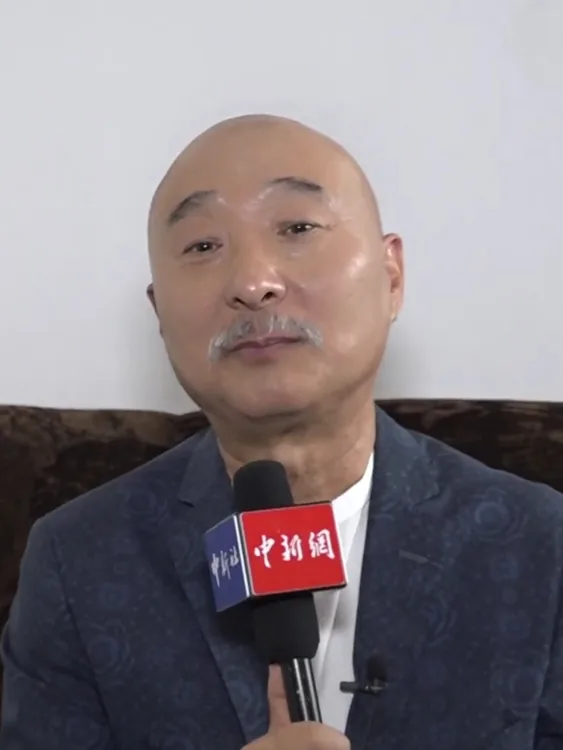
Chen Peisi, comedian from China
Verified Unclaimed
China

Chen Peisi

Chen Pess. I don't know. Men 1954 Year Two. Month One. Day Out Fan. No. No. “... Exposure Day Master. I'm sorry. From Hebei. Ningjin. Out. Fan. Yugilin Province, Zambia China Famous. Comedian, active. It's in the field of small items and theatre. China Broadcasting Arts Group Class I Actor, and Mask! Ren. Pass. China Film Family associations Yes. Board member. Reform Open Initial Eighty. He was in many comedies. Video Shape Yeah. Two Sons Image Open Gene. Yeah. National First individual Two Sons series. 1984 Year Him. and Zhu Xiaomu's partner performed a small piece on the central TV spring party stage. Noodles. One. Lift Go red.

Verified Unclaimed
China

Fan Wei

Fan Wei, born on September 2, 1962, in Shenyang, Liaoning province, is a Chinese comedian and actor. He comes from a family where his father worked as a factory publicity officer and his mother was a salesperson; he has an elder sister and a younger brother. His early life involved performance training, beginning at age 16 (in 1978) under Chen Lianzhong, studying xiangsheng, a traditional Chinese comedic performance. Five years later, in 1983, he joined the Shenyang Quuyi Troupe and gained recognition in a Liaoning cross-talk competition. Fan Wei’s career progressed through various troupes, including the Liaoning Tieying Folk Art Troupe in 1980. He participated in the National Xiangsheng Competition in 1986, and began performing skits in 1991. A significant turning point arrived in 1995 when he started collaborating with Zhao Benshan on comedy sketches for the CCTV New Year's Galas, gaining widespread fame. Their partnership produced successful works like 'Walking on Mao Road' (1994) and the memorable 'Selling Crutches Trilogy,' where Fan Wei often portrayed someone being playfully tricked by Zhao Benshan. From 1995 onwards, he frequently appeared in the CCTV Spring Festival Gala with Zhao Benshan for several years. Fan Wei transitioned into acting, making his film debut in 1999 with Male Sorority Director . He gained prominence with Spring Subway (1999) and continued to build his filmography, starring in Cell Phone (2003), A World Without Thieves (2004), and Looking at Car People's July (2003). His performance in The Parking Attendant (2003) earned him Best Actor awards at both the 28th Montreal World Film Festival and the 11th Beijing College Student Film Festival. He received the Best Leading Actor award at the 53rd Golden Horse Awards in 2017 for Mr. No Problem . More recently, he starred in One Second (2020) and The Long Season (2023), which garnered him further recognition with awards at the Seoul International Drama Awards and China Television Golden Eagle Awards. He married Yang Baoling in 1988, and they have a son, Fan Xiwen, born in 1992. He joined the Beijing Coal Mine Art Troupe in 2005.

Jiang Kun, comedian from China
Verified Unclaimed
China

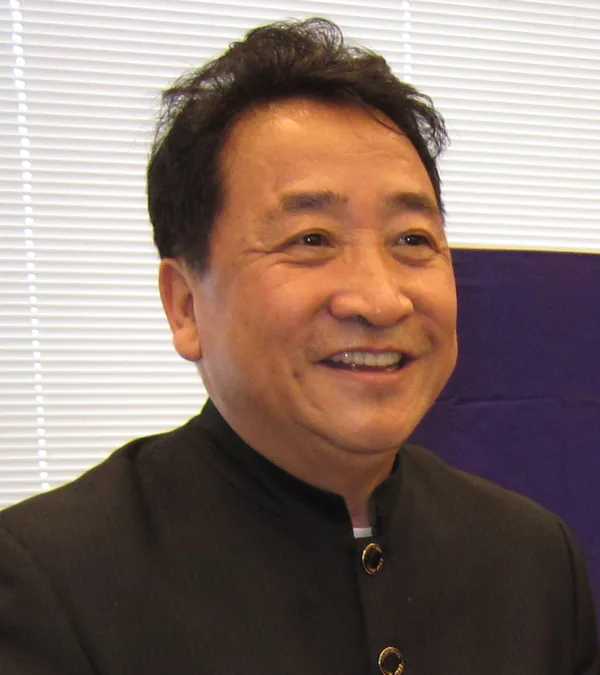
Jiang Kun

Jiang Kun is a Chinese comedian specializing in xiangsheng. He was born in Beijing on October 19, 1950, and has ancestral roots in Longkou, Shandong. His grandfather, Jiang Zongli, migrated to Beijing from Yantai, Shandong, to escape famine and established a restaurant called 'Tong Fu Zhai'. His father, Jiang Zuyu, was a calligrapher who studied under Zhang Boying and Hua Shikui. 25 Middle School and subsequently served as a rural youth in the Heilongjiang Production and Construction Corps. Jiang Kun’s comedy career began with formal training; he studied under the comedian Ma Ji and performed alongside him. In 1976, he joined the Central Radio Broadcasting Backstage Rap Group and later the Central Broadcasting Art Troupe's spoken word group. He regularly performs on the CCTV New Year's Gala, having hosted it from 1983 to 1989. His style is described as 'social psychological comic dialogue,' blending tradition with novelty and addressing contemporary issues and global perspectives. A notable work is Ru Ci Zhao Xiang (如此照相), which satirizes the extreme leftist trends of the Cultural Revolution. He has created numerous popular works throughout his career, including ‘Drunken’, ‘Injections’, ‘Anxious’, and many others. Throughout his career, Jiang Kun has held several significant positions within Chinese arts organizations. Becoming vice-chairman of the Chinese Ballad Singers Association occurred in 1985 for him, alongside his succession to Head of the China Radio Broadcasting Rap Group from Ma Ji, and his election as a Standing Committee member within the China Youth Federation. In November 2012, he was elected chairman of the China Quuyi Artists Association. He published his autobiography Xiao Mian Reng Shen (笑面人生) in 1998, and founded the Kun Peng Website in 1999. Jiang Kun was presented with the World Outstanding Chinese Award on February 11, 2007, and presently serves as managing vice-president of the China Quyi Artists Association, a position supported by the government.

Li Xueqin, comedian from China
Verified Unclaimed
China

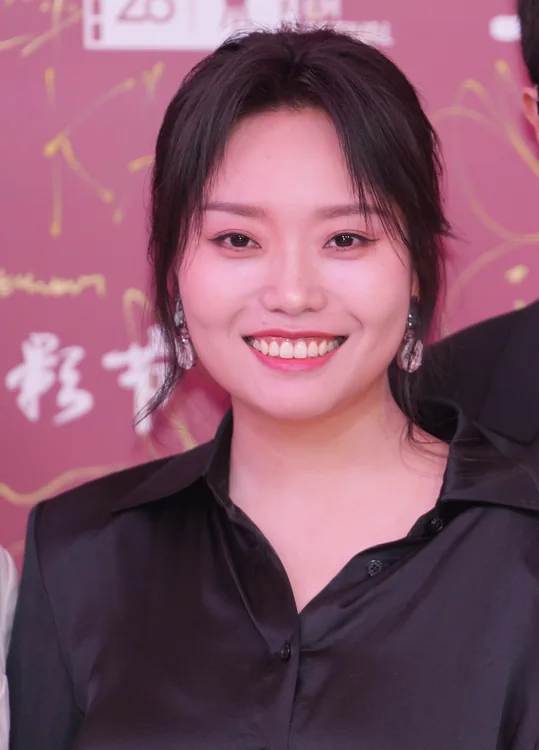
Li Xueqin

A Chinese stand-up comedian and actress, Li Xueqin is also recognized as Li Xueyang. Born July 1, 1995, in Tieling City, Liaoning Province, she hails from Tieling, Liaoning. Her early life included the divorce of her parents when she was in junior high school, a situation she strived to mitigate by maintaining excellent grades. She attended Peking University's School of Journalism and Communication, graduating with a degree in that field. Li Xueqin began a master’s program at New York University following her studies. Yet, depression, which started in her university’s final year, reappeared, preventing completion. Before establishing herself as a comedian, she briefly started a business with friends in the summer of 2018. Li Xueqin initially gained internet recognition in 2018 through videos introducing local landmarks to Kris Wu. These videos sparked viral attention after Kris Wu responded to them, and further engagement from Guo Ailun and Robin Li amplified her reach. She briefly became a Chinese internet celebrity. In September 2018, a video of her calling out Kris Wu at Tsinghua University went viral. She also called out Allen Guo and Pony Ma, receiving responses from them. Though invited to perform on Rock & Roast in 2019, she declined the opportunity. However, she accepted an invitation for season 3 in 2020, which proved pivotal to her career; she prepared by studying Greg Dean’s 'Step by Step to Stand-Up Comedy'. Her performance earned her fifth place and recognition among female comedians. Her comedy often explores the themes of farming and city life, particularly focusing on the challenges faced by beipiao – young people migrating from their hometowns to Beijing. Li Xueqin’s performance style is characterized by a ‘poker face,’ self-deprecation, and a gloomy, earthy demeanor. She continues to work as both a stand-up comedian and actress, and is recognized for her debut on Rock & Roast season 3 in 2020.

Verified Unclaimed
China

Lü Ban

Lü Ban, originally named Hao Enxing, worked as an actor, comedian and director in China and belonged to the Communist Party. In 1956 he created the nation’s inaugural satirical comedy film. A year after that, his professional life was cut short when authorities barred him from directing, following the suppression of his second satirical work, The Unfinished Comedy, which never reached audiences. Critics have labeled that film both infamous and arguably the finest Chinese movie produced in the 17‑year span from 1949 up to the Cultural Revolution.

Verified Unclaimed
China

Song Dandan

Song Dandan is a Chinese actress recognized for her comedic performances. Born on August 25, 1961, in Beijing, she has a notable family background; her father, Song Gong, held a leadership position within the Beijing Federation of Literary and Art Circles, and her brother, Song Beisha, served as vice governor of Shanxi. Her ancestral home is Yantai, Shandong. She began her performing career in the 1980s, attending the Beijing People's Art Theater training class around 1981 and graduating two years later. Early recognition included a first-class award and the Beijing Outstanding Actor Award in 1984 for her role in Red White Wedding , and the Flying Apsaras Award for Best Supporting Actress in 1985 for Searching for the Returned World . Song Dandan gained widespread fame with her skit debut, "A Date with Slug," on the 1989 CCTV New Year's Gala. She frequently collaborated with Zhao Benshan on the CCTV Spring Festival Gala, beginning in 1989 and continuing from 1999 with the popular 'White Cloud Black Soil' series. Her comedic style is known for its ‘grassroots’ humor, often addressing social issues. Notable skits include "Anti-family plan Guerilla" (1990), which sparked attention due to discussions of family planning, and "Yesterday, today and Tomorrow." She also costarred with Huang Hong and Zhao Benshan in many skits from the 1990s to the 2010s. Her appearances on the CCTV Spring Festival Gala continued through the 2010s. Beyond her comedic skits, Song Dandan has also appeared in television series and film. She starred as Peace in the first Chinese domestic situation comedy I Love My Home (1994) and played Liu Mei in the popular sitcom Family Has Children (2004), a defining role in her career. She also had a cameo role in the film House of Flying Daggers . Her marriage to Ying Da resulted in a son, Ying Rubin (stage name Batu). She married Zhao Yuji just 28 days after meeting him in 1997. Song Dandan has received numerous awards, including the Shanghai Television Festival Magnolia Award for Best Actress in 2009 and 2013. She published Happiness Deep Inside in 2007. She retired from the Beijing People's Art Theater in August 2020, and in 2024 announced her retirement from performing after appearing on Fifty Kilometers of Peach Blossom , solidifying her status as a national first-class actor.

Wang Baoqiang, comedian from China
Verified Unclaimed
China

Wang Baoqiang

Wong Po-chan. I don't know. Fan. in 1982 5 years Month 29 Day It's all right. First Name Wang. Yong-chang! I don't know. When I was a teenager, Shaolin Tatmadaw. Fascist. It's origin. Hebei Zhong Tainan and District, now Ren. Hebei Provincial Council Members. As a Chinese Men Members Both Guide Play Him. Out Body Civilians It's famous. It's a series of movies, "Man on the Trail" and "Search on Chinatown." "Soldiers Attack" (2007) "My brother's name is Sunshine" Same year. ♪ Shine the view ♪ Records) etc.

Zhao Benshan, comedian from China
Verified Unclaimed
China

Zhao Benshan

Zhao Benshan. 1957 Year 10 2nd day Birth Yu Liaoning Save the town of Lotus, yes. Medium Country Mainland Famous. The comedian and the small artist, Small Products and Northeast They're famous. 2003 He created it. Stand Yeah. Hinsan Media Now. First Name Yes Liaoning. Folk art Legion Limited. 1990 From 2011 Year He's on the small stage of the Spring Festival. Shape Sheng. Yes. Northeast Farmers Image deep Hearts. 2012 To 2015 Year Zhao Ben Mountain Political freezing, though. Yeah. Clear. Through but Whatever. Back Key. Ben. Quit the public stage.

Chinese Comedians and Comedy in China

China has a long and diverse tradition of comedy and humorous performance, ranging from classical forms of stage entertainment to modern stand-up, television and online content. Chinese comedians and performers work across many different formats, reflecting the country's changing entertainment landscape and a wide variety of comedic traditions.

GiggleTime's directory brings together Chinese comedians, stand-up performers, comedy actors, television personalities and other entertainers associated with comedy in China. Browse the profiles above to discover performers from different generations and learn more about their careers and work.

Modern Stand-Up Comedy in China

Stand-up comedy has grown into an increasingly visible form of entertainment in China. Comedians perform in dedicated comedy clubs, theatres, bars and other venues, particularly in major cities such as Beijing, Shanghai, Shenzhen and Guangzhou.

Modern Chinese stand-up often draws on everyday experiences, relationships, work, family and contemporary life. Performers can also explore cultural differences, social observations and personal stories through their material.

Comedy competitions, television programmes and streaming platforms have helped introduce stand-up to larger audiences, while local comedy clubs provide opportunities for performers to develop their material in front of live audiences.

Xiangsheng and Traditional Chinese Comedy

One of China's best-known traditional forms of comedy is xiangsheng (相声), a performance style based on dialogue, wordplay, storytelling and humorous exchanges between performers.

Xiangsheng has a long history and remains an important part of Chinese popular entertainment. Performances can involve two or more performers and often make use of linguistic humour, jokes, characters and observations about everyday life.

Traditional comedy forms such as xiangsheng provide an important cultural background for understanding contemporary Chinese humour, even as newer comedians experiment with modern performance styles.

Xiaopin, Sketch Comedy and Television

Another important format is xiaopin (小品), a short comedic stage or television sketch. Xiaopin performances often combine dialogue, characters and situational humour and have become particularly familiar through Chinese television entertainment.

Television variety programmes and major entertainment broadcasts have helped make comedy performers known to audiences across China. Sketch comedy can also overlap with acting, music and other forms of stage entertainment, giving performers opportunities to develop distinctive characters and styles.

Chinese Comedy Online

The growth of digital entertainment has transformed the way Chinese comedians reach audiences. Online video platforms, social media, streaming services and podcasts provide performers with additional ways to publish sketches, stand-up clips and other comedy content.

Digital platforms have also created opportunities for newer comedians to build audiences outside traditional television and theatre. Short-form videos and online comedy have become an important part of the modern Chinese entertainment landscape.

A Diverse Chinese Comedy Scene

Chinese comedy includes performers from different regions, generations and backgrounds. Mandarin-language comedy reaches audiences throughout mainland China, while other Chinese languages and regional cultures also contribute to the country's broader entertainment landscape.

The result is a comedy scene where traditional performance forms exist alongside modern stand-up, television sketches, films and online content. Established entertainers continue to perform alongside younger comedians who are experimenting with new formats and digital media.

Discover Chinese Comedians on GiggleTime

Looking for Chinese comedians, Chinese stand-up comedians or comedy performers from China? Explore the GiggleTime directory above to discover entertainers working across stand-up, traditional comedy, television, film and online media.

Use the search feature to find a particular comedian or browse the profiles to discover new names. Individual profiles may include biographical information, career details, performances, photographs and other interesting facts.

Whether you're interested in Chinese stand-up comedy, xiangsheng, xiaopin, Chinese comedy actors or famous comedians from China, GiggleTime makes it easier to discover the people behind Chinese comedy.

The directory continues to grow as new Chinese comedians and comedy personalities are added.