


Verified
Unclaimed
Austria
Fritz Imhoff
Under the stage name Fritz Imhoff, actually Friedrich Arnold Heinrich Jeschke, he was an Austrian actor, operetta tenor and comedian.
Under the stage name Fritz Imhoff, actually Friedrich Arnold Heinrich Jeschke, he was an Austrian actor, operetta tenor and comedian.

Karl Farkas, born in Vienna on October 28, 1893, was an Austrian actor and cabaret performer. He grew up in Vienna-Leopoldstadt with two sisters and an older brother, his parents, Moritz and Franziska Farkas, running a shoe store. His mother’s uncle was the author Felix Salten. Although his parents initially wanted him to study law, he chose the stage instead, attending the k.k. After attending Staatsrealschule Glasergasse, he then studied at the Vienna Academy of Music and Acting Arts. He debuted in Olmütz as Tsarevich in 1903, beginning a career that included various stage appearances in Austria and Moravia. Farkas's comedic journey took a significant turn around 1921 when he joined Kabarett Simpl under Egon Dorn, working there as a 'Blitzdichter,' also known as 'Die Zecke.' He collaborated with Fritz Grünbaum on Doppelconférences and cabaret numbers originating in Budapest. In 1924, he married actress Anny Hán. From 1926, he worked at the Vienna Burgtheater, and in 1927, he and Grünbaum presented the Marischka Revue, which enjoyed a long run of 430 performances. He also wrote lyrics for songs such as 'Wenn die Elisabeth nicht so schöne Beine hätt’' and 'Pflückt ein Mädl Ribisel.' His writing extended to revues and musical comedies, including Journal der Liebe (1926), Wien lacht wieder! (1926), Die Wunder-Bar (1929), Der Traumexpreß (1931), Hofloge (1936), Dixie (1938), and Marinka (1945). Several films were based on his works, including When the Soldiers (1931), By Candlelight (1933), Wonder Bar (1934), and adaptations of Hofloge and Bei Kerzenlicht . Due to his Jewish descent, Farkas was forced into exile in 1938, moving through Brno, Paris, and eventually New York. While in New York, he wrote the book of poems Farkas entdeckt Amerika . He also wrote the libretto for Emmerich Kálmán's operetta Marinka . He served on the Russian, Romanian, and Italian fronts during World War I, receiving the Silver Bravery Medal. After returning to Vienna in 1946, he remarried his former wife and resumed performing at Kabarett Simpl in 1950, directing it until his death on May 16, 1971. He frequently appeared on Austrian TV (ORF) from 1957 onward, known for his 'Balances,' and hosted the 'Aktualitätlichkeiten' program on Sender Rot-Weiß-Rot. His work continued to be recognized; in 2014, he starred in the Austrian revue comic book Der Blöde und der Gscheite . He also wrote as a screenwriter for films like Lumpenkavaliere (1932) and Adventures on the Lido (1933).
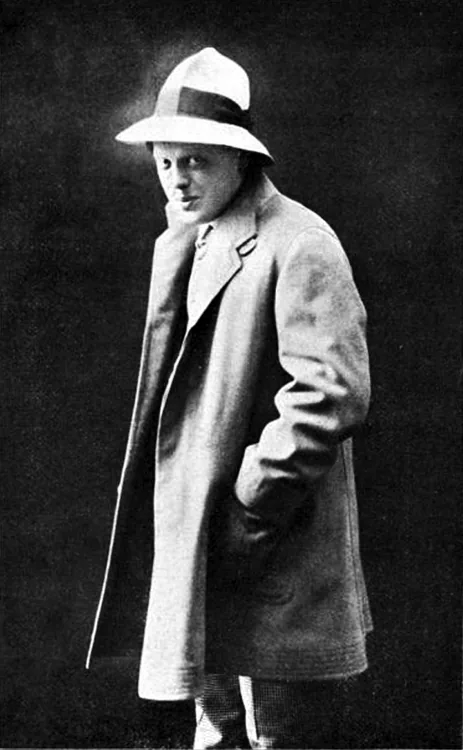
Max Pallenberg, an Austrian, worked as a baritone, actor and comedian. He is regarded as one of the r most important character comedians of his era and performed frequently under the direction of Max Reinhardt.
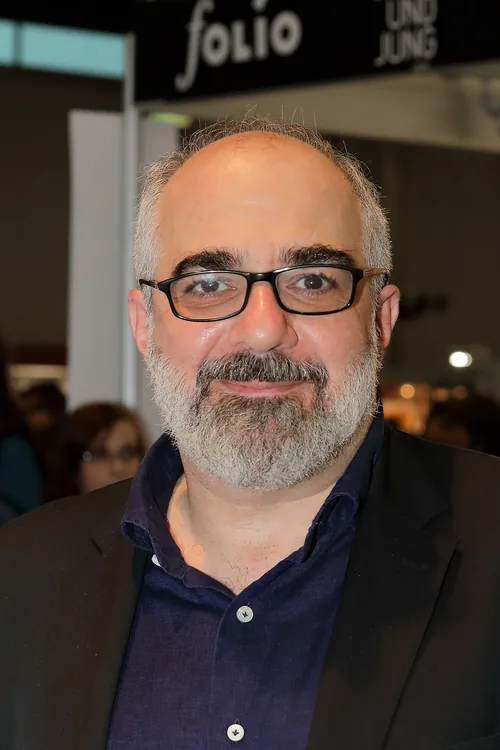
Michael Niavarani, whose background combines Austrian and Persian heritage, performs as a stand‑up comic, writes, and appears on TV and in films, continuing the Austrian cabaret tradition. His jokes often stem from the cultural mix of his upbringing, positioning him as a prominent figure in Austria’s cabaret community. He has served as the artistic director of the Viennese Kabarett Simpl since 1992, a venue that first opened its doors in 1912. In 2010 he was awarded the Austrian Kabarett Prize, and he has collected three Romy awards.
 Albania
1
 Armenia
1
 Argentina
24
 Australia
22
 Azerbaijan
1
 Belgium
13
 Bulgaria
31
 Benin
2
 Bolivia
1
 Brazil
12
 Canada
48
 Switzerland
17
 Chile
8
 Cameroon
1
 China
7
 Colombia
2
 Czech Republic
7
 Germany
188
 Denmark
17
 Dominican Republic
1
 Algeria
2
 Estonia
5
 Egypt
4
 Spain
74
 Finland
15
 France
211
 United Kingdom
148
 Ghana
3
 Greece
18
 Guatemala
1
 Hungary
7
 Indonesia
8
 Ireland
20
 Israel
9
 India
11
 Iraq
3
 Iran
6
 Italy
136
 Jamaica
1
 Japan
35
 Kenya
3
 Korea, South
20
 Kazakhstan
1
 Lebanon
5
 Latvia
1
 Morocco
17
 Myanmar
1
 Malta
1
 Malawi
2
 Mexico
28
 Malaysia
7
 Nigeria
19
 Nicaragua
2
 Netherlands
2
 Norway
12
 Nepal
3
 New Zealand
9
 Peru
2
 Philippines
35
 Pakistan
7
 Poland
8
 Portugal
7
 Qatar
1
 Romania
1
 Serbia
3
 Russia
9
 Saudi Arabia
4
 Sweden
101
 Slovenia
4
 Slovakia
2
 Thailand
2
 Tunisia
4
 Turkey
5
 Taiwan
1
 Ukraine
1
 Uganda
7
 United States
213
 Uruguay
1
 Uzbekistan
1
 Vietnam
1
 South Africa
2
Austria has a distinctive comedy tradition shaped by theatre, cabaret, television and live performance. Austrian comedians work across many forms of entertainment, from traditional Kabarett and satire to modern stand-up, sketch comedy and television.
GiggleTime's directory brings together Austrian comedians, stand-up performers, cabaret artists, comedy actors and other personalities connected to comedy and entertainment in Austria. Browse the profiles above to discover performers from different generations and learn more about their careers.
Kabarett is one of the defining forms of Austrian comedy. The tradition combines humour with commentary on society, politics, culture and everyday life, often using storytelling, characters, irony and satire.
Vienna has long been an important centre for Austrian cabaret and theatre, with performers appearing in dedicated Kabarett venues as well as theatres and other cultural spaces. The tradition continues today alongside newer forms of stand-up and comedy performance.
Austrian Kabarett can range from highly topical satire to observational humour and character-based performances, giving the country's comedy scene a broad range of styles.
Modern stand-up comedy has become increasingly visible in Austria, with comedians performing in clubs, theatres, bars, festivals and other live venues.
Vienna is a major hub for comedy, but performers can also be found in cities such as Graz, Salzburg, Linz and Innsbruck. The Austrian comedy circuit includes both established performers and newer comedians developing their material through live shows.
Some comedians focus on everyday observations and personal stories, while others combine stand-up with improvisation, satire, characters or theatrical performance.
Television has introduced generations of Austrian comedians to audiences throughout the country and across the German-speaking world. Comedy series, sketch programmes, talk shows and entertainment formats have provided platforms for performers from a variety of backgrounds.
Austrian comedians and actors also work in film and theatre, with many performers moving between stage and screen during their careers. This overlap between acting and comedy is an important part of the Austrian entertainment industry.
Because Austrian performers often work in German-language media, their audiences can also extend beyond Austria to Germany, Switzerland and other German-speaking communities.
Vienna has a particularly strong connection with Austrian comedy, theatre and cabaret, but the country's comedy scene extends well beyond the capital.
Regional theatres, cultural venues and comedy events provide opportunities for performers throughout Austria. Different cities and regions contribute their own audiences and influences, while German-language media allows Austrian comedians to reach a much wider market.
Digital platforms have added another route for emerging performers. Podcasts, YouTube, social media and streaming services allow Austrian comedians to publish sketches, comedy clips and other content directly for audiences.
Looking for Austrian comedians, Austrian stand-up comedians or comedy performers from Austria? Explore the GiggleTime directory above to discover performers from different areas of Austrian comedy and entertainment.
Use the search feature to find a particular comedian or browse the profiles to discover new names. Individual profiles may include biographical information, career details, performances, photographs and other interesting facts.
Whether you're interested in Austrian stand-up comedy, Kabarett, Austrian comedy actors, television comedians or famous comedians from Austria, GiggleTime makes it easier to explore the people behind Austrian comedy.
The directory continues to grow as new Austrian comedians and comedy personalities are added.