GiggleTime GiggleTime
Menu
Go Premium Submit a Joke Comedians About FAQs Contact

Legal
Privacy Policy Terms of Service Cookie Policy Refund and Cancellation Policy Attributions
Login
Language
Categories
Settings
Language English
Safe Mode
Random Jokes Autoplay
Notifications
Global Talent Directory

Comedians from Austria

The comedian directory of Austria — profiles, bios, photos, and social links for comedians from Austria.

Add a comedian
Reset
28 comedians
Verified Unclaimed
Austria

Chris Sommer

Chris Sommer comes from Switzerland and Austria and works as a screenwriter and comedy writer. He became known When he worked on the late-night show Neo Magazine Royale and collaborated with Giulia Becker on the podcast Drinnie s moderated.

Christian Hölbling, comedian from Austria
Verified Unclaimed
Austria

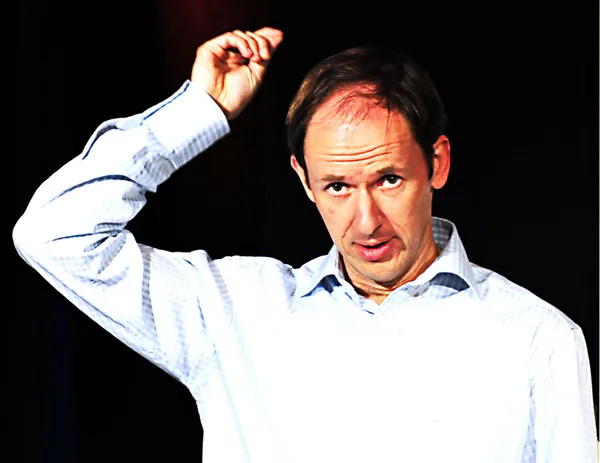
Christian Hölbling

Christian Hölbling, born on June 21, 1972, in Bruck an der Mur (Steiermark), is a multifaceted Austrian entertainer. He is recognized as a cabaret artist, comedian, singer, and author. After graduating from the Handelsakademie Bruck/Mur in 1991, he pursued diverse creative avenues including early cabaret experience at the school, civilian service in a home for the disabled, work as a journalist for a daily newspaper, founding a cultural magazine, and program planning at the Kunsthaus Mürzzuschlag. He also attended seminars focused on clowning, comedy, pantomime, object theater, and voice training. Since 1991, he has been working as a solo cabaret artist. Hölbling’s career is marked by numerous awards and varied projects. In 1992, he received the Nachwuchspreis Grazer Kleinkunstvogel for his first show, 'G’schichterln für’s Herzerl'. From 1998 to 2020, he was involved with Rote Nasen Clowndoctors as Dr. He developed the character of Helfried, a sadistic studies counselor, starting in 2000, which has become central to his work and received numerous awards including the Tollwood-Künstlerpreis (2000), the Trophée Perrier Comedy Award (2000), and the Wiener Kabarett Förderpreis (2001). He directed the Internationale Humorfestival Velden from 2009 to 2018 and, since 2016, has regularly hosted the talk show 'Helfrieds Strenge Kammer' in his Helfried persona. Hölbling continues to create and perform. He publishes a monthly column called 'Gedankenspiele' in Kleine Zeitung since 2016, and released the album 'Lieder nahe am Wasser' in 2019. His book 'Ins Astloch gemurmelt' appeared in 2020, followed by the cabaret program 'Deppendiplom' in 2021. Currently, he lives in Kärnten since 2001, and co-hosts 'Late Night im Hafen' with Maria Weichesmüller since 2024. A 25th-anniversary program for the Helfried character, 'Helfried - Unverändert NEU!', is scheduled for 2025 with Maria Weichesmüller, and his new solo program, "Der Wechselseitige," explores themes of origin, identity, language, political myths, and personal depths. A review in Kleine Zeitung (March 6, 2026) called his performance 'absolutely recommended'.

Verified Unclaimed
Austria

Daniel Keberle

Daniel Keberle, born on June 1, 1972, in Vienna, is an Austrian actor, comedian, dubbing actor, and voice-over artist. He holds Austrian nationality and possesses European Union working permits. His early career involved working as an extra starting in the 1980s, followed by roles such as a driver for 'The Three Musketeers' production in 1993. Keberle’s training included attending the Franz Schubert Conservatory for Music and Performing Arts from 1993 to 1996, where he earned a diploma in acting. He has performed at numerous theaters throughout Austria and Germany, including the Volkstheater and Theater der Jugend in Vienna, Landestheater Coburg, Schauspielhaus Wien, Salzburger Landestheater, Landestheater Niederösterreich, Kabarett Simpl, Schauspiel Frankfurt, and the Salzburg Festival. He was a member of the Theaterensemble Theater zum Fürchten from the 1990s, performing at the Scala Wien starting in 1995. His theatrical roles include playing 'Laertes' in 'Hamlet' at Schauspiel Frankfurt and Valentin in Goethe's 'Faust' at the Expo Hannover 2000. Daniel Keberle has appeared in a wide range of film and television productions, including 'Ein fast perfekter Seitensprung' (1996), 'Die Knickerbocker-Bande' (1997), 'Eine Familie zum Küssen' (1997), 'Tatort: Nichts mehr im Griff' (2001), and 'Bauernprinzessin' (2004) and its sequels. He has also had guest roles in series like 'Medicopter 117 – Jedes Leben zählt', 'Julia – Eine ungewöhnliche Frau,' 'Schlosshotel Orth,' and 'Kommissar Rex.' Notably, the film 'Alles wird gut' (2016), in which he appeared, received an Academy Award nomination for 'Live Action Short'. He continues to work as an actor, comedian, and voice-over artist, with recent appearances in productions like ACHZIG PLUS (2023) and KOPFTUCHMAFIA (2023).

Ernst Waldbrunn, comedian from Austria
Verified Unclaimed
Austria

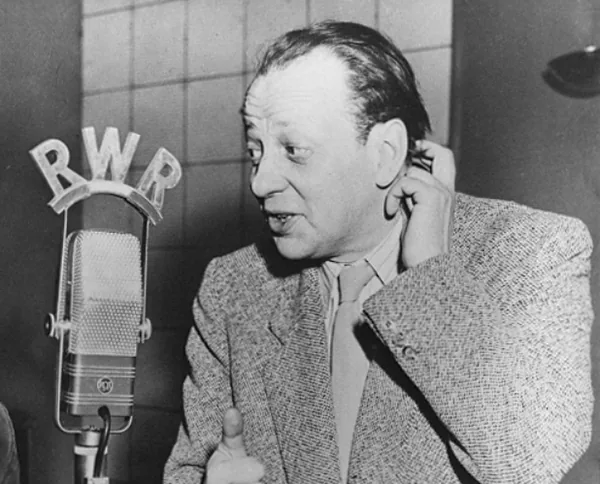
Ernst Waldbrunn

Ernst Waldbrunn, born Ernst Karl Anton Waldbrunn on August 14, 1907, in Krumau, Bohemia (now Český Krumlov, Czech Republic), was an Austrian actor and cabaret artist. His father, Karl Waldbrunn, held a position as a government official from Vienna, while his mother, Rosa Lederer, came from Mies and was the daughter of a Jewish coal and tobacco merchant. He spent his childhood in Brüx, where his father served as a district administrator. Waldbrunn's formal education included studying law at his father's insistence, culminating in a doctorate in law from Prague. He began his theatrical career in 1928 in Teplitz-Schönau, directing and performing there. However, his early career on German stages was curtailed by the rise of the Nazi regime. During his engagement at the Theater Gleiwitz, he faced a difficult situation, being compelled to perform for Auschwitz concentration camp guards due to his classification as a ‘Jewish mixed breed’. In September 1944, he was deported to the Gleiwitz subcamp of Auschwitz but managed to escape in October, finding refuge in Vienna. Following World War II, Waldbrunn found renewed success, performing at the Simpl Cabaret alongside Karl Farkas from 1945. He gained considerable fame through double conférencen written by Hugo Wiener, a format invented earlier by Karl Farkas and Fritz Grünbaum in 1922. He was a member of the Theater in der Josefstadt from 1946 until his death in 1977. Waldbrunn appeared in numerous films throughout his career, including ‘Aufschneider’ and ‘Blue Moon’. In 1965, he co-authored the play Die Flucht with Lida Winiewicz, achieving significant recognition for his performance in the lead role. His characteristic stutter became a beloved trademark of his comedic style. He collaborated with various artists including Fritz Imhoff, Mimi Shorp, Rosl Dorena, Sepp Löwinger, and Elfriede Ott. He also contributed to radio broadcasting and screenwriting, and from 1955 appeared on television in programs like 'Bilanzen' and 'Simpl' revues. A recording of his performances with Karl Farkas, 'Karl Farkas & Ernst Waldbrunn - Doppelconférencen', is part of a ‘Best of Kabarett Edition’. Ernst Waldbrunn died on December 22, 1977, in Vienna. He was married to Elfriede Ott from 1950 to 1964. Shortly before his death, in late September 1977, he suffered a stroke. He is now commemorated with an honorary grave at the Vienna Central Cemetery, solidifying his place in Austrian entertainment history.

Joe Furtner, comedian from Austria
Verified Unclaimed
Austria

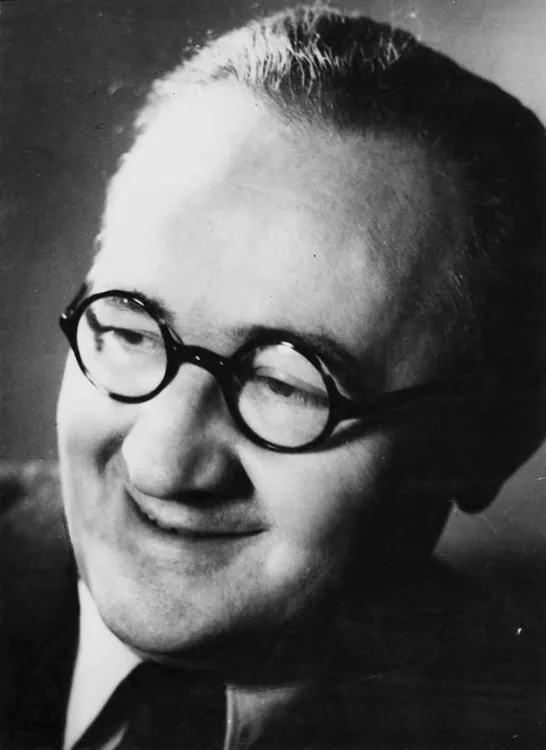
Joe Furtner

Joe Furtner, born in Vienna in 1893, was a German actor and comedian. He considered Berlin his second home, living and working there for many years while maintaining his Viennese charm. He began performing at the Kabarett der Komiker as early as 1939, appearing in programs through 1942 and again in 1947. In 1947, he performed with Helmut-Zacharias-Quartett and 'Erinnern Sie sich? - Eine Melodienfolge' by Rudolf Nelson at the Neue Scala/Kabarett der Komiker, with Hanns Geert conferring and playing piano. He was also depicted in a 1940 magazine/journal as part of the Kabarett der Komiker ensemble. Furtner’s career encompassed stage, film, and radio. He appeared in several film roles and frequently performed in theaters including the Hebbel-Theater, Schauspielhaus Hansa, Berliner Theater an der Nürnberger Straße, and Renaissance-Theater. He was a Spielleiter at the Kabarett der Komiker, led by Willi Schaeffers, and a performer there for many years. Radio work provided numerous opportunities, particularly when a Viennese character was needed. He acted as Herr Huber in the 1953/54 radio series 'Die Arche Noack', portraying roles such as Pilkington in 'Da werden Tiere zu Hyänen' (1949) and Bellicek in 'Der kleine Grenzverkehr' (1953), and Prof. Düring in 'Der Kammersänger' (1959). He also appeared in the television variety show 'Wir senden Frohsinn - wir spenden Freude' in 1943, performing a segment called 'Wenn's dem Esel zu wohl wird' by Jo Hanns Rösler, which included various characters. A broadcast on October 8, 1943, from 2:30 PM to 4:00 PM took place at the Kuppelsaal des Reichssportfeldes. Furtner is best known for his role as Professor Quatschnie in the radio program 'Die Insulaner' from 1948 to 1961, a character he frequently referred to by the nickname “Professor Quatschnie.” He often portrayed kind-hearted characters in stage productions and films. A quirk of his performances involved playfully refusing to pay for beer after offering people paprika peppers. Joe Furtner married Johanne Sophie Krüger in 1943. He signed a Philips photograph, and was part of the ensemble featured in a 1940 publication from Berlin P. W. Brocker.

Roman Szeliga, comedian from Austria
Verified Unclaimed
Austria

Roman Szeliga

Roman Felix Szeliga works as a physician, is a moderator, leads seminars, writes books and gives lectures on the topic of humor as a keynote speaker; He also inspires as an amateur magician. He presents his performances primarily in Austria, supplemented by assignments in Germany and the Switzerland.

Tricky Niki, comedian from Austria
Verified Unclaimed
Austria

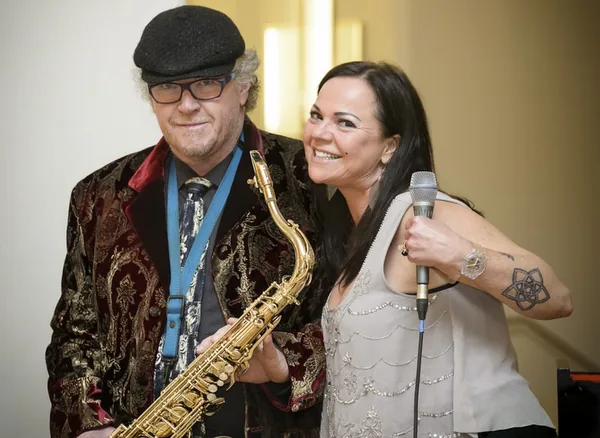
Tricky Niki

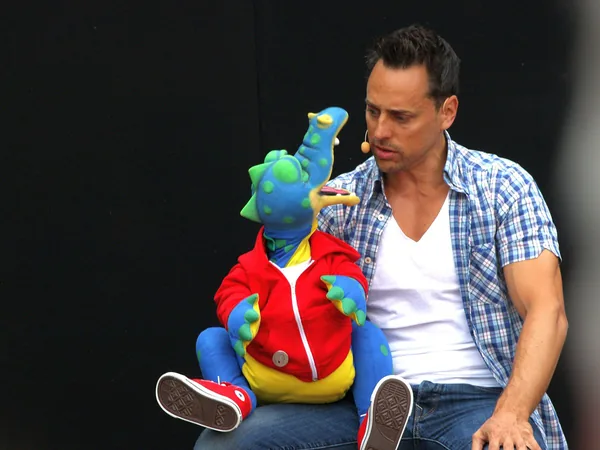
Tricky Niki comes from Austria and works as a ventriloquist, comedian and entertainer. In German-speaking countries he became known because he was there in his shows s venturing with interactive audiences, comedy and magic linked.

Verified Unclaimed
Austria

Victim Oliver

Victor Oliver von Samek, known professionally as Vic Oliver, was born in Vienna on July 8, 1898, to Baron Viktor von Samek. Coming from a Jewish family, he demonstrated considerable athletic ability early in life, winning the Austrian junior tennis championship in 1914. Having begun his education at Vienna University with the intention of studying medicine, he later dedicated himself to music, displaying remarkable talent as a violin prodigy and receiving instruction from Mahler. During World War I, he served in the Austrian cavalry as an adjutant. After the war concluded, he held short-term positions in both banking and textile manufacturing; subsequently, he pursued musical endeavors, which included playing drums within a jazz ensemble in Rouen and Le Havre. Oliver’s career took a transatlantic turn in 1922 when he traveled to the United States. His stage appearances encompassed vaudeville productions, and in 1923, he became a member of the jazz group 'The Nine Nights of Jazz'. A partnership with violinist Margaret Crangle commenced in 1924, creating a double act. A pivotal moment occurred in 1928 when he accidentally fell from a piano stool, eliciting laughter and revealing his comedic talent. This discovery led to an engagement at the Palace Theatre in New York in 1929, marking the beginning of his rise as a comedian. He quickly gained popularity in Britain after performing at the London Palladium in 1931, known for his deferential humor, sometimes risqué cabaret style, and deliberately poor violin playing. Throughout the 1930s and 40s, Oliver became a mainstay of British entertainment. He topped the bill at the London Palladium by 1935 and shared a record for appearances at the Holborn Empire with Max Miller. He starred in revues like 'Follow the Sun' in 1934, where he met Sarah Churchill. He married her on Christmas Day 1936 in New York; they later divorced in 1945. During World War II, he appeared in several popular revues and hosted the BBC radio show 'Hi, Gang!' and was the first guest on 'Desert Island Discs' in 1942. He also founded the Vic Oliver Concert Orchestra in 1944, specializing in light classical music. He continued to appear in variety shows and pantomimes, and starred in films such as 'Rhythm in the Air' (1936) and 'Meet Mr. Penny' (1938), and the TV series 'Hotel Imperial' (1958-1960). He became a naturalized British subject in 1948 and remarried Natalie Frances Conder in 1946, having one daughter. Oliver's professional life ended prematurely when he suffered a collapse and passed away during a concert in Johannesburg, South Africa, on August 15, 1964, at the age of 66.

Austrian Comedians and the Comedy Scene in Austria

Austria has a distinctive comedy tradition shaped by theatre, cabaret, television and live performance. Austrian comedians work across many forms of entertainment, from traditional Kabarett and satire to modern stand-up, sketch comedy and television.

GiggleTime's directory brings together Austrian comedians, stand-up performers, cabaret artists, comedy actors and other personalities connected to comedy and entertainment in Austria. Browse the profiles above to discover performers from different generations and learn more about their careers.

Austrian Kabarett and Satire

Kabarett is one of the defining forms of Austrian comedy. The tradition combines humour with commentary on society, politics, culture and everyday life, often using storytelling, characters, irony and satire.

Vienna has long been an important centre for Austrian cabaret and theatre, with performers appearing in dedicated Kabarett venues as well as theatres and other cultural spaces. The tradition continues today alongside newer forms of stand-up and comedy performance.

Austrian Kabarett can range from highly topical satire to observational humour and character-based performances, giving the country's comedy scene a broad range of styles.

Stand-Up Comedy in Austria

Modern stand-up comedy has become increasingly visible in Austria, with comedians performing in clubs, theatres, bars, festivals and other live venues.

Vienna is a major hub for comedy, but performers can also be found in cities such as Graz, Salzburg, Linz and Innsbruck. The Austrian comedy circuit includes both established performers and newer comedians developing their material through live shows.

Some comedians focus on everyday observations and personal stories, while others combine stand-up with improvisation, satire, characters or theatrical performance.

Austrian Comedians on Television and Film

Television has introduced generations of Austrian comedians to audiences throughout the country and across the German-speaking world. Comedy series, sketch programmes, talk shows and entertainment formats have provided platforms for performers from a variety of backgrounds.

Austrian comedians and actors also work in film and theatre, with many performers moving between stage and screen during their careers. This overlap between acting and comedy is an important part of the Austrian entertainment industry.

Because Austrian performers often work in German-language media, their audiences can also extend beyond Austria to Germany, Switzerland and other German-speaking communities.

Comedy from Vienna and Beyond

Vienna has a particularly strong connection with Austrian comedy, theatre and cabaret, but the country's comedy scene extends well beyond the capital.

Regional theatres, cultural venues and comedy events provide opportunities for performers throughout Austria. Different cities and regions contribute their own audiences and influences, while German-language media allows Austrian comedians to reach a much wider market.

Digital platforms have added another route for emerging performers. Podcasts, YouTube, social media and streaming services allow Austrian comedians to publish sketches, comedy clips and other content directly for audiences.

Discover Austrian Comedians on GiggleTime

Looking for Austrian comedians, Austrian stand-up comedians or comedy performers from Austria? Explore the GiggleTime directory above to discover performers from different areas of Austrian comedy and entertainment.

Use the search feature to find a particular comedian or browse the profiles to discover new names. Individual profiles may include biographical information, career details, performances, photographs and other interesting facts.

Whether you're interested in Austrian stand-up comedy, Kabarett, Austrian comedy actors, television comedians or famous comedians from Austria, GiggleTime makes it easier to explore the people behind Austrian comedy.

The directory continues to grow as new Austrian comedians and comedy personalities are added.